
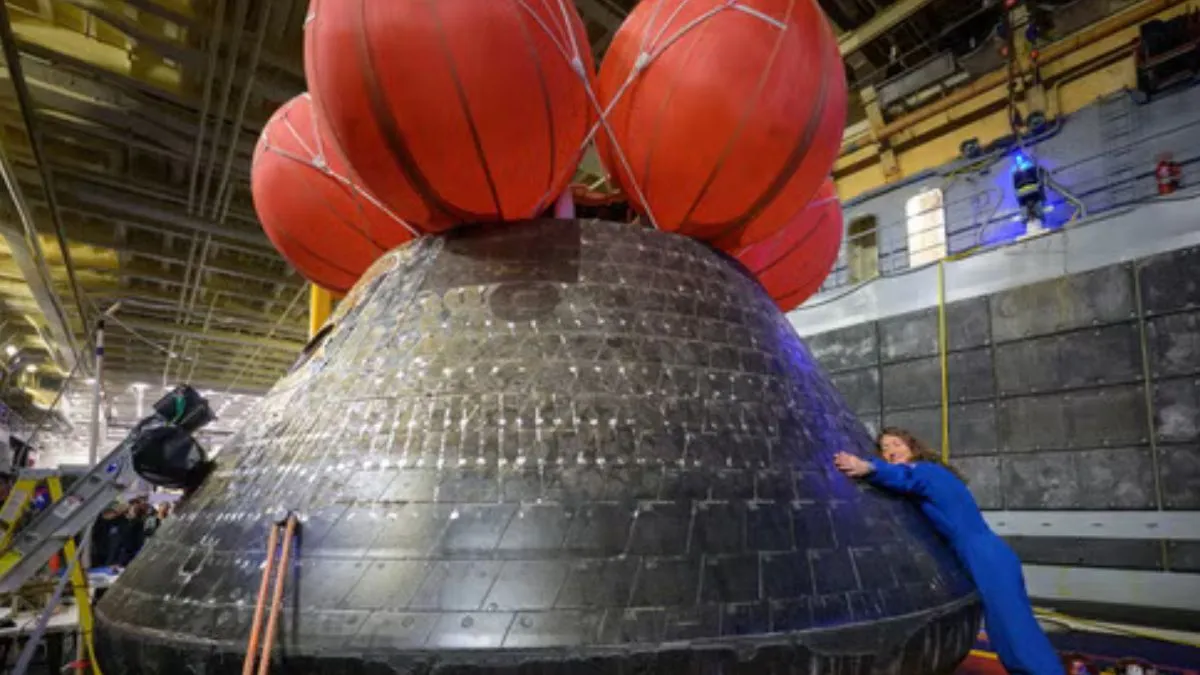
After completing a groundbreaking mission, NASA’s Artemis II spacecraft has safely returned to its launch site in Florida. The capsule, which carried four astronauts around the Moon, is now back at the Kennedy Space Center right where its historic journey began nearly a month ago. This mission marks a big step forward for human space exploration, as it was the first time in more than 50 years that astronauts traveled to the Moon and back.
From splashdown to home base
The Orion capsule landed in the Pacific Ocean on April 10, ending its nearly 10-day mission in space. After that, it was carefully transported from San Diego back to Cape Canaveral by truck.
Now that it is back, engineers will begin a detailed inspection. Special attention will be given to the heat shield, which protected the capsule during its fiery return through Earth’s atmosphere. Other parts, including electronic systems and research equipment, will also be checked, repaired, or reused for future missions.
The capsule, named Integrity by its crew, carried astronauts farther into space than any human
has traveled before. Despite a small issue with the onboard toilet, the spacecraft performed very well throughout the mission, according to NASA officials.
The success of this journey shows that the systems designed for deep space travel are working as planned.
Meet the crew
The Artemis II mission was led by Commander Reid Wiseman, along with pilot Victor Glover, mission specialist Christina Koch, and Canadian astronaut Jeremy Hansen.
After returning to Earth, the crew went through medical checks and tests. Now, they are finally getting some well-earned rest. Wiseman even shared a personal moment online, saying he felt a deep sense of peace while relaxing after the mission.
Looking ahead to Artemis III
While Artemis II has come to an end, the next mission is already in preparation. Artemis III will use a new capsule and a different crew. Instead of going straight to the Moon, the mission will focus on practicing docking maneuvers in Earth’s orbit.
These tests will involve lunar landers currently being developed by private companies. If everything goes as planned, this will prepare NASA for a future Moon landing mission, possibly as early as 2028.
