
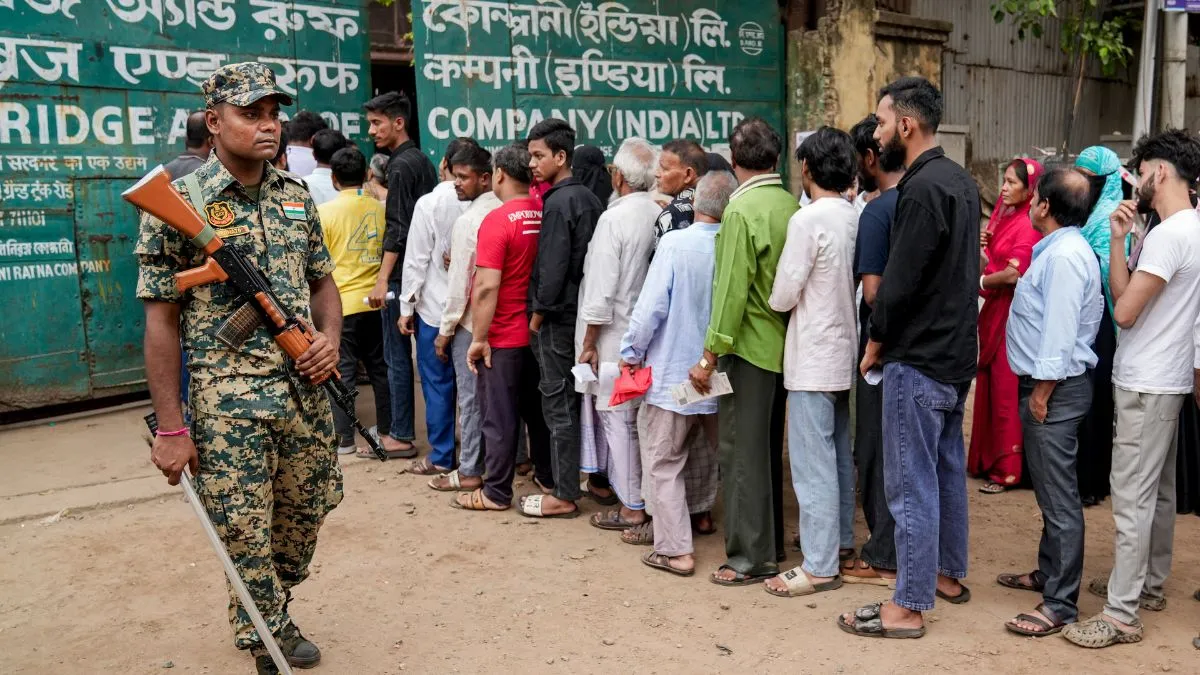
Voting for the second phase of the West Bengal Assembly elections concluded across 142 constituencies spread over seven districts. The extensive security and administrative measures were in place. A communication from the Election Commission said 91.66 per cent turnout was recorded in the second phase of polls till 7.45 pm, putting the combined poll percentage over the two phases at 92.47 per cent. The first phase of polling was held on April 23 and the counting will be on May 4.
The Election Commission of India had mobilised a large-scale operation to ensure smooth and peaceful polling, deploying over 350,000 security personnel throughout the state.
In the state capital, Kolkata, nearly 35,000 security forces were stationed, while approximately 2,550 companies of central armed police forces were assigned statewide duties. To maintain transparency and monitor proceedings closely, 142 general observers and 95 police observers have been appointed.
In a significant development, the National Investigation Agency(NIA) was deployed for the first time during these elections to respond to any serious incidents of violence or security threats.
This phase is particularly crucial due to several high-profile electoral contests. A key battle is expected between Mamata Banerjee of the Trinamool Congress (TMC) and Suvendu Adhikari of the Bharatiya Janata Party (BJP). The outcome of such contests is likely to influence the broader political narrative in the state. Additionally, eight ministers from the incumbent government are contesting in this phase, raising the political stakes further.
A total of 1,448 candidates are in the fray, with more than 32 million eligible voters expected to cast their ballots. Earlier, 152 constituencies went to polls in the first phase on April 23, making this the next critical step in the multi-phase election process.
Suvendu Adhikari has expressed confidence in his party’s prospects, asserting that the BJP will secure a full majority in the state. He also vowed to defeat Mamata Banerjee in Bhabanipur.
Meanwhile, the Election Commission has introduced a dedicated helpline to allow citizens to report electoral violations, reinforcing its commitment to free and fair elections.
The counting of votes will take place on May 4.
