
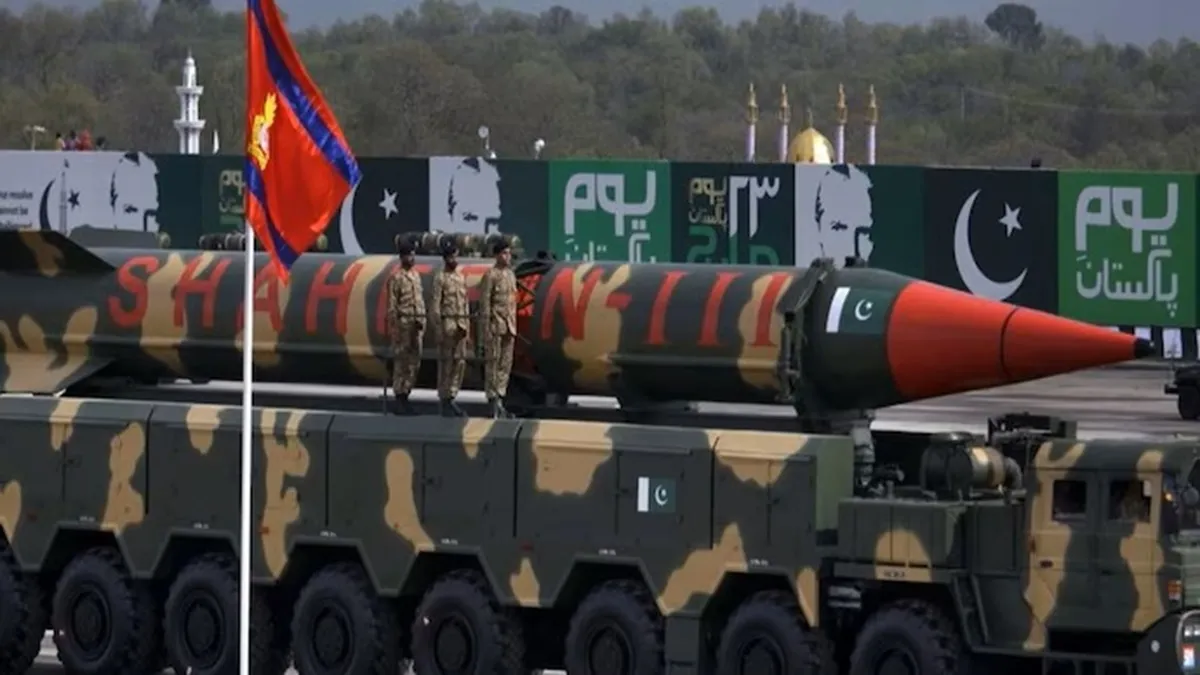
The world has been left stunned by the precision with which India carried out targeted strikes on terror infrastructure in Pakistan and Pakistan-occupied Kashmir (PoK) and hit PAF's nine strategic airbases. But why did India agree to pause? Who asked for a ceasefire?
On May 10, when India was pounding key bases of the Pakistan Air Force, the Pakistani establishment dialled America in panic with the fear that BrahMos supersonic missiles may hit its nuclear control and command centre. India agreed to a ceasefire and paused the military offensive as the main objective (neutralising terror fountainheads) had been achieved.
The Ceasefire
At the height of the conflict, US Vice President JD Vance dialled Prime Minister Narendra Modi. The Indian Prime Minister's response was clear. Modi told Vance that if Pakistan escalates the situation further, our response will be 'very, very strong'.
However, Pakistan failed to take the cue and its air force attempted to attack Udhampur, thereby forcing India's hand as it went ahead with demolishing eight high-value Pakistani air bases. India's response shocked Pakistan and forced it to change its tune immediately.
The following morning, National Security Advisor of America Marco Rubio called India's External Affairs Minister S Jaishankar and said, "Pak has understood (the message)," leading to Pakistan's DGMO Major General Kashif Abdullah picking up the hotline with his India counterpart Lieutenant General Rajiv Ghai to express the desire for a ceasefire.
The new normal
By raising the cost of cross-border terrorism, India has now set a 'new normal' in its approach to such acts and made it clear that Pakistan cannot continue with terrorism while expecting cooperation in areas of its choosing.
As a responsible nation, India takes nuclear threats seriously, but this time the Modi government chose to expose Pakistan's nuclear deterrence bluff and made it clear that it allows its neighbour to use nuclear threat as a cover for it to carry out terror activities in India.
The 'new normal' makes it emphatically clear that Pakistan will have to pay a heavy price for terror activities aimed at India. Neither the Line of Control nor the International Border, not even the nuclear threat, will be able to protect Islamabad from decisive actions from India.
Went for the snake's head
Operation Sindoor saw India targeting the leadership and core infrastructure of terrorism rather than just its foot soldiers, signalling a shift in strategy and intent. The response to the Pahalgam attack was not limited to military action alone but executed through a coordinated military, political and psychological approach.
All three objectives have been accomplished, with a strong psychological message that the old rules of engagement no longer apply. The message is clear—this is not business as usual.
As Prime Minister Narendra Modi reportedly directed, "Inko mitti mein mila do" (reduce them to dust). The terror command centre in Bahawalpur (Jaish's Markaz has already been destroyed, and others involved in cross-border terrorism are now next in line).
The new normal underlines that India will ensure that no place in Pakistan is safe for terrorists.
The message was clear: No matter where terror operatives hide in Pakistan, India will hit them. No place in Pakistan is safe for terrorists; nobody is untouchable, everyone is touchable.
No talks beyond those on status of PoK
India has also made it clear that its stance on dialogue with Pakistan has not changed. There will be no discussions on Jammu and Kashmir with Pakistan, and the only pending issue that needs to be discussed with its hostile neighbour is the return of PoK - only via talks between DGMOs of both countries.
Prime Minister Narendra Modi's intent appears to be clear that any future talks would be contingent upon Pakistan's commitment to dismantling terror networks operating from its soil. He reportedly conveyed to US Vice President JD Vance that discussions would proceed only if Pakistan addresses the issue of harbouring terrorists.
Furthermore, India has expressed no intent to withdraw its decision to suspend the Indus Waters Treaty, signalling that cooperation in shared resources cannot continue amidst ongoing hostilities.
Goli ke badle gola chalega
Prime Minister Modi has instructed the armed forces to adopt a more assertive posture. He instructed the armed forces that India's response to every action by Pakistan should be more forceful.
Modi's directive, "Wahan se goli chalegi, toh yahan se gola chalega" (If bullets come from there, shells will be fired from here), encapsulates this shift. This approach aims to deter future attacks by ensuring that any aggression is met with a disproportionately strong response.
The Indian military's actions post-Pahalgam have been described as focused, measured, and non-escalatory, yet decisive. This balance seeks to maintain regional stability while conveying a clear message against terrorism.
With Operation Sindoor, India has conveyed a clear and strong message to Pakistan that it can no longer expect cooperation with New Delhi if it continues to harbour terrorists and that the retaliation to such acts will be with even more force in the future.
Major shift in India's counter-terrorism strategy
In the wake of the devastating Pahalgam terror attack on April 22, which claimed the lives of 26 civilians, India launched "Operation Sindoor," marking a significant escalation in its response to cross-border terrorism. This operation signifies a new doctrine in India's defence strategy, emphasising proactive and punitive measures against terror threats emanating from Pakistan.
The Pahalgam attack, targeting predominantly Hindu tourists, was a stark reminder of the persistent threat posed by Pakistan-based terror groups. In response, India executed a series of precision strikes on May 7, targeting nine high-value terror launchpads in Pakistan-occupied Kashmir and Pakistan's heartland. These strikes reportedly resulted in the elimination of over 100 terrorists and significant disruption to terror infrastructure.
The operation's name, "Sindoor," symbolises the loss suffered by the widows of the victims, underscoring the human cost of terrorism and India's resolve to combat it.
