
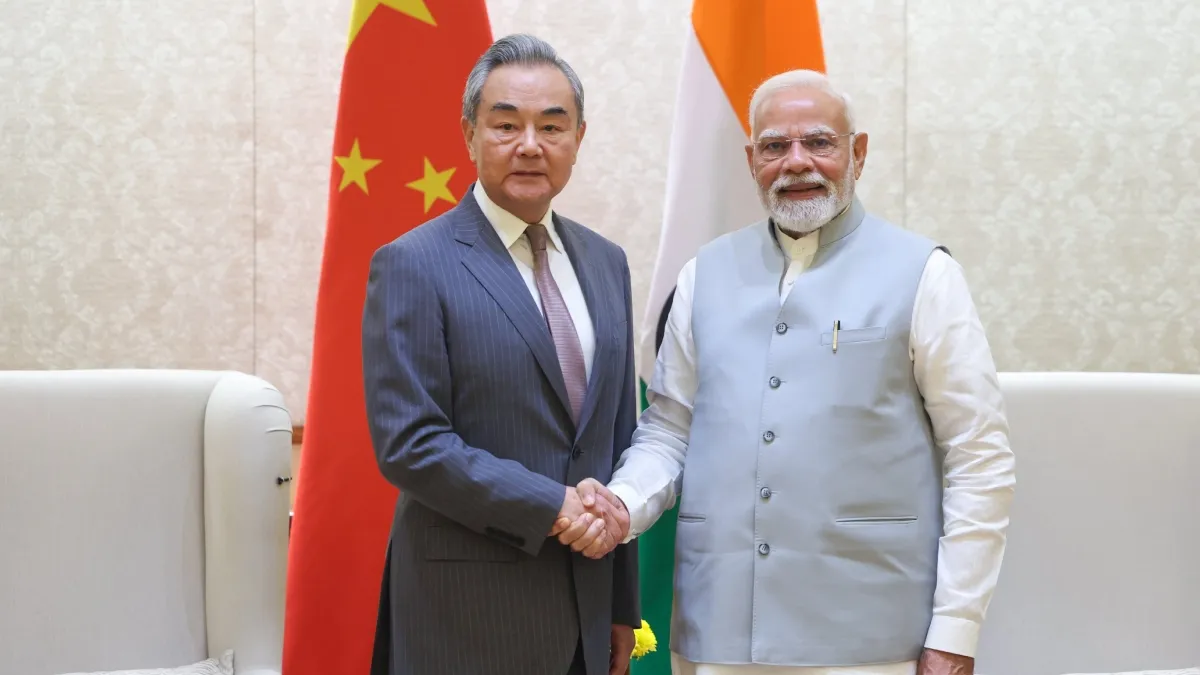
In a significant step towards improving India-China relations, Prime Minister Narendra Modi met Chinese Foreign Minister Wang Yi at his official residence, 7 Lok Kalyan Marg, on Tuesday. This high-level meeting marked a key moment in the ongoing diplomatic engagement between the two nations, which have faced tensions since the 2020 border standoff in eastern Ladakh.
Taking to X, PM Modi expressed that he was "glad to meet Foreign Minister Wang Yi," highlighting the steady progress in bilateral relations since his meeting with President Xi Jinping in Kazan last year. He emphasised that this progress has been guided by mutual respect for each other’s interests and sensitivities. PM Modi also welcomed President Xi’s invitation to attend the upcoming Shanghai Cooperation Organisation (SCO) Summit in Tianjin and underscored that stable, predictable, and constructive ties between India and China are essential for regional and global peace and prosperity.
During the meeting, Wang Yi handed over a message and invitation from President Xi to PM Modi for the SCO Summit. Wang Yi also shared a positive assessment of his recent meetings with External Affairs Minister Dr. S Jaishankar and the 24th round of Special Representatives’ talks on the boundary issue, co-chaired by National Security Advisor Ajit Doval.
PM Modi reiterated the importance of maintaining peace and tranquillity along the border and reaffirmed India's commitment to a fair, reasonable, and mutually acceptable resolution of the boundary question. He welcomed the positive developments in bilateral ties since Kazan, including the resumption of the Kailash Mansarovar Yatra.
Earlier in the day, Wang Yi held talks with NSA Ajit Doval during the 24th round of Special Representatives’ discussions. Doval noted an “upward trend” in relations over the past nine months, pointing to a relatively peaceful border and increased diplomatic engagement. Both sides emphasised economic cooperation, with China expressing willingness to support India in key areas such as rare earth minerals, fertilizers, and infrastructure technology.
External Affairs Minister S Jaishankar also met with Wang Yi, urging a “candid and constructive” approach to India-China relations based on the “three mutuals”: mutual respect, mutual sensitivity, and mutual interest. He stressed that differences should not turn into disputes, nor should competition lead to conflict.
Officials described the talks as pragmatic and forward-looking. Doval reaffirmed that the border situation is “stable and improving,” while Wang acknowledged that previous tensions did not serve the interests of either country.
This diplomatic engagement reflects a cautious but positive effort by both India and China to strengthen dialogue, reduce tensions, and foster long-term cooperation.
