
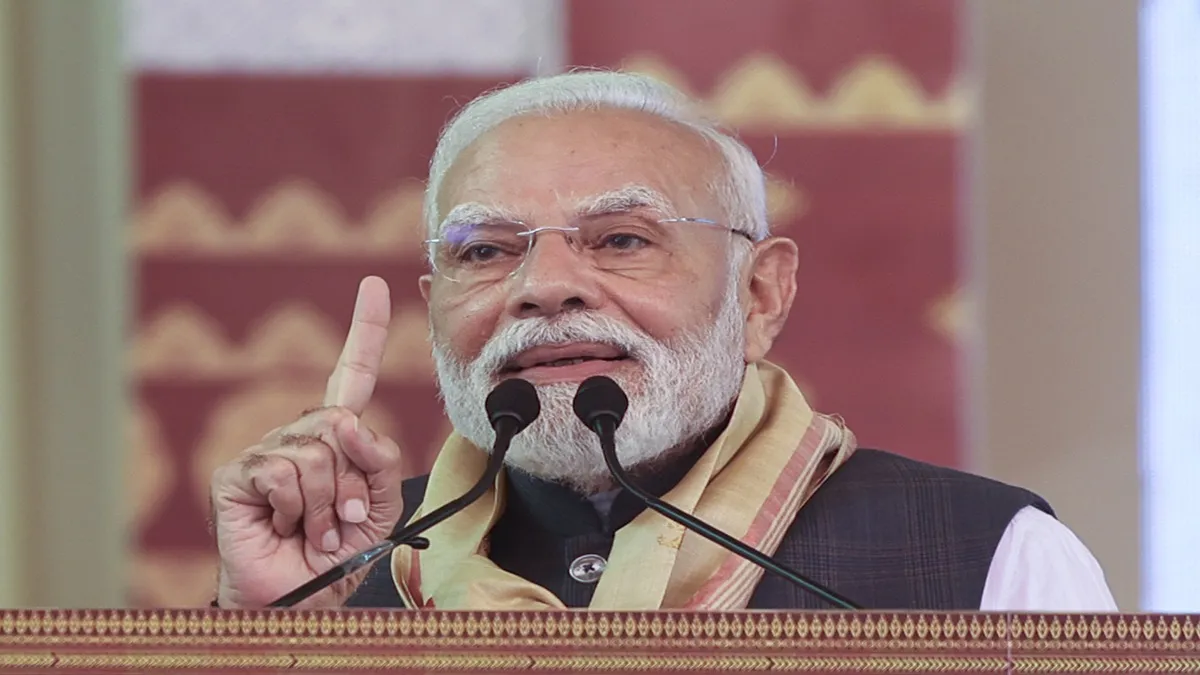
Narendra Modi registered his first electoral victory in February 2002, when he contested a by-election to the Gujarat Legislative Assembly from the Rajkot II constituency. This moment marked Modi’s formal entry into the democratic process as a candidate, stepping onto the political stage after being appointed Chief Minister of Gujarat in late 2001.
Modi’s first electoral triumph: Rajkot II, 2002
Modi’s contest from Rajkot II was significant, as he had just taken office as Chief Minister and needed to win a seat in the assembly to continue his leadership. He won the by-election comfortably, reinforcing his leadership role in Gujarat and setting the foundation for future victories. In the 2002 Rajkot II by-election, Narendra Modi faced his most decisive electoral challenge from prominent Congress leader Ashwinbhai Narbheshankar Mehta. Having taken over as Gujarat’s Chief Minister a few months prior, Modi needed to win this seat to continue his leadership.
The contest was intense; Modi managed to win only by a margin of 14,728 votes, a much narrower gap compared to previous elections on the same seat, which had seen margins exceeding 28,000 votes. Ashwin Mehta, a respected banking executive and political loyalist, was seen as a formidable opponent, but Modi’s victory demonstrated his ability to withstand strong competition.
From state leader to political icon
After 2002, Modi shifted to the Maninagar constituency for three consecutive state elections (2002, 2007, and 2012), regarding it as a safer seat. Despite fielding notable Congressional opponents- Yatin Ojha (2002), senior leader Dinsha Patel (2007), and in 2012, activist Sanjiv Bhatt’s wife- none could pose the same sharp challenge that Ashwin Mehta had presented in Rajkot II.
The victory from Rajkot II not only solidified Modi's position as Chief Minister but also paved the way for subsequent wins. He later contested and won from the Maninagar constituency, before moving to national politics and securing the Prime Minister’s seat.
BJP’s narrow triumph in Rajkot II
In the high-stakes 2002 by-election for Rajkot II, Chief Minister Narendra Modi secured victory by a margin of 14,728 votes over Congress’s Ashwin Mehta, polling 45,297 votes (57.32 per cent) to Mehta’s 30,569 (38.68 per cent). Though the margin was smaller than what former BJP finance minister Vajubhai Vala had achieved previously, it demonstrated Modi’s strength, especially considering the smaller electorate and a heated campaign that saw the Congress hoping for an upset.
Legacy of electoral rivalries
Modi’s encounters- especially the tight battle against Ashwin Mehta in 2002- are remembered for testing his political mettle early in his career. Subsequent elections saw opposition candidates struggle to mount significant challenges, underscoring how Modi’s initial challenge helped shape his political rise.
Congress' success in other key seats
While Rajkot II belonged to Modi and the BJP, Congress scored convincing wins in the other two by-election seats, Mahua and Sayajigunj, wresting them from the BJP. The BJP’s focus on Rajkot II, needed to secure Modi’s entry into the assembly, may have contributed to the losses elsewhere. In Sayajigunj, Congress’s Dalsukh Prajapati secured a strong margin of 22,554 votes, and the party also won comfortably in Mahua, reflecting a surge in its fortunes, particularly in south and central Gujarat.
Impact of campaign tactics
The outcome left Congress leaders disappointed, blaming a late, aggressive campaign against Modi for alienating upper-caste and middle-class voters, while others believed that without such tactics, the opposition would have stood little chance against the chief minister’s administrative influence and stature. BJP’s victory procession in Rajkot exemplified its celebration of Modi’s success, even as the lost seats highlighted the party’s vulnerabilities during a period of intense electoral drama.
Ashwin Mehta: The formidable adversary
Ashwin Mehta, Modi’s 2002 opponent in Rajkot II, was admired for his calm temperament and sterling banking career as the chairman of Citizen Bank. Though Mehta was highly respected locally, the fierce campaign ended with Modi securing the seat and all other candidates losing their deposits- an indication of the contest’s absolute nature.
Legacy of the first win
Narendra Modi’s first electoral success in Rajkot II in 2002 is widely seen as a turning point that launched his ascent as a dominant force in Indian politics. This victory marked the beginning of a remarkable electoral journey that eventually led to three terms as the Prime Minister of India.
The battle against giants: Lok Sabha Elections
In the 2014 Lok Sabha elections, Narendra Modi raised the stakes by contesting two major seats- Vadodara in Gujarat and Varanasi in Uttar Pradesh. In Vadodara, he faced veteran Congress leader Madhusudan Mistry, while in Varanasi, he battled Aam Aadmi Party’s Arvind Kejriwal. Both rivals were highly respected and publicly declared their intent to challenge Modi, but both were defeated by massive margins- demonstrating Modi’s growing electoral prowess.
Here are some related stories-
