
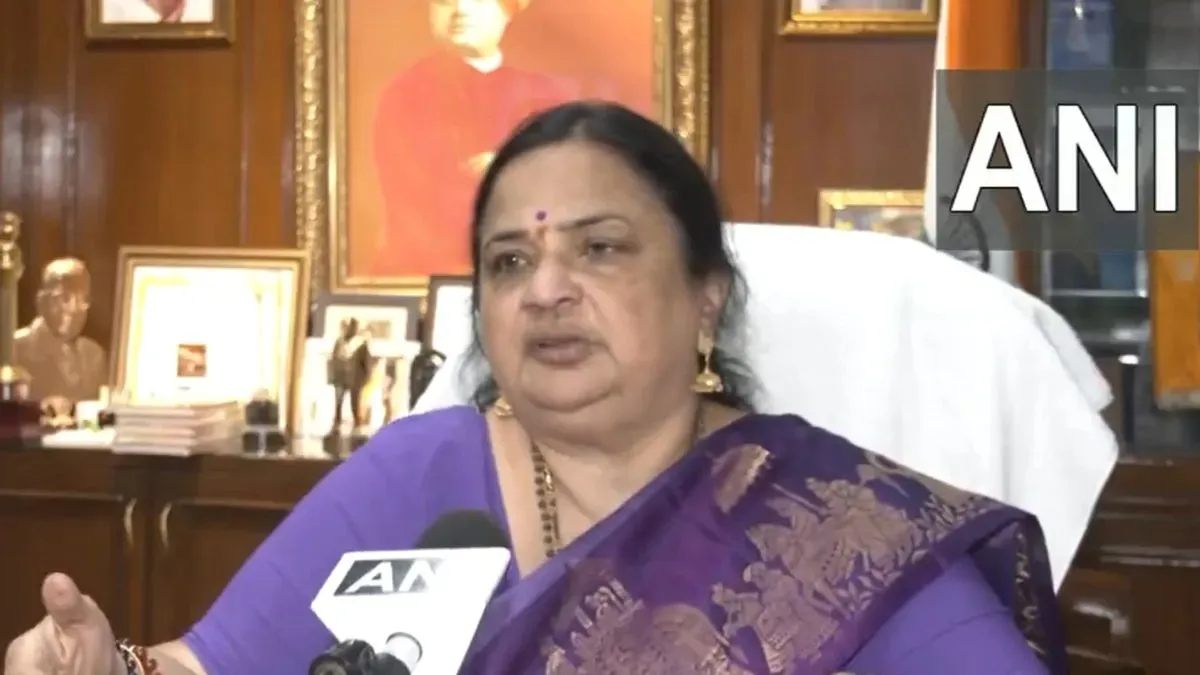
The ongoing Marathi language controversy has taken a new turn following comments made by Professor Shantishree Dhulipudi Pandit, the Vice Chancellor of Jawaharlal Nehru University (JNU). Speaking about the issue of linguistic diversity in India, Professor Pandit emphasised the importance of prioritising one’s mother tongue while also encouraging the learning of regional and career-related languages. Her remarks come at a time when tensions are escalating in Maharashtra over the promotion and imposition of Marathi, especially in the state’s economic hub, Mumbai.
Importance of mother tongue and multilingualism
Professor Pandit’s stance on language reflects a balanced approach to India’s multilingual landscape. “I will prioritise the mother tongue first, as it is the most important. The other two languages should be your market language,” she said. In addition to promoting mother tongue, she underscored the importance of multilingualism in India.
She argued that language should not be a tool for hatred or superiority but should serve as a medium for communication. "All languages in India are good, and multilingualism is important. The number of languages doesn’t matter," she added, emphasising the rich cultural heritage embedded in India’s linguistic diversity.
Efforts to promote Marathi at JNU
In line with her belief in preserving and promoting linguistic heritage, Professor Pandit also highlighted JNU’s efforts to include Indian languages, including Marathi, in the academic curriculum. She mentioned that Maharashtra's Chief Minister's office had shown interest in setting up a "Kusumagraj Special Centre" for Marathi language, literature, and culture. Kusumagraj, a renowned Marathi poet and Jnanpith Awardee, was celebrated for his contributions to literature.
Professor Pandit added that JNU is making strides in introducing Marathi as a subject at the Master's level and offering certificate courses for non-Hindi speakers. Additionally, the university is working towards translating notable Marathi literary works into other Indian languages. She thanked the Maharashtra Government and Chief Minister Devendra Fadnavis for their support in establishing these initiatives and providing funding.
The Marathi language controversy
The Marathi language dispute in Maharashtra has been an ongoing issue, centred around the promotion and mandatory use of Marathi in public life, particularly in Mumbai. Political, social, and cultural dimensions have fueled the controversy, with rising tensions and violent incidents linked to the imposition of one language over others.
The controversy gained momentum in March 2025, when RSS leader Suresh Bhayyaji Joshi stated that learning Marathi should not be compulsory for residents of Mumbai. His comments sparked strong protests from regional parties like Shiv Sena (UBT) and Maharashtra Navnirman Sena (MNS). In response, Maharashtra Chief Minister Devendra Fadnavis reiterated that Marathi is integral to the state’s culture, calling its promotion a civic duty.
Adding fuel to the fire, the Maharashtra government announced in April 2025 that Hindi would be mandatory as a third language in schools from classes 1 to 5. Marathi proponents viewed this decision as an attempt to impose Hindi, leading to further protests. Opponents argued that such moves threaten the identity and culture of Marathi speakers.
