
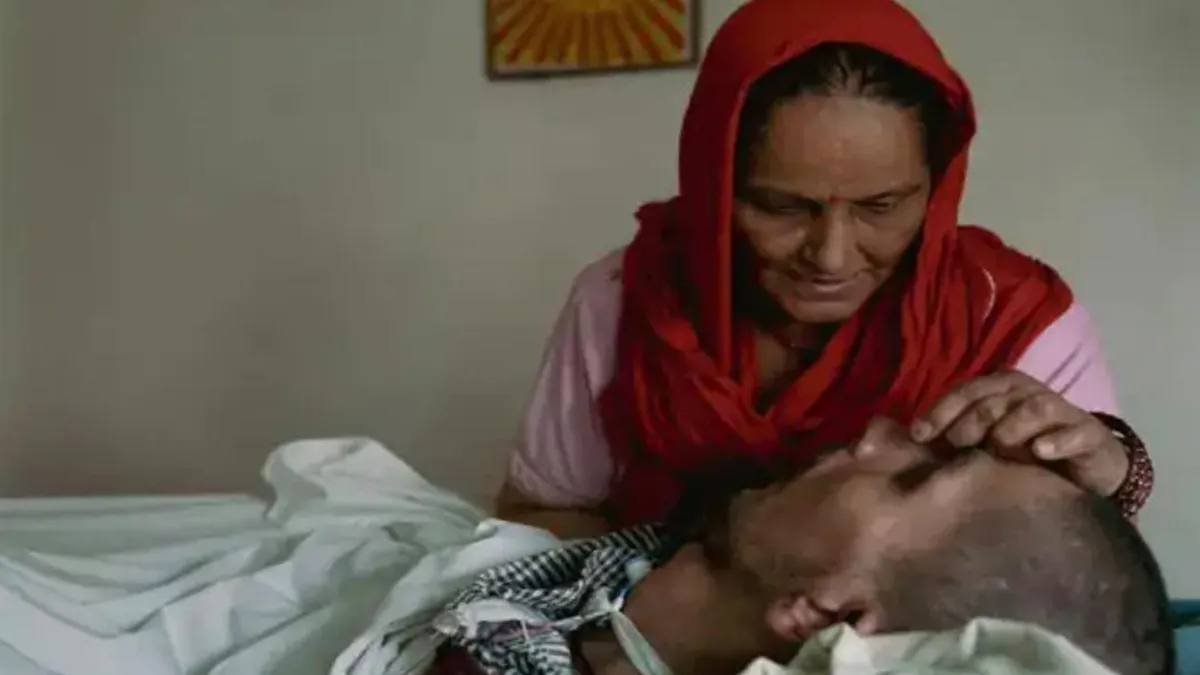
In a landmark ruling on Wednesday, the Supreme Court allowed the withdrawal of life-sustaining treatment for Harish Rana, a 32-year-old man who had been in a permanent vegetative state (PVS) for over 13 years. This decision from the Supreme Court marks the first practical implementation of the passive euthanasia guidelines established by the court in its 2018 Common Cause judgment.
A bench of Justices JB Pardiwala and KV Viswanathan allowed Rana’s parents to withdraw medical support, holding that the key question in such cases is not whether death is in a patient’s best interest, but whether continuing life-sustaining treatment serves the patient’s best interest.
Moreover, the Supreme Court clarified that clinically administered nutrition qualifies as a form of medical treatment. The Apex Court said such treatment can be withdrawn if medical boards examining the patient conclude that there is no meaningful prospect of recovery and recommend withdrawal of support.
Check timeline of the case
• August 20, 2013: Harish Rana, then a civil engineering student at Punjab University, suffered a big fall from the fourth floor of his PG accommodation in Chandigarh on August 20, 2013. The accident resulted in severe head injuries, 100% disability, and a permanent vegetative state.
• July 2024: After caring for him at home for nearly a decade, Harish’s parents approached the Delhi High Court on July 2024 seeking permission for passive euthanasia. However, the court rejected the petition, stating that Harish was not being kept alive mechanically (he was not on a ventilator) and could sustain himself without extra external aid.
• August 2024: The Supreme Court, led by then-CJI DY Chandrachud, upheld the High Court’s decision on August 2024 and noted that since Harish was not on life support but was being fed via a tube, withdrawing treatment would amount to active euthanasia, which is illegal in India.
• November 2024: DY Chandrachud in November 2024 in his final working day, directed the Uttar Pradesh Government to explore ways to cover Harish’s medical expenses, acknowledging the family's extreme financial and emotional burden.
• December 11, 2025: Harish's parents later approached the Supreme Court for a second time. A bench of Justices J.B. Pardiwala and K.V. Viswanathan directed the constitution of a Primary Medical Board to assess his condition.
• December 18, 2025: Then, after reviewing a "pathetic" report from the primary board, the Supreme Court ordered AIIMS New Delhi to form a Secondary Medical Board for a final assessment. The bench remarked, "We cannot keep the boy like this for all time to come".
• January 13, 2026: The Supreme Court judges met personally with Harish’s parents and younger brother. The family then requested the withdrawal of life-sustaining treatment (feeding tubes) so he could have a natural end.
• January 15, 2026: The Supreme Court reserved its final judgment after hearing detailed arguments from the family's counsel and the Additional Solicitor General.
How is Harish Rana case different from Aruna Shanbaug case
The Aruna Shanbaug case is a landmark legal and medical case in the country involving a nurse who spent 42 years in a persistent vegetative state (PVS) following a brutal sexual assault. Her plight eventually led to the 2011 Supreme Court ruling that legalised passive euthanasia in India.
While working as a junior nurse at King Edward Memorial Hospital, Parel, Mumbai in 1973, Shanbaug was sexually assaulted by a hospital janitor, and remained in a vegetative state afterwards. On 24 January 2011, after Shanbaug had been in this state for 37 years, the Supreme Court responded to a plea for euthanasia filed by journalist-activist Pinki Virani, setting up a medical panel to examine her. The court rejected the petition on 7 March 2011. However, in its landmark opinion, it allowed passive euthanasia for Aruna Shanbaug. Aruna Shanbaug died of pneumonia on 18 May 2015 after being in a persistent vegetative state for nearly 42 years.
Also Read:
SC allows passive euthanasia for Harish Rana, who is in coma for 13 years, in landmark verdict
