
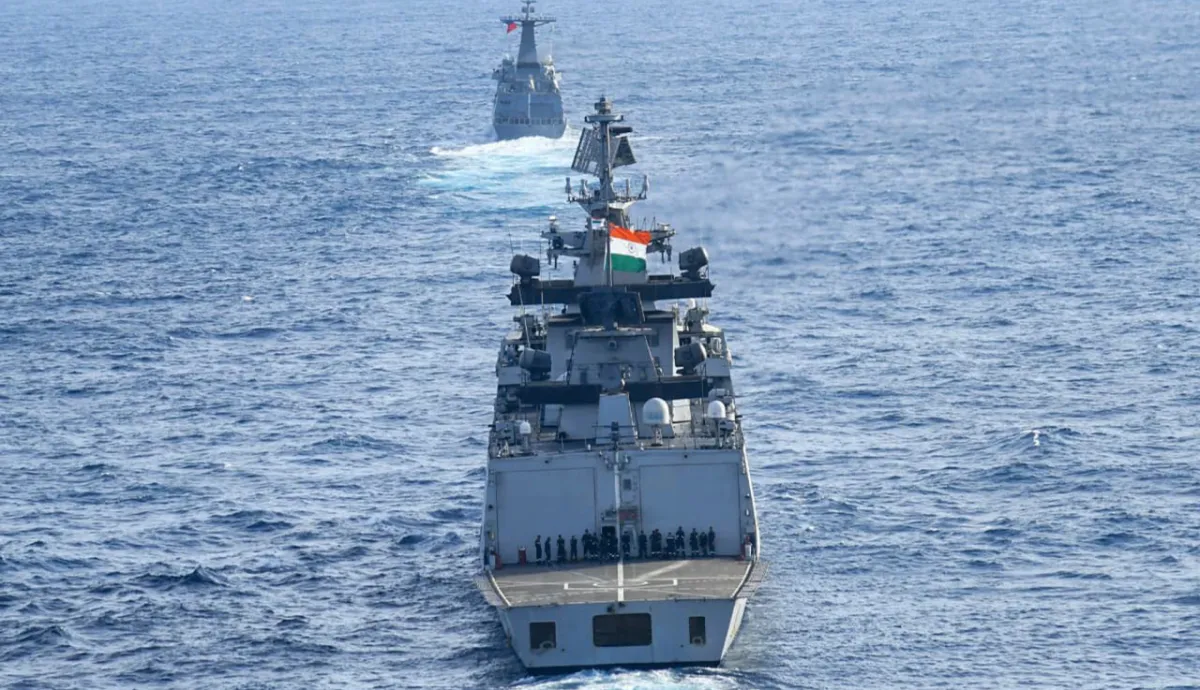
India’s carrier story runs from early bought and refurbished ships, through to the first large carrier built in India, and now to plans and studies for a much larger future carrier often called INS Vishal.
The fleet evolution reflects shifting doctrine, industrial learning, technology choices and budget and strategic trade-offs.
- The first -- INS Vikrant, acquired and commissioned in 1961, established the carrier concept in post-independence India and saw combat service. Later carriers included INS Viraat and others, each shaping India’s carrier doctrine.
- INS Vikramaditya, a refurbished Soviet era hull, Admiral Gorshkov, was formally commissioned into the Indian Navy on 16 November 2013 after an extensive refit in Russia. The ship entered Indian service in 2014 and became a key carrier for the navy.
- INS Vikrant, IAC 1, the first indigenous aircraft carrier, was designed by the Naval Warship Design Bureau and built at Cochin Shipyard. It was commissioned on 2 September 2022 and was highlighted by the government as a milestone for Atmanirbhar Bharat in defence manufacturing. The Ministry of Defence describes Vikrant as India’s largest warship built domestically with substantial indigenous content.
What Vikrant introduced
It is the first large carrier built in India, showcasing domestic shipbuilding, systems integration and local supplier networks. It uses the conventional ski jump, STOBAR, flight deck arrangement and carries a mixed air wing, including MiG-29 K fighters and helicopters.
The proposed next step, INS Vishal, IAC 2 or IAC 3
A far larger carrier, often quoted near sixty thousand to 65,000 tonnes displacement, intended to give India catapult-assisted arrested recovery operations, known as CATOBAR. This change is significant because catapult launch systems expand the types and weights of aircraft a carrier can operate.
The Navy has evaluated electromagnetic aircraft launch systems, EMALS, and senior officers have been briefed on the technology. Sustained interest in EMALS as a way to achieve catapult capability, pending technology access and integration choices.
Constraints and current status
Moving from STOBAR to CATOBAR with EMALS, or choosing nuclear propulsion, increases complexity, technology dependencies and cost. This is why INS Vishal has been a long drawn study project, with periodic reports that planning continues and other reports suggesting that the government or navy have delayed or revisited the three-carrier ambition because of budget and timing factors. Recent reporting indicates that the navy is studying options while the exact timeline, configuration and approval remain unsettled.
Why carriers still matter to India’s strategy
Aircraft carriers are force multipliers for maritime air power and regional deterrence. India sees carriers as central to protecting sea lines, projecting presence in the Indian Ocean Region and supporting coalition operations when needed. This strategic logic explains the sustained push for indigenous carrier design and shipyard capacity.
Key takeaways
India has moved from buying carriers, to refitting one, to building a large indigenous carrier at home. The commissioning of INS Vikrant in 2022 was a major step for domestic capability.
INS Vishal remains a proposed and studied programme rather than a confirmed build. The navy has signalled ambition for a CATOBAR, sixty thousand plus tonne platform, and it has evaluated EMALS and other technologies, but final decisions on propulsion, catapult choice and approvals are still subject to technical, diplomatic and budgetary constraints. Design studies and interdepartmental clearances are expected before construction can begin.
