
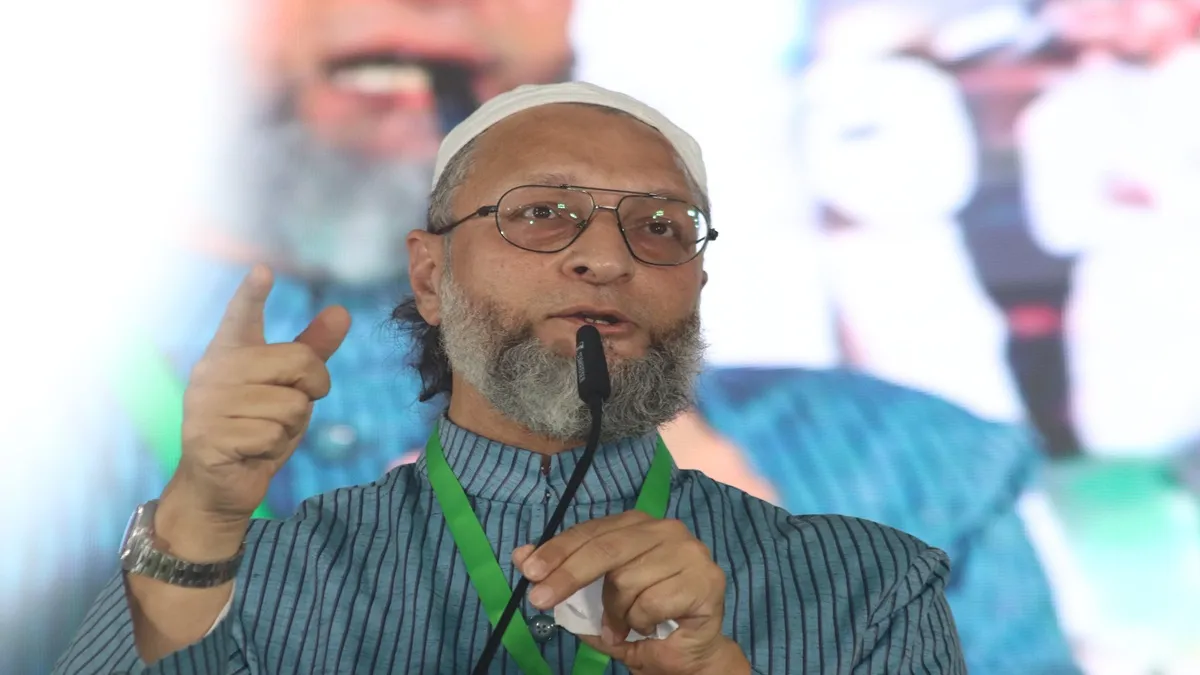
All India Majlis-e-Ittehadul Muslimeen (AIMIM) Chief and Hyderabad Member of Parliament (MP) Asaduddin Owaisi has raised an urgent appeal to the Government of India and the Telangana state administration to ensure the immediate evacuation of Indian nationals stranded in Iran and Iraq. In a public statement on X, Owaisi revealed that 1,595 Indian students, including 140 medical students at Tehran University, are currently stuck in Iran. He also highlighted the plight of 183 Indian pilgrims stranded in Iraq.
Owaisi confirmed that he has already contacted Joint Secretary (PAI) Anand Prakash in the Ministry of External Affairs and shared comprehensive details of those stranded. He stressed that swift government action is now critical.
“I urge External Affairs Minister Dr S Jaishankar to treat this as an emergency and coordinate an urgent evacuation plan. I also request the Telangana Chief Minister’s Office to ensure that students and pilgrims from Telangana are brought back safely,” Owaisi posted.
The appeal comes amid rising tensions in the region and growing anxiety among the families of those stranded. Owaisi’s intervention underscores the humanitarian urgency and the need for a coordinated central and state response to protect Indian lives abroad.
Israel warns ‘Tehran will burn’ amid escalating conflict with Iran
Tensions between Israel and Iran surged dangerously over the weekend, with both countries exchanging deadly strikes and threats of further escalation. Israel’s Defence Minister issued a stark warning on Saturday, declaring that “Tehran will burn” if Iran continues launching missiles, following an unprecedented Israeli assault on Iranian nuclear and military targets.
Israeli strikes target nuclear infrastructure
The Israeli offensive, described as a surprise and “blistering” in intensity, struck deep inside Iran, reportedly killing multiple top-ranking military officials. Among the dead were nine senior scientists and nuclear experts linked to Iran’s advancing atomic programme. Israel, while maintaining a policy of ambiguity around its own nuclear arsenal, has long warned against Tehran’s nuclear ambitions.
Heavy casualties and strategic losses for Iran
Iran’s ambassador to the United Nations reported that 78 people were killed and over 320 wounded in the Israeli bombardment. The strikes dealt a severe blow to Iran’s military leadership and technical capabilities.
Diplomatic fallout
The conflict’s intensification has effectively frozen any ongoing diplomatic engagements between Washington and Tehran, particularly around Iran’s nuclear development. Hopes for a negotiated revival of the nuclear deal now appear distant.
Global leaders call for de-escalation
Despite widespread international appeals to step back from the brink of war, both Israel and Iran have signalled that further military action is likely. The Middle East remains on edge as regional dynamics shift rapidly.
Wider regional implications
The renewed hostilities come at a time when Israel is deepening its offensive against Iran-backed Hamas in Gaza, following nearly two years of intense fighting. The convergence of these fronts raises the risk of a broader regional conflict involving multiple actors.
Here are some related stories of Israel-Iran conflict-
