
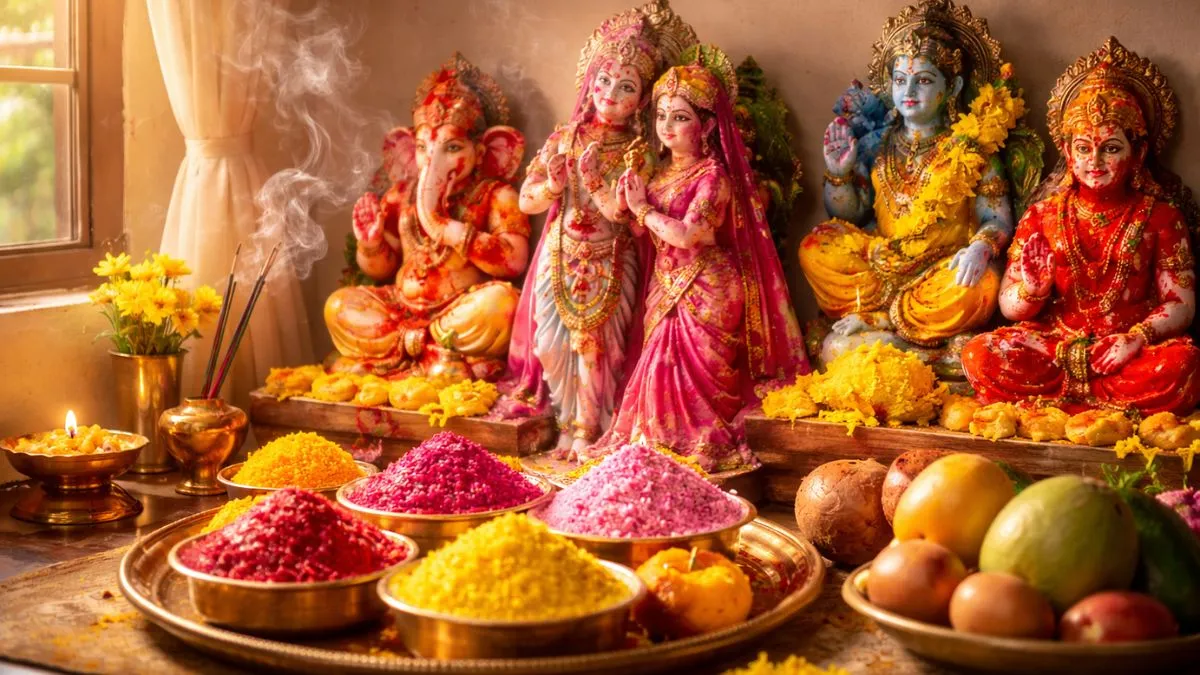
Holi marks the triumph of good over evil, beginning with the burning of Holika on the full moon night of Phalgun and followed by the vibrant celebration of colours the next day. In 2026, Holi will be celebrated on March 4, bringing families together in a burst of colour, devotion and joy.
Tradition holds that the day should not begin with colours on friends, but with colours offered to the divine. Worship in the morning is believed to invite positivity, harmony and prosperity into the home for the year ahead. Here is how many households traditionally begin Holi.
Begin with prayer before play
After taking a bath in the morning, devotees first offer abeer or gulal to their chosen deity. Only after this ritual do they step out to celebrate with family and friends.
Offering colour to God symbolises gratitude and seeks blessings for peace, protection and happiness. It is considered auspicious to begin Holi in this mindful way before the festive excitement unfolds.
Offerings to Lord Ganesha
Ganesha is worshipped first in most Hindu rituals. On Holi morning, offering vermilion or orange gulal to him is considered auspicious. Devotees also offer modaks, believed to bring success in work and remove obstacles from life.
Radha Rani and Shri Krishna
Holi is deeply associated with Krishna and Radha, as legend says they played Holi together for the first time. On this day, abir and gulal are applied to their idols. Many households place colours, gulal and even a symbolic water gun in the home temple. Traditionally, brighter shades are offered to Radha, while softer or darker hues are applied to Krishna.
Yellow gulal for Lord Vishnu and his incarnations
Those devoted to Vishnu and his incarnations, including Rama and Krishna, often offer yellow gulal. Yellow symbolises prosperity, knowledge and auspiciousness. Offering yellow fruits and sweets on this day is also considered beneficial.
Blue or red gulal for Lord Shiva
Devotees offer red or blue gulal to Shiva on Holi. Belpatra leaves, sacred ash, and flowers are also presented. It is believed that such offerings help remove obstacles and bring inner strength.
Worship of Goddess Lakshmi and Saraswati
Offering yellow gulal to Lakshmi is believed to invite prosperity and abundance into the home. For Saraswati, white flowers and yellow gulal symbolise the growth of wisdom and learning.
Offer vermilion to Hanuman and red to Durga
Offering vermilion gulal to Hanuman is associated with courage and strength. Sweet bread made of jaggery is also traditionally offered. Red gulal is offered to Durga, and presenting a red chunari is considered especially auspicious. Donating clothes or essentials to the needy on this day is also seen as a virtuous act.
A morning rooted in gratitude
While these rituals are based on faith and tradition, their core message is gratitude, devotion and mindful celebration. Beginning Holi with prayer is believed to align the home with positivity before stepping into the colour-filled festivities.
Disclaimer: The information provided here is based on religious and folk beliefs. There is no scientific evidence supporting these practices. India TV does not verify or endorse these claims.
