
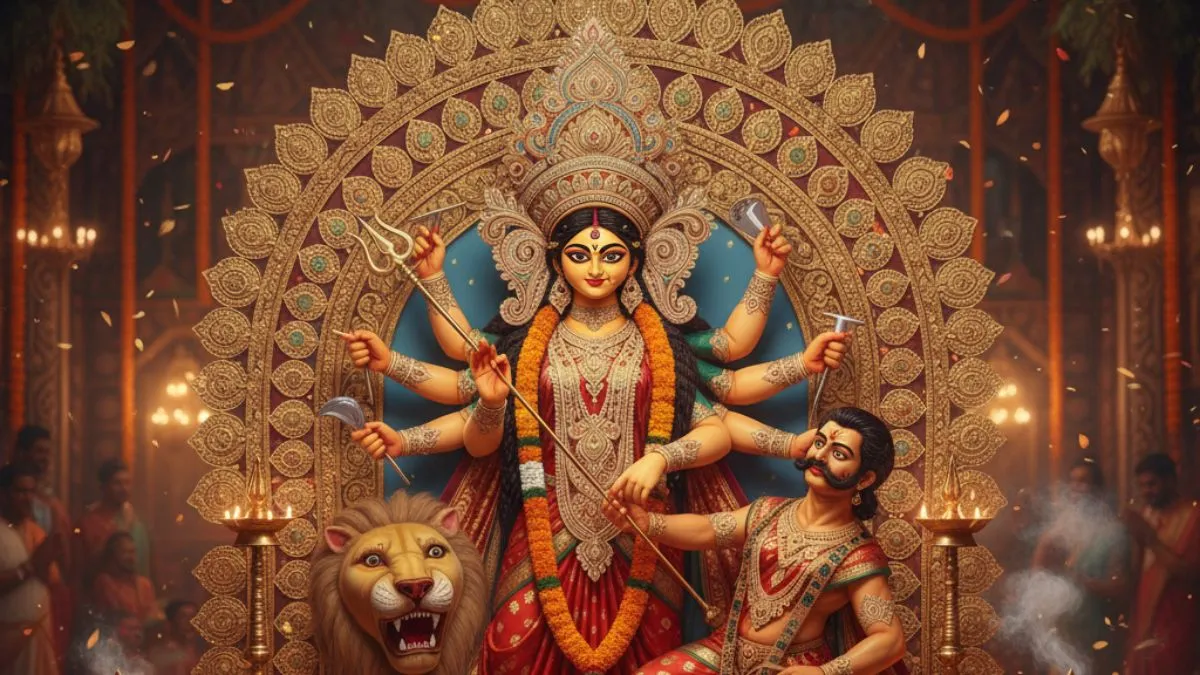
Durga Puja is one of the most awaited festivals of Bengal and across India. In 2025, the second day of Durga Puja, Maha Shashthi, will be observed on Sunday, September 28, 2025 (Ashshin 11, 1432). This day marks the formal beginning of the grand celebrations of Durga Puja 2025, filling the air with devotion, joy, and cultural vibrance.
On Shashthi, Goddess Durga is welcomed with rituals like Kalparambha, Akal Bodhon, Amantran, and Adhivas. It is the day when the Goddess is ceremonially invited to descend into our homes and hearts.
Also Read: Durga Puja 2025 in Delhi's CR Park: Pandal themes, mela vibes and metro guide
When is Durga Shashthi 2025 and what are the puja timings?
- Durga Shashthi 2025 Date: Sunday, September 28, 2025
- Tithi: Shashthi
- Main Rituals: Kalparambha, Akal Bodhon, Amantran, and Adhivas
- Best time for invocation: Sanyakal (approx 2 hours 24 minutes before sunset)
The next day, September 29, 2025, will be observed as Kolabou Puja (Navpatrika Puja).
How devotees celebrate Maha Shashthi 2025 rituals
- Kalparambha – This marks the beginning of Durga Puja rituals. In Bengal, Kalparambha is done a day before Kolabou Puja. In other regions, it is equivalent to Bilva Nimantran.
- Amantran (Invitation) – On this day, Goddess Durga is formally invited to reside in the Bilva tree or a Kalash.
- Adhivas (Consecration) – The ritual of dwelling the spirit of the Goddess into the Bilva tree or Kalash is called Adhivas.
- Akal Bodhon – The special invocation of Goddess Durga, which means “untimely invocation.”
The story behind Akal Bodhon in Durga Puja
Traditionally, Goddess Durga was worshipped in the Chaitra month of the Hindu calendar. Over time, however, the Sharad Navratri during Ashwin became more popular.
According to belief, it was Lord Rama who performed Akal Bodhon of Goddess Durga before his battle with Ravana. Rama invoked the Goddess in the month of Ashwin to seek her blessings for victory. Since then, the tradition of Sharad Navratri and Durga Puja began.
Shashthi 2025 and its connection with Navratri traditions
- In Bengal, Durga Shashthi 2025 is celebrated with grandeur as part of the five-day Durga Puja.
- Kalparambha during Durga Puja is symbolically the same as Ghatasthapana or Kalashsthapana in Navratri, which is performed on Pratipada.
- Hindu scriptures also mention alternative forms of Navratri - 7 days, 5 days, 3 days, 2 days, or even 1 day worship, apart from the full 9 days.
- Thus, Maha Shashthi 2025 connects the traditions of Bengal’s Durga Puja with the broader celebrations of Navratri across India.
Why Durga Shashthi 2025 is so special for devotees
- Shashthi marks the arrival of Goddess Durga into her earthly abode.
- It symbolises the beginning of battle between good and evil, echoing the time when Lord Rama invoked her strength.
- The rituals of this day remind devotees to invite the Goddess not just into their homes, but also into their lives, with purity, devotion, and gratitude.
Also Read: Durga Puja 2025 date and puja days: From Shashthi to Vijayadashami explained
On Durga Shashthi 2025, families across Bengal and beyond will gather for rituals, prayers, and cultural festivities, ushering in the divine presence of Maa Durga. It is a day of faith, unity, and devotion, setting the tone for the grand celebrations ahead.
Frequently Asked Questions on Durga Shashthi 2025
Q1. When is Durga Shashthi 2025?
Durga Shashthi 2025 will be celebrated on Sunday, 28 September 2025. It marks the second day of Durga Puja, also called Maha Shashthi.
Q2. What rituals are performed on Maha Shashthi?
On Maha Shashthi, rituals like Kalparambha, Amantran, Adhivas, and Akal Bodhon are performed to welcome Goddess Durga.
Q3. Why is Durga Shashthi called Akal Bodhon?
Shashthi is called Akal Bodhon because Lord Rama first invoked Maa Durga in the month of Ashwin, before fighting Ravana. This began the tradition of Durga Puja in Sharad Navratri.
Q4. How is Durga Shashthi connected to Navratri?
In Bengal, Maha Shashthi marks the start of Durga Puja, while in other states the same spirit is celebrated as Ghatasthapana or Kalashsthapana on Navratri’s first day.
