
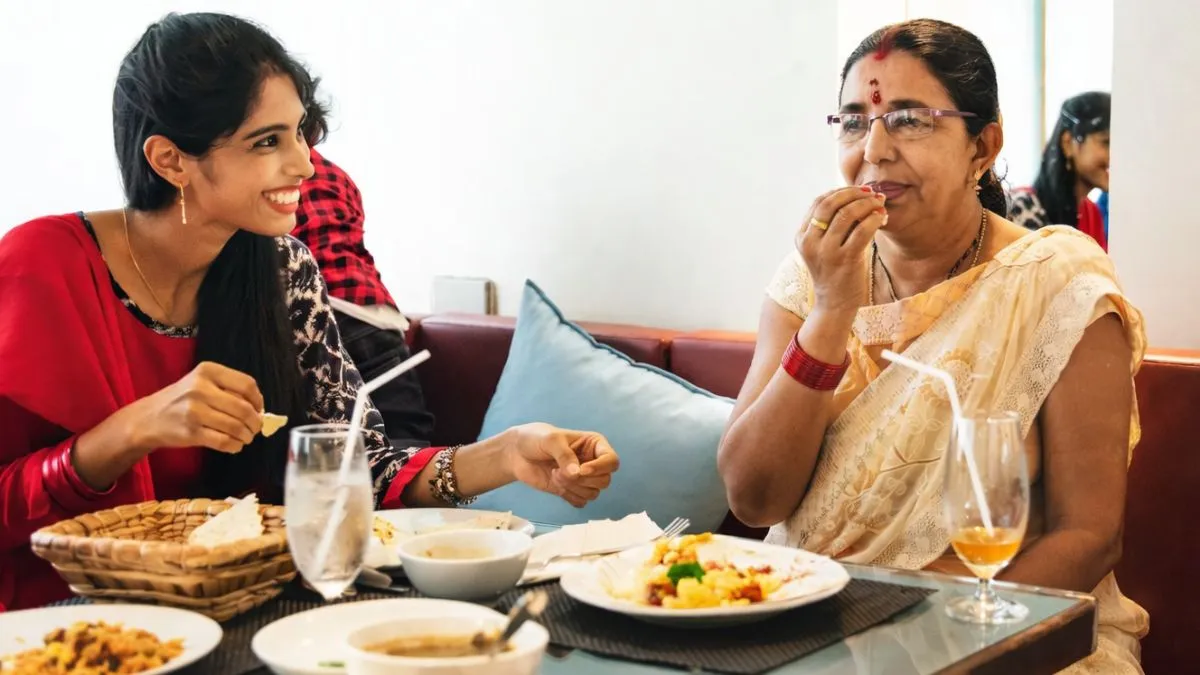
Indians are known all over the world for their love of food. However, have you considered that the same food is turning into a menace for you? Our obsession with 'eating like a king' has led to excessive calorie intake.
In a recent post on X (formerly Twitter), Kamal Saini, nutritionist and health coach, pointed out a common pattern he sees across Indian households. “Most Indians eat breakfast like a king, lunch like a king, and dinner like a king,” he wrote. “How can you expect to become fit following this kind of eating?”
A look at a typical Indian day on the plate
Saini breaks down what many people consider a regular, home-cooked day. Breakfast often includes two to three aloo parathas with butter and tea, adding up to roughly 700–800 calories.
Lunch is usually a full spread of four chapatis, some rice, dal, sabzi and papad, easily crossing 800 calories. Evening snacks tend to be tea with a full packet of biscuits and namkeen, contributing another 700–800 calories.
Dinner often mirrors lunch, adding another 800 calories.
Late-night snacking, usually sweets or savoury items eaten casually, adds 600–800 more calories. Without counting frequent indulgences like samosas, bhature, gol gappe or chocolates, the total daily intake can reach around 4,000 calories.
Where the imbalance begins
For most men, the recommended daily calorie intake for good health is around 2,000–2,500 calories, while for most women it ranges between 1,800–2,200 calories.
This means many people are consuming 1,500 extra calories every single day, often without adequate physical activity to burn them.
“Excess calories don’t disappear,” Saini warns. “They turn into stored fat over time.”
Why is this pattern especially risky
Eating heavy meals consistently throughout the day keeps insulin levels high, slows fat burning and overloads digestion. Over months and years, this increases the risk of obesity, fatty liver, diabetes, heart disease and joint problems.
What makes it more concerning is that most of this food is perceived as “ghar ka khana”, which leads people to underestimate its calorie load.
It’s not about starving, it’s about structure.
The solution is not extreme dieting or skipping meals. It is about balance.
Nutritionists suggest:
- Lighter, protein-rich breakfasts
- Balanced lunches with controlled portions of rice and roti
- Smart snacking instead of biscuits and namkeen
- Lighter dinners eaten earlier in the evening
- Cutting down late-night eating
Combined with regular movement, these changes can significantly improve health without drastic restrictions.
Longevity and fitness are not built on overeating, even if the food is homemade. Eating like a king all day, without activity, slowly adds metabolic stress to the body. As Saini puts it plainly, “Do something about it if you want to live long and healthy.” Sometimes, the most powerful health advice is also the simplest: eat enough, not excess.
Also read: Popcorn, yoghurt and more: AIIMS gastroenterologist rates snacks for gut health
