
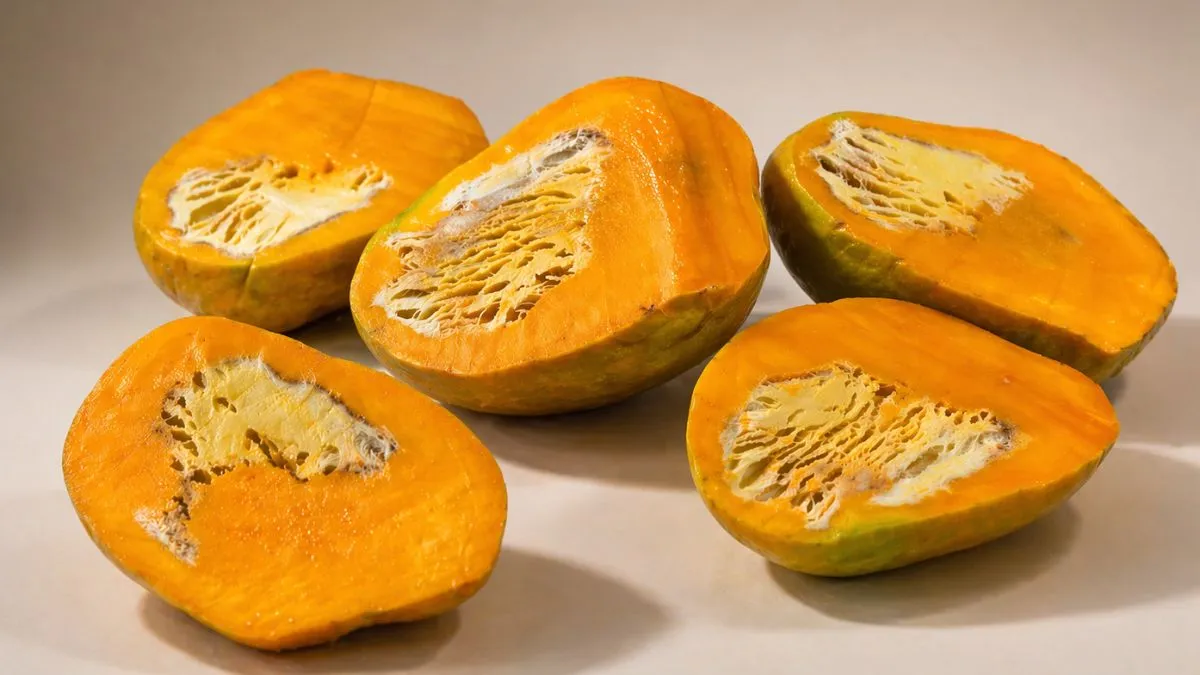
You cut open a mango expecting that rich golden pulp. Soft, sweet, exactly how it should be. But sometimes, it is not. The inside looks pale. White patches. Firm. Almost raw. The taste is off too. Flat. Dry.
This is not random spoilage. And it is not about the fruit being unripe from the outside. What you are seeing is called spongy tissue. It develops inside the mango, even when everything on the outside looks perfectly fine.
What spongy tissue in mangoes actually means
Spongy tissue shows up as white or pale sections inside the fruit. These parts feel harder than the rest of the pulp and lack the usual sweetness.
It happens because the ripening process does not move evenly through the fruit. Some areas stop developing midway. Sugars do not spread properly. So while one part ripens, another stays underdeveloped.
The result is a mango that looks ready from the outside but does not taste right when you cut into it.
Why this happens inside the fruit
The main trigger here is heat.
Mangoes need stable conditions to ripen properly. When temperatures rise too high, especially close to 40°C, the internal system of the fruit starts to break down. The natural ripening process gets disrupted.
Instead of softening evenly, the pulp develops patches where growth slows down or stops. That is where the spongy, white tissue forms.
It is not something that happens after harvesting. It begins while the fruit is still on the tree.
How heat affects the entire crop
This issue rarely comes alone. When temperatures stay high for long periods, multiple things start to shift at the same time:
- Fruits may drop before they are fully developed
- The overall size of mangoes can reduce
- Pollination may get affected, which impacts fruit formation
- The internal quality of the fruit declines
Even when the outer appearance seems fine, the inside may not match.
What this means for yield and quality
When spongy tissue becomes common, it directly affects how much of the crop can actually be used.
Fruits with internal defects are difficult to sell. The texture is off. The taste is not reliable. Even if prices in the market go up, it does not fully cover the loss if the fruit itself cannot be sold.
The impact is not just visual. It is practical. It affects both quality and quantity at the same time.
Is it safe to eat?
Yes, it is generally safe to eat.
But the experience is different. The flavour is weaker. The texture feels uneven. It is not the kind of mango most people expect.
Why it matters beyond just one fruit
Mango cultivation supports a large agricultural ecosystem. Many people depend on it for income.
When internal issues like spongy tissue increase, the effect goes beyond a single fruit. It influences the entire cycle. Yield drops. Quality drops. And with that, income becomes uncertain.
It starts small. Just a white patch inside. But it points to something much bigger happening underneath.
ALSO READ: 5-minute mango fixes to satisfy your summer cravings
