
Prime Minister Narendra Modi hosted a gala dinner for leaders and delegates at Bharat Mandapam in New Delhi on September 12, as India hosts the 18th BRICS Summit. The dinner menu featured a selection of Indian dishes, including Khandvi Mille-Feuille and Khumb Galouti as starters, followed by Paneer Lababdar, Gucchi Marmik, Carrot Bean Poriyal, Thakkali Belle Saaru, Millet Pulao and Beetroot Raita.
The dessert menu included Old Delhi Fruit Cream with Jalebi and Shahtoot Phirni, a slow-cooked pudding of milk and rice topped with sweet mulberries and gold leaf. But among the familiar dishes on the menu, one detail in the description of Paneer Lababdar stands out: the gravy was made with shallots and tomato, rather than the regular onions that are commonly used in the dish.
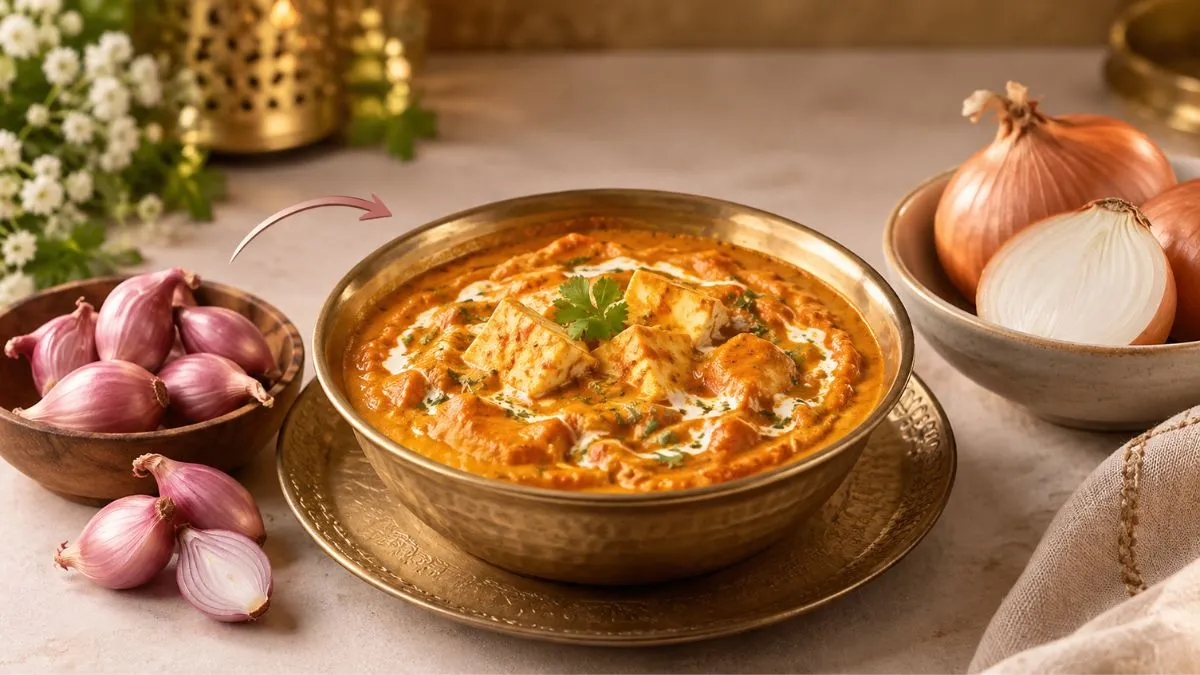
Paneer Lababdar, a familiar dish on the BRICS menu
The menu describes Paneer Lababdar as "soft cottage cheese cubes simmered in a rich gravy of shallots and tomato". Paneer Lababdar is normally prepared with an onion and tomato-based gravy, making the use of shallots an interesting variation for the BRICS dinner.
The difference may sound minor, but onions and shallots do not have exactly the same flavour. Both belong to the same Allium family, alongside ingredients such as garlic and leeks, but shallots are generally known for their milder and sweeter flavour.
That means the choice of shallots can subtly change the character of the gravy without changing the dish itself. The paneer, tomato and spices remain central to Paneer Lababdar, but the onion component can be less pronounced.
How are shallots different from onions?
One obvious difference is size and appearance. Shallots are generally smaller and often grow in clusters of bulbs, while the common bulb onion produces a single, larger bulb. Shallots also tend to have a more delicate texture and flavour.
There is a difference in taste too. Shallots are generally milder than regular onions when raw and develop a sweeter flavour when cooked. This makes them useful in dishes where a gentler onion flavour is preferred.
The flavour is not identical across all shallots either. Different varieties can vary in their shape, colour, size, flavour and sweetness. Regular onions also vary considerably, with some varieties being mild and sweet while others are much stronger and more pungent.
So, saying that every shallot will always taste sweeter or milder than every onion would be too simplistic. The variety matters. But as a broad culinary distinction, shallots are known for their gentler, sweeter profile.
What can shallots do to Paneer Lababdar?
This is where the ingredient becomes particularly relevant to the BRICS menu.
A conventional onion-and-tomato gravy can have a more prominent onion flavour, depending on the variety and how it is cooked. Using shallots instead can bring a milder onion character and additional sweetness to the base. Shallots also become sweeter as they cook, which can help create a softer flavour in the finished gravy.
In a rich Paneer Lababdar gravy, that could create a more rounded flavour profile, allowing the tomato and spices to remain noticeable without the onion component being as assertive. The result would not necessarily be dramatically different, but the balance can be more delicate.
Shallots can also be useful when a recipe calls for a smaller quantity of onion flavour without wanting the sharper character that some onions bring. Their relatively subtle taste means they can blend into a gravy rather than dominating it.
Why the shallot detail stands out on the dinner menu
The interesting part is not that shallots are an exotic ingredient. They are closely related to onions and can be used in many of the same preparations. The distinction lies in the flavour they bring.
For the BRICS gala dinner, the menu took a familiar Indian dish and specified shallots and tomato as the base of its gravy. That gives the Paneer Lababdar a subtle point of difference from the more familiar onion-and-tomato preparation.
It is also consistent with the broader menu, which featured recognisable Indian dishes alongside more distinctive preparations and ingredients. Paneer Lababdar was served alongside Gucchi Marmik, Millet Pulao and Beetroot Raita, while the dessert selection included Old Delhi Fruit Cream with Jalebi and Shahtoot Phirni.
So while the BRICS menu does not explain why the chefs chose shallots, the ingredient itself tells us something about the version of Paneer Lababdar served at the dinner: it used a milder, sweeter member of the onion family in place of the more conventional onion base, potentially giving the gravy a softer and more rounded flavour.
ALSO READ:
BRICS Summit 2026: Paneer Lababdar, Millet Pulao and Shahtoot Phirni on PM Modi's dinner menu