
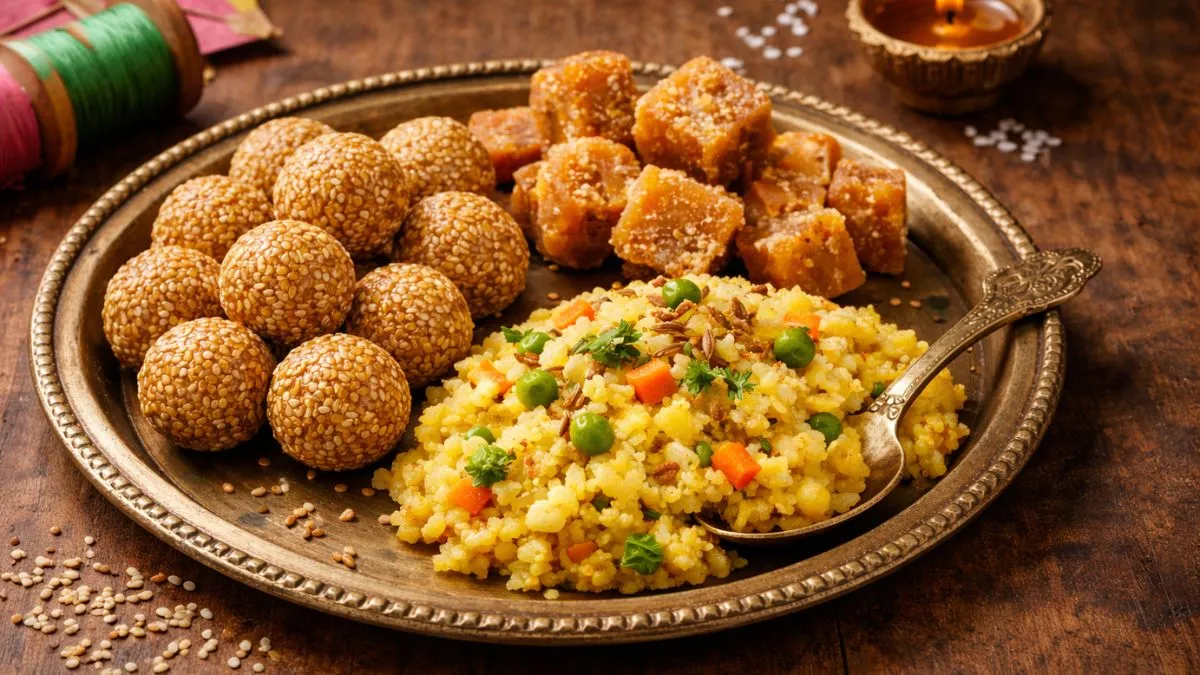
Makar Sankranti is one of those festivals where the food quietly does most of the talking. There are rituals, yes. And dates and timings. But for many people, the real memory sits on the plate. Simple things. Familiar tastes. Food that shows up every year, without fail.
Til, jaggery, and khichdi may look like everyday ingredients, but on Makar Sankranti, they carry meaning. Not loud symbolism. Nothing dramatic. Just ideas that have travelled through kitchens and conversations for generations. Often without being explained.
Why til is eaten on Makar Sankranti
Til, or sesame seeds, are small. Easy to miss. But they are central to Makar Sankranti food traditions across regions. One reason is practical. Til generates heat in the body, which matters in the middle of winter. But the meaning goes beyond that.
Sesame is often linked to protection and continuity. Something about its ability to last. To endure. In many homes, til is shared with the idea of staying connected. You eat together. You give it away. You keep relationships warm when the season is cold. Quiet symbolism. Nothing fancy.
Why jaggery is important on Makar Sankranti
Jaggery, or gur, usually follows til. Rarely alone. That pairing itself says something. Jaggery stands for sweetness, not just in taste, but in behaviour. The old idea is simple. Speak sweetly. Think kindly. Especially as the year moves forward.
On Makar Sankranti, jaggery is meant to soften things. Conversations. Grudges. Even moods. It reminds people to carry warmth into their words. A gentle reset. One that does not require effort, just awareness.
Significance of khichdi on Makar Sankranti
Khichdi appears on Makar Sankranti tables in many forms. Plain. Nourishing. Easy to digest. It is food without excess. And that is exactly the point.
Khichdi represents balance. Rice and lentils together. Enough, not more. It is also closely tied to charity on this day. Many people donate khichdi or its ingredients. The idea is to keep life simple and share what you have. Especially at a time linked to harvest and renewal.
ALSO READ: Magh Mela 2026 second snan on Makar Sankranti: Date, rituals and significance
