
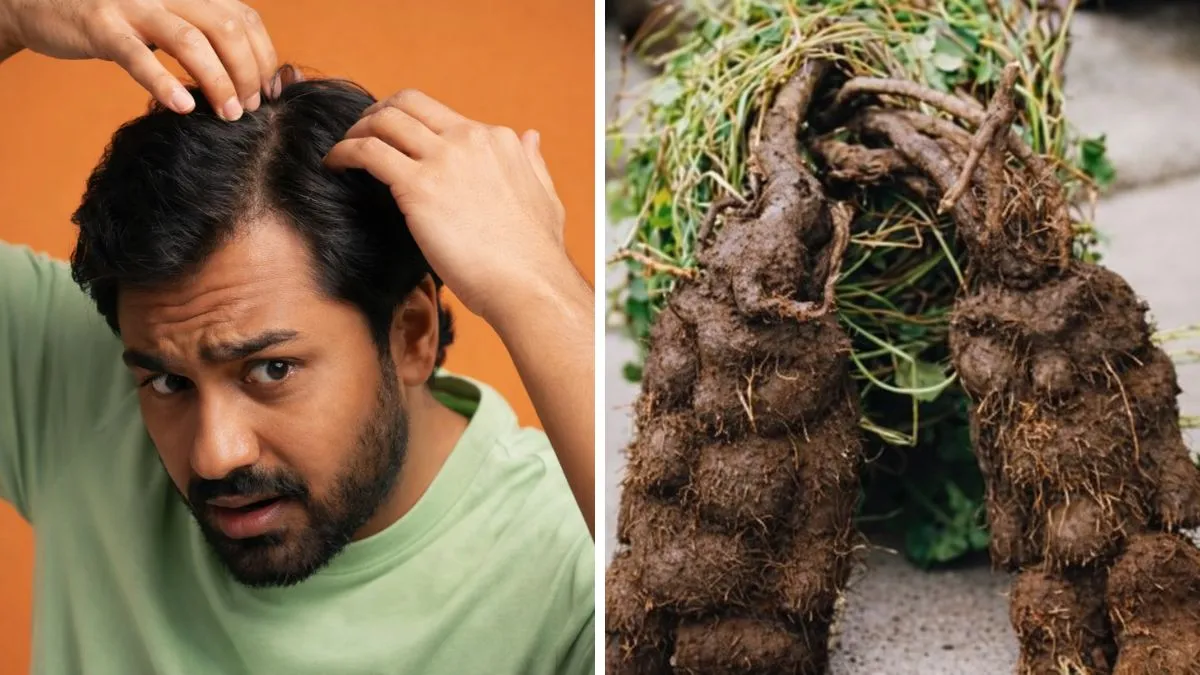
Hair loss fixes come and go, but every now and then, something with serious historical backing circles back into the spotlight. This time, it’s Polygonum multiflorum. A medicinal root used for centuries in traditional Chinese medicine, long associated with restoring darker, healthier hair, is now getting a second look from modern researchers.
A recent ScienceDaily report suggests the herb may work on several biological fronts at once. From blocking hair-shrinking hormones to supporting follicle health and boosting scalp circulation, it’s being studied as a multi-pathway approach to tackling hair thinning.
Polygonum multiflorum and hair regrowth: How the ancient root is being studied for pattern hair loss
Most of the conversation around the root ties back to androgenetic alopecia, the pattern hair loss seen across both men and women, and one that affects millions worldwide.
Conventional treatments such as finasteride and minoxidil still dominate prescriptions. They’re clinically backed, widely available, and often effective. But concerns around side effects, along with the reality of long-term use, have steadily nudged people towards plant-led or integrative alternatives.
What’s interesting about Polygonum multiflorum is that it doesn’t appear to operate through just one biological switch.
Research highlighted in the ScienceDaily report suggests the herb may:
- Temper the activity of dihydrotestosterone (DHT), the hormone strongly linked to follicle miniaturisation
- Shield follicle cells from early damage and programmed cell death
- Nudge growth signalling routes like Wnt and Shh back into action
- Encourage better scalp circulation, improving the supply of oxygen and nutrients where follicles need it most
It’s this multi-layered mode of action that’s fuelling renewed scientific curiosity around its hair regrowth potential.
Ancient hair regrowth remedies meet modern clinical research
The renewed attention isn’t just lab-based curiosity. Researchers are also revisiting historical medical texts.
Han Bixian, lead author of the review published in the Journal of Holistic Integrative Pharmacy, explained the overlap between traditional records and modern biology.
“Our analysis bridges ancient wisdom and modern science. Historical texts from the Tang Dynasty onward describe effects that align with today’s understanding of hair biology. Modern studies now confirm that this isn’t folklore; it’s pharmacology.”
The review pulled from historical documentation, clinical observations, and laboratory data to map how the root may influence the hair cycle beyond surface-level effects.
Can Polygonum multiflorum actively support hair regrowth, not just slow hair fall?
One of the more compelling angles researchers are exploring is whether the root’s role extends beyond damage control.
Rather than simply slowing the pace of hair fall, there are indications it may help restart dormant growth activity. By interacting with multiple growth factors and signalling networks within the hair cycle, the herb could, in theory, support fuller regrowth outcomes.
That broader biological reach is what sets it apart from therapies designed to target just one pathway at a time.
That wider scope is part of why it’s being positioned as a complementary or alternative therapy in integrative hair care research.
Safety, processing methods and what studies say so far about long-term use
The ScienceDaily report also highlights an important caveat. Preparation matters.
In traditional practice, Polygonum multiflorum undergoes specific processing before use, a step believed to influence both safety and efficacy. When handled this way, existing observations suggest it is generally well tolerated.
That may appeal to individuals cautious about side effects sometimes associated with standard pharmaceutical options, including scalp irritation or sexual health concerns.
Still, researchers are careful not to overstate the case. Larger, well-structured clinical trials are needed to pin down effectiveness, dosage ranges, and long-term safety with greater certainty.
What the current review does underline, though, is the value of examining traditional remedies through a scientific lens. In doing so, long-standing herbal knowledge can occasionally surface new therapeutic directions, including for widespread concerns like androgenetic alopecia and hair regrowth support.
ALSO READ: Hair fall isn’t always bad news: Dermatologist explains when it’s completely normal
