
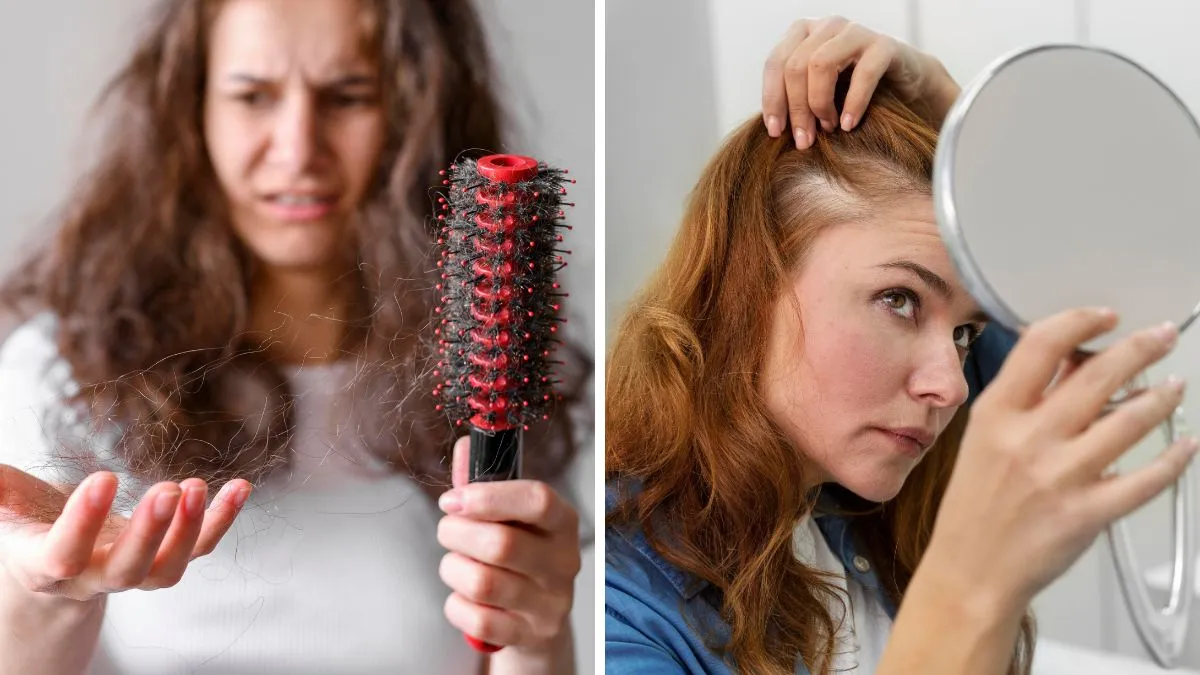
For many women, hair fall after 40 doesn’t announce itself loudly. It shows up slowly, more strands in the shower drain, a thinner ponytail, a scalp that feels more visible than before. What’s confusing is knowing whether this is just ageing, or a sign that something deeper is going on.
According to Dr Jangid, MD, Ex-Dermatologist at AIIMS, New Delhi, award winner with over 12 years of experience in advanced hair treatments, hair fall is rarely random.
“Hair loss is basically a symptom, a sign of an underlying problem,” Dr Jangid explains. “Like when someone has a fever, you don’t just focus on the fever itself, you try to find out what’s causing it.”
Why hair fall becomes more noticeable after 40
One of the biggest reasons hair falls with age is a disruption in the hair growth cycle. Normally, hair grows for two to three years before shedding. But with age, hormonal shifts and deficiencies can shorten this phase dramatically.
“What happens is the growth phase that should normally last two to three years starts lasting only about six months,” says Dr Jangid. “So hair falls faster, becomes thinner, and doesn’t grow back the way it used to.”
In women, this often appears as overall thinning rather than bald patches. Female pattern hair loss is hormonally driven and tends to affect the crown and parting, making hair look less dense over time.
When hair fall is a warning sign
Some hair shedding is normal. “Losing about 100 hairs a day is considered normal hair fall,” Dr Jangid says. “But if you’re losing more than that consistently, it’s abnormal and could be a sign of some underlying illness.”
After 40, common triggers include iron deficiency, vitamin B12 deficiency, stress and metabolic changes. “Skin and hair are like an internal mirror of your body,” he notes. “If hair fall is excessive, it means something inside needs to be fixed.”
This is why treating hair fall without investigating the cause often fails. “If a woman has iron deficiency, you don’t need special hair treatment,” Dr Jangid explains. “Just correct the deficiency and the hair fall improves.”
Temporary vs permanent hair loss
Not all hair loss after 40 is permanent. Stress-induced shedding, illness-related hair fall and hormonal fluctuations can all cause temporary loss. “Conditions like stress-related hair loss usually last two to three months and then gradually get better,” says Dr Jangid.
Permanent hair loss, on the other hand, is usually linked to hormones or conditions that damage the hair root. “Male pattern and female pattern baldness are caused by hormones and are considered permanent hair loss,” he explains. The key difference lies in early diagnosis. The sooner the cause is identified, the more control women have over progression.
Can hair fall after 40 be controlled?
Yes, but expectations need to be realistic. “Hair fall is just a symptom,” Dr Jangid says. “Treatment works only when you treat the reason behind it.”
Medical treatments like minoxidil can help in stress-related hair fall and early thinning, but must be used under medical guidance. “Although it’s available over the counter, the doctor needs to decide how much to apply, how often, and for how long,” he says.
PRP therapy can support weakened hair roots when follicles are still active. “We take platelets from your blood and inject the growth factors into the hair roots to stimulate repair,” Dr Jangid explains, adding that studies show positive results in about 80–85% of cases, though responses vary.
What won’t fix the problem
One of the biggest myths women fall for is product-led solutions. “No shampoo has been made that actually makes your hair grow,” Dr Jangid states clearly. “Shampoo is for the scalp, not for hair growth.”
Oils, serums and home remedies may improve texture or frizz, but they don’t reverse hormonal or deficiency-related hair loss. “Anything we apply on the skin doesn’t penetrate that well,” he explains.
Hair fall after 40 is common, but it’s not something women have to silently accept. Understanding whether the cause is temporary, hormonal or deficiency-related makes all the difference. As Dr Jangid puts it simply: “Hair fall doesn’t happen without a cause.” And once that cause is addressed, control, not panic, becomes possible.
Also read: PRP, minoxidil, hair transplant: Who actually needs what, according to a specialist
