
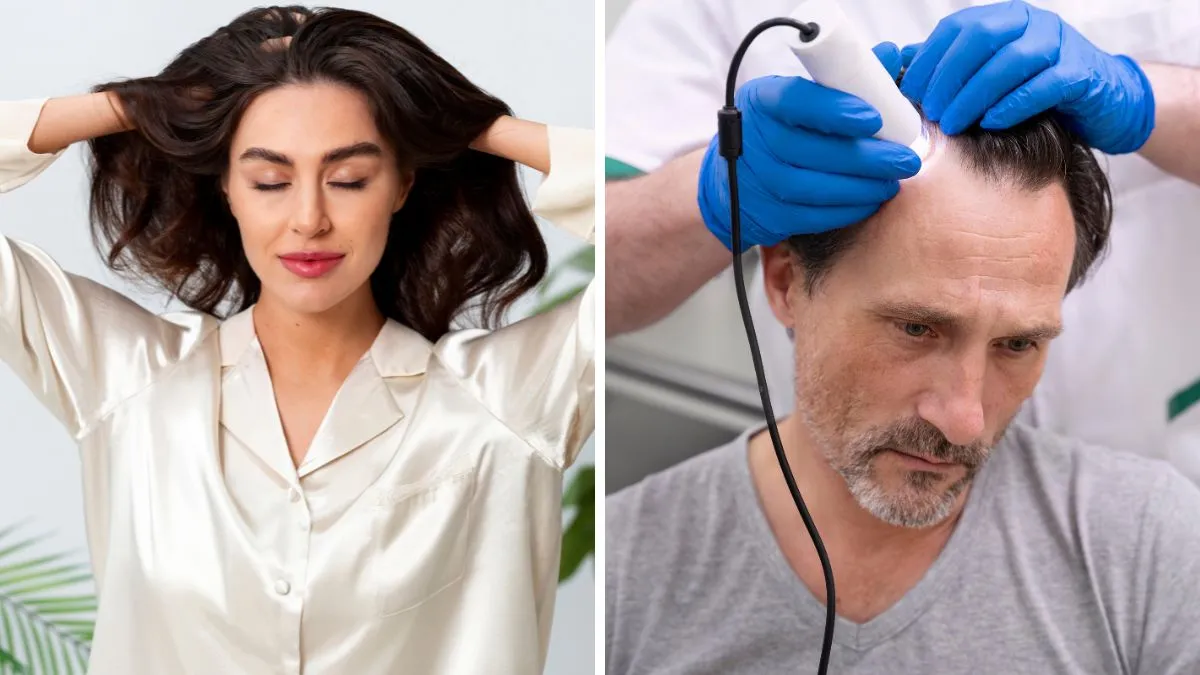
Hair loss is no longer a hushed concern reserved for midlife. These days, dermatology clinics are seeing teenagers, twenty-somethings and new parents all asking the same anxious question: What treatment do I actually need, if any?
According to Dr Jangid, MD, Ex-Dermatologist at AIIMS, New Delhi, award winner and a specialist with over 12 years of experience in advanced hair treatments, the biggest mistake people make is jumping to solutions before understanding the problem. “Hair fall is a symptom,” he explains. “Until you know the cause, no treatment will truly work.”
Step one: Is it hair fall or hair loss?
Dr Jangid draws a crucial distinction that many people miss. Hair fall refers to excessive daily shedding, typically more than 100 strands a day. While hair loss means a visible reduction in hair density. “Normal hair goes through a cycle,” he says. “It grows for two to three years, rests, and then falls. If that cycle is disturbed by stress, deficiency or hormones, hair fall increases, and over time that leads to thinning or baldness.”
This is why treatments aren’t interchangeable. Stress-related shedding, hormonal baldness and patchy autoimmune hair loss are entirely different conditions, and they need different approaches.
When minoxidil makes sense
Minoxidil is often the first name people hear, and they misuse it. While it’s available over the counter, Dr Jangid stresses it should still be used under medical guidance.“If your hair fall is stress-induced or related to early thinning, minoxidil can help reduce shedding and support regrowth,” he says. However, it’s not a one-time fix. Dosage, concentration and duration matter, and stopping abruptly can reverse gains.
Crucially, minoxidil won’t work if the underlying issue is untreated, for example, iron deficiency or vitamin B12 deficiency. “You can apply everything,” he notes, “but unless the root cause is corrected, results will be limited.”
Where PRP fits in
PRP (Platelet-Rich Plasma) therapy is often misunderstood as a miracle procedure. In reality, it’s a supportive treatment, most effective when hair follicles are still alive but weakened. “We use your own blood,” explains Dr Jangid. “Platelets contain growth factors. When injected into the scalp, they signal your body to repair and strengthen the hair roots.”
PRP is typically recommended after medicines like minoxidil, particularly in male and female pattern baldness. Studies suggest a positive response in around 80–85% of patients, though results vary. It’s not painless, but it’s tolerable, and consistency matters more than intensity.
When only a hair transplant will work
A hair transplant is never the first option, and shouldn’t be treated like an emergency. “If the scalp area is completely bald, no medicine or PRP can regrow hair there,” says Dr Jangid. “That’s when transplant becomes the only solution.”
Eligibility depends on age (usually 24–25+), medical fitness and stable hair loss for at least three to six months. Hormone-driven hair loss, especially in men, follows predictable patterns. Once follicles are gone, they don’t come back.
Done well, a transplant shouldn’t look obvious. “Hair transplant is a mix of art and science,” he says. “Designing a natural hairline requires experience. That’s why celebrity transplants look invisible, quality matters.”
What treatment doesn’t fix
One hard truth from the consultation: shampoos, oils and serums don’t regrow hair. “Shampoo is for the scalp, not hair growth,” Dr Jangid clarifies. Oils can improve texture and frizz, but penetration to the hair root is minimal.
Home remedies like onion juice may help in alopecia areata through mild irritation therapy, but they’re not substitutes for medical treatment. Hair loss isn’t a one-size-fits-all problem, and neither is the solution. Minoxidil supports early thinning, PRP strengthens weakened follicles, and hair transplants restore permanently lost hair. The key is timing, diagnosis and realistic expectations.
As Dr Jangid puts it simply: “Before treating hair, you have to treat the reason behind the hair fall.” And once you do, the right solution becomes surprisingly clear.
Also read: No shampoo can make your hair grow: What shampoos really do and don’t do
