
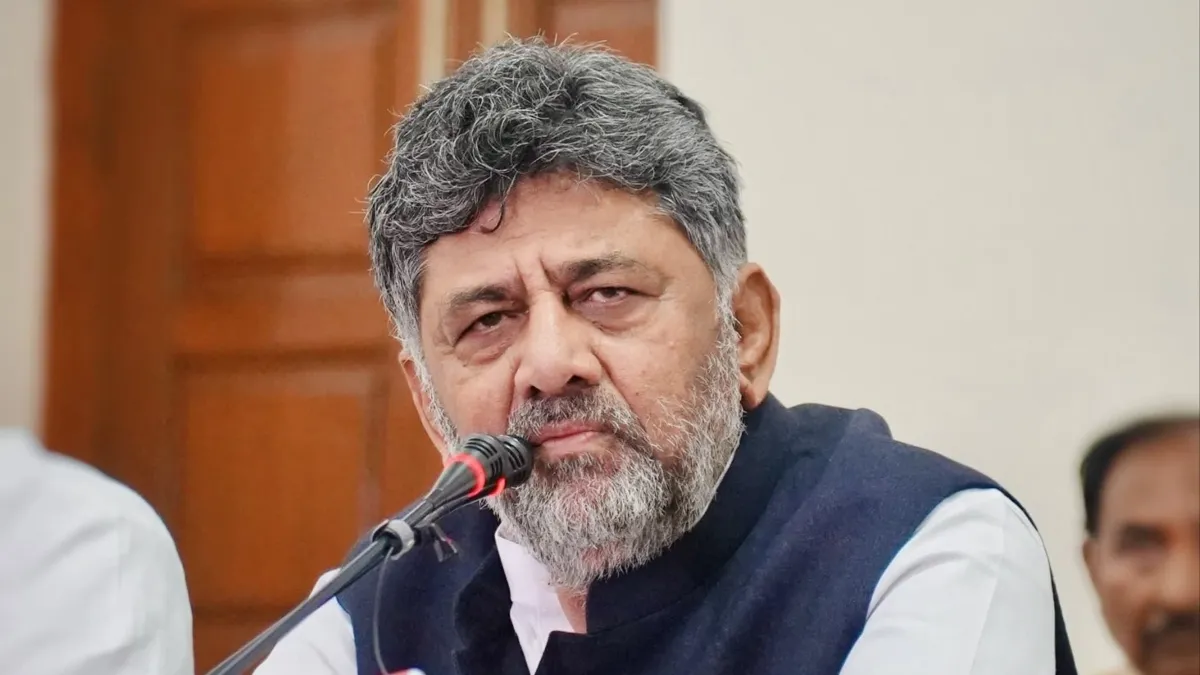
Karnataka Chief Minister DK Shivakumar is pushing ahead with one of the state's most ambitious urban development projects, the Greater Bengaluru Integrated Township at Bidadi, which is being positioned as a long-term solution to Bengaluru's chronic traffic congestion, housing shortage, and uneven urban growth.
What is Bidadi township project?
Spread across 7,481 to 9,640 acres in nine villages of Ramanagara district, around 30-40 kilometres from Bengaluru, the proposed township aims to become India's first AI-powered integrated urban hub. The project is envisioned as a self-sustaining "work-live-play" hub that will draw investments of more than Rs 20,000 crore and generate lakhs of direct and indirect jobs in technology, manufacturing, and allied sectors.
According to project details, over 2,000 acres have been earmarked for AI and innovation zones, with around 1,800 acres set aside for residential layouts, alongside commercial spaces and industrial clusters already anchored by major players such as Toyota Kirloskar.
Planners have incorporated sustainability measures, including 950 acres of green buffers and the rejuvenation of water bodies like Byramangala Lake. Funding includes borrowings of approximately Rs 12,511 crore, HUDCO loans of about Rs 9,011 crore, internal contributions from the Bengaluru Development Authority, and public-private partnerships. Connectivity is a key focus, with a proposed 40-km network linking major roads and rail systems. Officials say the government will invest an average of Rs 5 crore per acre, with the township targeted for phased completion over the next three years.
How could it ease Bengaluru's traffic and housing crisis?
Bengaluru's metropolitan population has swelled to between 14 and 14.8 million, creating intense pressure on infrastructure. Commuters routinely lose several hours daily in traffic snarls, while housing shortages, water stress across hundreds of zones, and depleting groundwater levels continue to mount.
By establishing a second central business district along the Bengaluru-Mysuru corridor, authorities hope to decentralise economic activity, ease migration into the core city and open up opportunities in AI, advanced manufacturing, and services. Government sources emphasise local skilling programs and a locals-first hiring approach, aiming to help rural communities transition while preserving Bengaluru’s livability. The initiative builds on Bidadi's existing industrial strengths and fits into broader national efforts to manage rapid urbanisation.
HD Kumaraswamy architect of concept
Chief Minister Shivakumar has maintained that the proposed Bidadi integrated township is not a new project but the continuation of a plan that has been under consideration for nearly two decades.
Addressing the media, Shivakumar said notifications for integrated townships, including the Bidadi project, were first issued in 2006 during the tenure of then Chief Minister HD Kumaraswamy. He noted that subsequent BJP governments also advanced the project through land acquisition and allotments, with more than 1,000 acres reportedly allocated through the Karnataka Industrial Areas Development Board (KIADB) in earlier phases.
The Chief Minister has credited Kumaraswamy with conceptualising the project and said the present government is proceeding in accordance with legal requirements.
According to government officials, around 80 per cent of affected landowners have expressed willingness to participate in the project. The state has announced compensation of up to Rs 2.55 crore per acre, along with options for landowners to receive a share of developed residential or commercial land in lieu of acquisition. Other proposed benefits include additional Floor Area Ratio (FAR), developed plots and annual financial assistance during the development period.
The government has issued final notifications for the first phase of the project, covering 518.45 acres across the villages of Kempayyanapalya, Mandalahalli, and Vaderahalli in Ramanagara district. Officials said approximately 754 farmers are affected by the acquisition process, and more than 200 have already applied for compensation.
Authorities have also initiated the process of appointing consultants to prepare a detailed master plan for the township. The plan is expected to address infrastructure requirements, land use, water supply, and other urban development components.
Also Read: Karnataka MLC polls: How Congress benefited from cross-voting by BJP, JD(S); a look at the numbers
Also Read: Congress dominates Karnataka Legislative Council polls, wins 5 of 7 seats; BJP secures 2
