
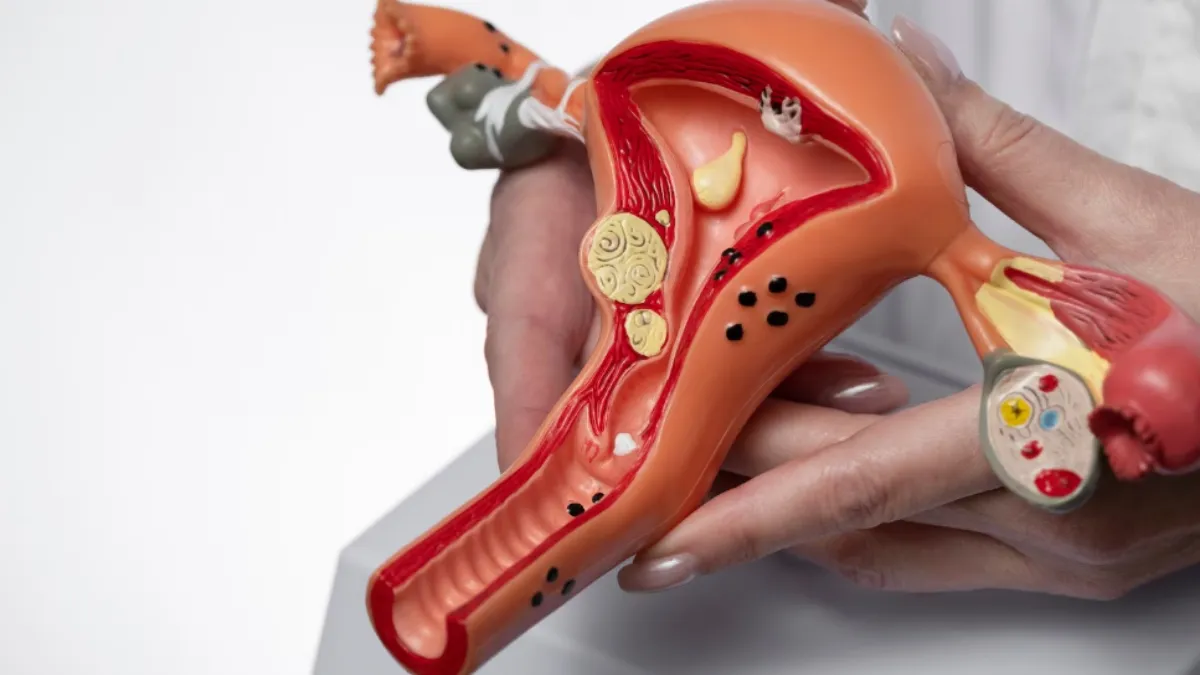
Severe, ongoing pelvic pain in women is routinely treated as a medical mystery — hushed away, dismissed as stress, or attributed to "normal" menstrual cramps. Endometriosis has, in recent times, become a much-needed answer to many of these phenomena.
It's an important advance for women's health: the condition impacts an estimated 42 million Indian women, or about one out of ten women of reproductive age. But with increasing recognition of endometriosis comes a new problem — the presumption that every case of chronic pelvic pain is endometriosis.
When is pelvic pain not endometriosis?
"Endometriosis is a significant offender," declares Dr Smeet, an Endometriosis Specialist, Mayflower Women’s Hospital, Ahmedabad, who sees mostly pelvic-pain patients, "but it's only one element of a complicated puzzle." Ignoring other possible reasons is to shortchange our patients."
In fact, pelvic pain can be due to a multitude of conditions — adenomyosis, in which the uterine lining infiltrates into the muscular wall; pelvic inflammatory disease, due to untreated infections; fibroids, ovarian cysts, pelvic congestion syndrome, or even muscular dysfunction of the pelvic floor.
These situations might be symptomatically similar to endometriosis but necessitate quite different therapies. The issue occurs when such options are not exhaustively researched, and a woman is placed on hormonal pills or prescribed painkillers without doing any additional research. Too many end up living with pain for which they do not get answers — worse still, they are informed that the pain is psychological.
How delayed diagnosis affects women in India
The Silent Cost of Delayed Diagnosis
The Indian Council of Medical Research's 2023 Endometriosis Burden Study reveals the real magnitude of this delay in diagnosis. The typical number of years it takes for an Indian woman to get a correct diagnosis for endometriosis is 7.2 years — more than the international average. During those years, the disease progresses. Pain becomes chronic. Organs can become irreparably damaged. Fertility declines quietly, unobtrusively. And yet, some of these women may not even have endometriosis — they may be suffering from a different, undiagnosed condition that never got the attention it rightfully deserved.
Why women’s pain is still normalised
The causes of these delays are multilayered and systemic. There is a cultural predisposition to normalise women's pain at work here. "Period pain" far too routinely exists as something to be suffered, rather than explored. There is also a stark shortage of specialists: India has only one endometriosis specialist for five million women. General physicians are often not trained to identify the subtle differences between various pelvic disorders, resulting in years of misdiagnosis and ineffective treatment.
The cost of ignoring pelvic pain | Health, career, and mental toll
The impact is not only clinical — it's profoundly economic. The cost of endometriosis, says the ICMR study, is an estimated ₹38,000 to ₹50,000 crores in direct medical expenses each year. Throw in another ₹12,000 to ₹15,000 crores in lost productivity and wages due to lost workdays, and another ₹7,000 to ₹9,000 crores on IVF and other fertility treatments. These aren't mere figures. They mirror women forgoing careers, putting off careers, and suffering emotional trauma — frequently while still being informed that their agony isn't quite enough.
Reclaiming women’s health | What India must do next
Pelvic pain is not a diagnosis — it's a symptom, a message from the body that things are amiss. And that message requires sensitive, sophisticated listening, not guessing. The way forward is to create systems that actually prioritise women's health: multidisciplinary clinics and hospitals where gynaecologists, gastrointestinal (GI) experts, pelvic floor specialists, pain specialists, urologists, and counsellors share space. Clinics where no one quiets a woman with a five-minute visit and a scribble on a prescription slip and a shrug.
Why this story matters to every woman
Indeed, endometriosis is a public health emergency. But it should not be the sole prism by which we see pelvic pain. By narrowing too intensely, we risk erasing the women who don't fit the script — and in doing so, compounding their misery.
The typical diagnostic delay is seven years. That's seven years of being ignored, of pain being normalised, of life suspended. The actual question isn't solely medical — it's political and ethical: how many women might have been treated earlier, if only someone was there to hear them and help them reclaim their lives? It's time we heard. And most importantly, acted.
ALSO READ: What are the specific AQI safety guidelines for pregnant women and the elderly? Doctor explains
