
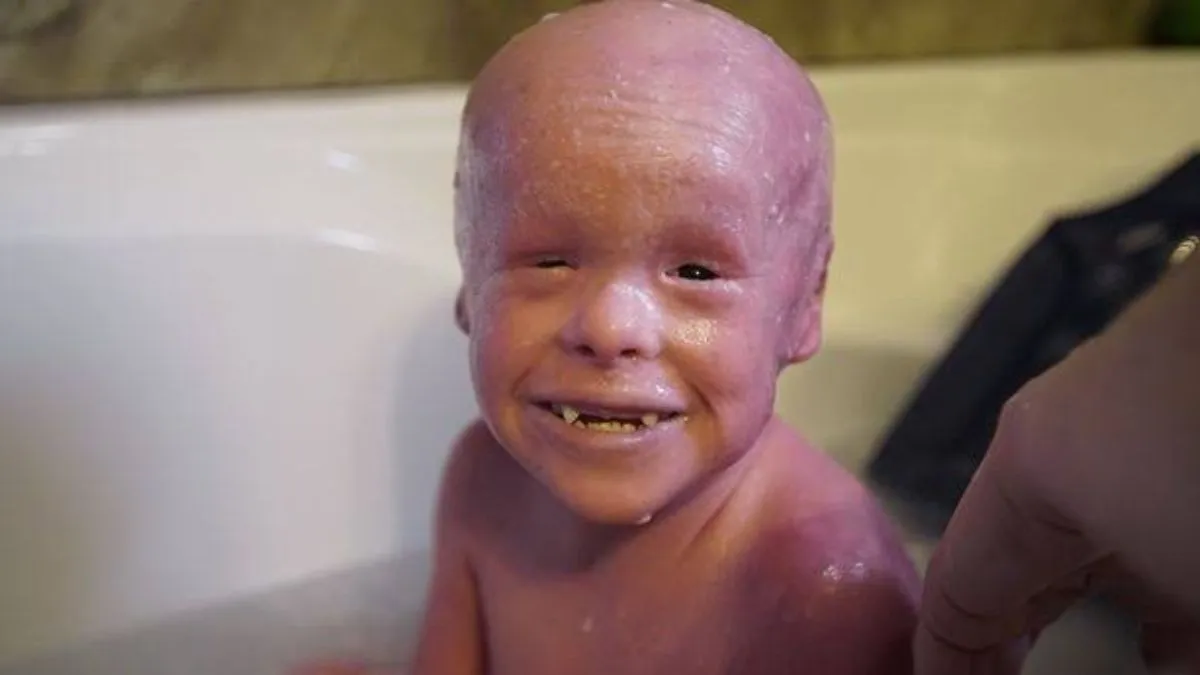
Harlequin Ichthyosis (HI) is one of the rarest and most severe congenital skin disorders in the world. This disorder affects approximately 1 in 300,000 to 500,000 births. For decades, it was considered universally fatal, but advancements in neonatal care and medical treatment are now helping many children survive.
Harlequin Ichthyosis influence the formation of the eyelids, nose, mouth, and ears, and hinders the mobility of the arms and legs. Limited movement of the chest can result in breathing challenges and respiratory failure in infants. Babies affected by this condition also encounter difficulties with feeding.
Also read: What are the causes of premature birth? Know the risk factors
Symptoms and visible signs of Harlequin Ichthyosis
Babies born with Harlequin Ichthyosis have skin that forms thick, armour-like plates separated by deep cracks. This does more than alter the exterior appearance. Those affected will have compromised major functions like movements, respiration, and regulating body temperature.
Features of an affected individual's face may be distorted, with ectropion or the outward turning of eyelids, and eclabium or the outward turning of lips. This worsens the feeding and protection of their corneas.
How is Harlequin Ichthyosis inherited?
The ABCA12 gene is mutated, causing the condition, which is inherited in an autosomal recessive fashion. This gene is essential in the formation of the natural barrier of the skin. In the absence of that barrier, skin becomes fragile and is unable to lock in moisture, thereby exposing the body to infections, along with dehydration.
Also read: Can prenatal diagnosis help in treatment of the condition? Doctor answers
Can Harlequin Ichthyosis be detected before birth?
Harlequin Ichthyosis can be identified before birth, utilising a combination of genetic testing and prenatal ultrasound. Prenatal testing is suggested if there is a family history of the condition or if both parents are known carriers of the gene mutation.
Survival rate of Harlequin Ichthyosis worldwide
A multicenter review of 45 clinical cases published in the National Library of Medicine found that:
- 56% of patients survived beyond infancy, living between 10 months and 25 years.
- 44% of the deaths happened within the first three months, frequently due to sepsis or respiratory complications.
- Oral retinoid therapy for babies significantly increased the rates of survival, in one instance showing 83% survival in treated cases against only 24% of untreated ones.
- Japanese health registries have reported survival rates of up to 81%, depending on early diagnosis and involved neonatal intensive care.
Treatment options and medical care for Harlequin Ichthyosis
- Harlequin Ichthyosis does not have a specific cure, but some modern medical strategies emphasise supportive care and its complications:
- NICU: A controlled, humidified setting to prevent dehydration and infections.
- Topical care: Baths and application of emollients or petroleum jelly are needed to keep the skin soft and to facilitate the shedding of thick scales.
- Retinoid therapy: Either oral isotretinoin or acitretin may decrease skin thickening and provide some improvement in mobility, but requires very close monitoring for long-term side effects.
- Feeding support: Tube feeding may be necessary during the first weeks to ensure sufficient intake.
- Multidisciplinary care: The involvement of dermatologists, ophthalmologists, orthopaedic specialists, and p
Daily challenges and quality of life with Harlequin Ichthyosis
Children who survive infancy often face lifelong hurdles, including chronic skin infections, joint stiffness, eye damage, delayed growth, and social stigma. Despite this, medical literature has documented several cases of survivors living well into their teens and twenties with continuous care.
Emotional and social support for families
Psychological support also plays a critical role. Families and children living with Harlequin Ichthyosis often face immense emotional and social challenges, making counselling and awareness programs essential for improving quality of life.
Harlequin Ichthyosis, regarded once as a condition incompatible with life, might now be considered survivable, and with utmost care, a life worth living. Survival rates have been reported to be close to 50-56% worldwide, with some nations having even better statistics. Improvements in neonatal care, given early treatment with retinoids, and well-organised multidisciplinary care may really help to change the outlook for these rare children.
