
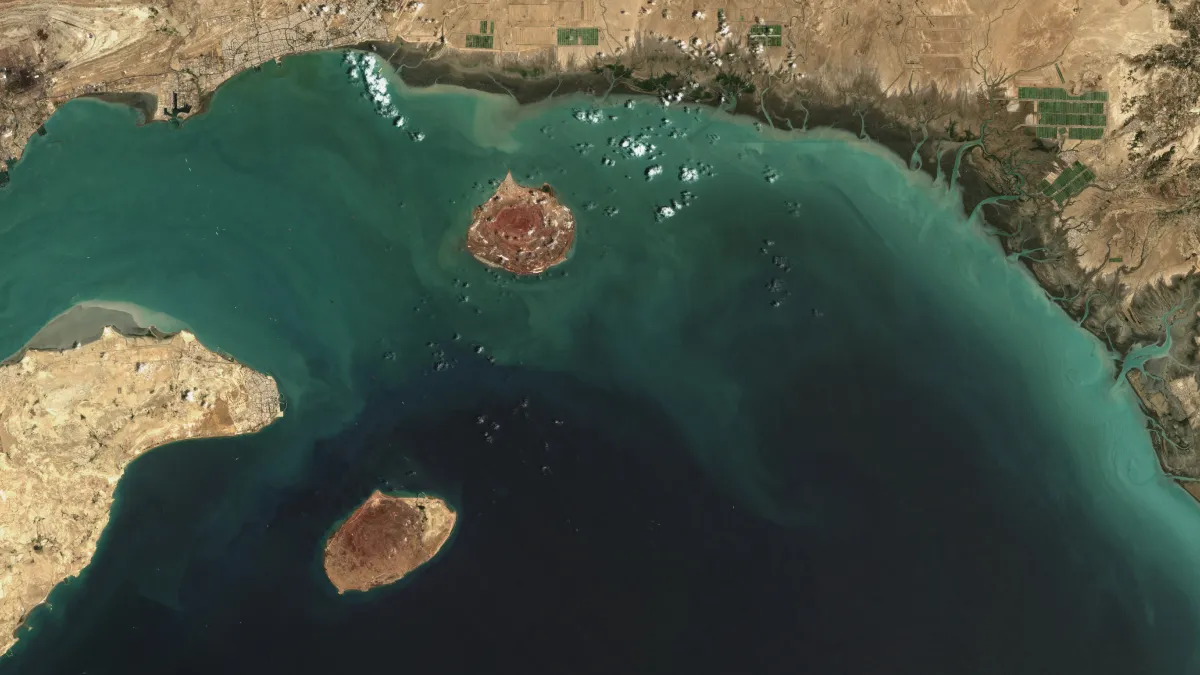
The US-Iran ceasefire appeared to be hanging by a thread once again on Wednesday after a fresh escalation in the Middle East saw the US striking Iran's Qesh Island, prompting retaliatory strikes on American targets in Kuwait and Bahrain with missiles and drones.
The fragile ceasefire between Iran and the United States has come under repeated strain from reciprocal military actions, even as officials from both countries continue efforts to negotiate a broader end to the conflict.
While diplomatic contacts remain ongoing, it is unclear how close the two sides are to reaching an agreement, and fresh hostilities could still derail the talks.
US strike on Qeshm Island
US Central Command said it carried out strikes in Iran on Saturday and Sunday near the city of Geruk and on Qeshm Island, targeting air defence systems, a drone ground control station and two attack drones that it said posed a threat to shipping in the region.
According to CENTCOM, the operation neutralised an active radar installation and a drone command facility allegedly used to coordinate missile attacks against Gulf states and commercial vessels.

Why Qeshm Island is strategically important
Qeshm Island sits at the entrance to the Strait of Hormuz, one of the world's most strategically important maritime chokepoints. The strait handles roughly 20 per cent of global LNG trade and about 25 per cent of seaborne oil shipments, making it critical to international energy markets.
Due to its location, Iran can use military assets stationed on Qeshm to exert significant influence over shipping through the waterway, which serves as the primary maritime export route for countries including Iraq, Kuwait, Bahrain and Qatar, while also carrying a substantial share of the UAE's energy exports.
IRGC's military fortress
Military analysts often describe Qeshm as Iran's "unsinkable aircraft carrier” because of its extensive military infrastructure. The Islamic Revolutionary Guard Corps (IRGC) has developed a network of underground missile facilities and defensive positions across the island, giving it the name Iran's "missile city".
These include subterranean tunnel systems believed to house missile storage and launch sites capable of deploying anti-ship ballistic and cruise missiles. The island also hosts naval facilities used by fast-attack craft equipped with rockets and naval mines, enabling swarm-style tactics designed to challenge larger conventional naval forces operating in the Gulf.
The militarisation of Qeshm has also carried significant consequences for civilians.
During the early stages of the conflict, airstrikes destroyed a major desalination plant on the island, disrupting fresh water supplies to around 30 villages and underscoring the humanitarian costs of fighting in strategically important areas.