
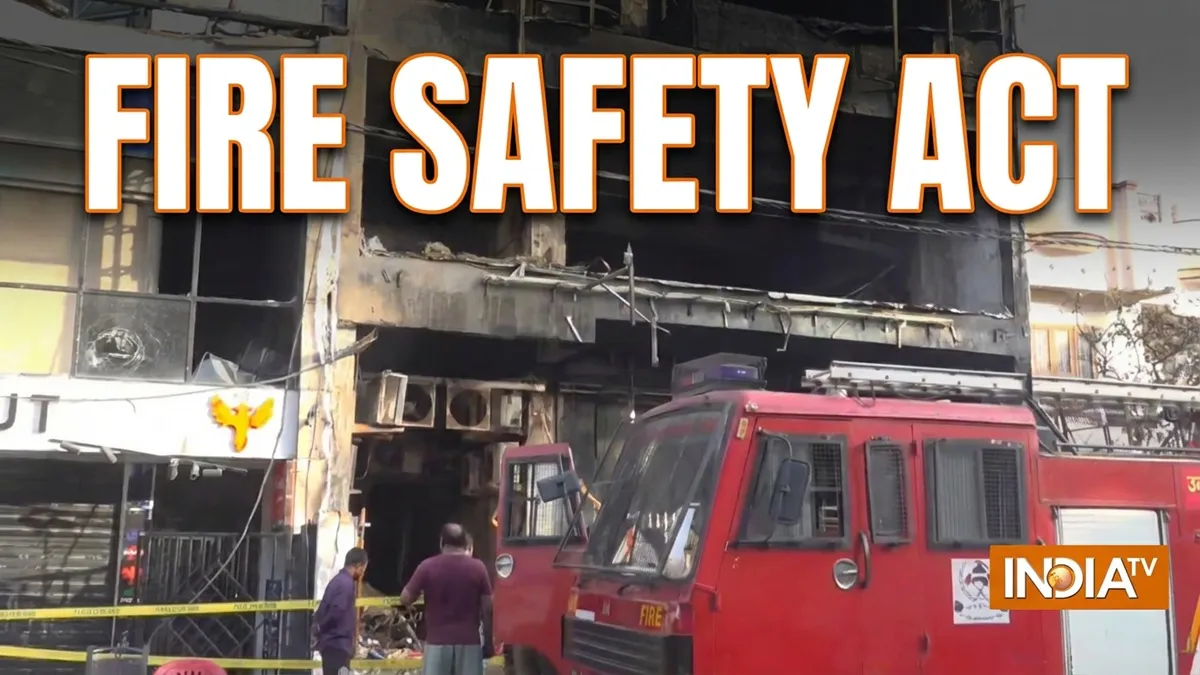
The devastating fire at a coaching centre in Uttar Pradesh's capital Lucknow, which claimed 15 lives and left several others seriously injured, has once again brought fire safety standards under sharp scrutiny. The tragedy comes close on the heels of another major fire incident at a hotel in Delhi's Malviya Nagar, reigniting concerns about safety compliance in public buildings across the country. As investigations continue into the Lucknow incident, experts and authorities are questioning whether coaching institutes, hotels, hospitals and commercial establishments are adequately following fire safety regulations designed to prevent such disasters.
Fire safety rules for hospitals, hotels, schools and commercial buildings
To minimise the risk of major fire accidents, several laws and regulations have been put in place across India. In Uttar Pradesh, fire safety measures are governed by the Uttar Pradesh Fire Prevention and Fire Safety Act, 2005. The legislation aims to prevent fire-related incidents and ensure public safety in buildings such as hospitals, hotels, shopping malls, educational institutions, office complexes and other high-occupancy premises. The Act outlines mandatory safety measures that building owners and operators must implement to reduce fire hazards and facilitate safe evacuation during emergencies.
Key provisions of the Fire Safety Act
Under the Act, designated categories of buildings are required to install and maintain fire safety systems.
Some of the key requirements include:
- Installation of fire extinguishers at strategic locations.
- Fire alarm and smoke detection systems.
- Automatic sprinkler systems in eligible buildings.
- Clearly marked emergency exits and evacuation routes.
- Adequate fire-fighting equipment and infrastructure.
- Compliance with prescribed building safety norms.
Building owners and management authorities are legally responsible for ensuring that all fire safety measures remain functional and compliant with regulations.

Why is a fire NOC mandatory?
Multi-storey buildings, hospitals, hotels, malls and several commercial establishments are required to obtain a Fire No Objection Certificate (NOC) from the fire department. The Fire NOC serves as proof that the building meets prescribed fire safety standards and is equipped to handle emergencies. Before granting the certificate, fire officials inspect the premises and assess whether adequate preventive measures are in place. Failure to obtain or renew a Fire NOC can attract legal consequences and may expose occupants to significant risks during emergencies.
What action can be taken for violations?
The fire department is authorised to conduct periodic inspections of buildings covered under the Act. If deficiencies are detected, authorities may issue notices directing owners to rectify the shortcomings. In serious cases, violators can face:
- Monetary penalties.
- Suspension or cancellation of licences.
- Closure of operations.
- Legal proceedings under applicable laws.
Experts note that enforcement remains one of the biggest challenges, as many establishments continue to operate despite safety deficiencies.
Why fire safety compliance matters
According to fire safety experts, the first few minutes after a fire breaks out are often the most critical. Functional alarms, sprinklers and well-planned evacuation routes can significantly reduce casualties and prevent panic. In many fire incidents across India, loss of life has been linked to blocked exits, the absence of emergency escape routes, non-functional fire-fighting equipment and delayed evacuation. This is why fire safety compliance is not merely a regulatory requirement but a crucial safeguard for human lives.
Essential safety measures in high-rise buildings
Experts recommend that high-rise structures and large public buildings should also have:
- Dedicated fire lifts.
- Adequate water storage for fire-fighting operations.
- Backup power systems to ensure uninterrupted functioning of safety equipment.
- Regular inspection of electrical wiring.
- Routine checks of gas pipelines and utility systems.
- Emergency response and evacuation plans.
Regular fire drills and staff training are also considered critical to improving emergency preparedness.
Recent fire tragedies renew focus on safety gaps
Recent fire incidents in Lucknow and other cities have once again highlighted recurring safety lapses. Experts say that many major fire accidents are often linked to factors such as the absence of a valid Fire NOC, poor maintenance of fire-fighting systems, overcrowding, unauthorised construction and faulty electrical infrastructure.
Authorities are expected to intensify inspections and compliance checks in the aftermath of the Lucknow tragedy, particularly at coaching centres, educational institutions and commercial establishments.
Common fire safety mistakes that lead to major disasters
Fire safety specialists identify several recurring mistakes that frequently contribute to large-scale fire accidents:
- Locked or obstructed emergency exits.
- Overloaded electrical circuits.
- Poorly maintained air-conditioning systems.
- Storage of combustible materials in unsafe areas.
- Lack of emergency evacuation training.
- Expired or non-functional fire extinguishers.
- Unauthorised modifications to building layouts.
Experts stress that even the most advanced fire safety infrastructure can fail if regular maintenance and emergency preparedness are neglected.
ALSO READ: Lucknow coaching centre fire: LDA orders demolition of Aliganj building after 15 killed