
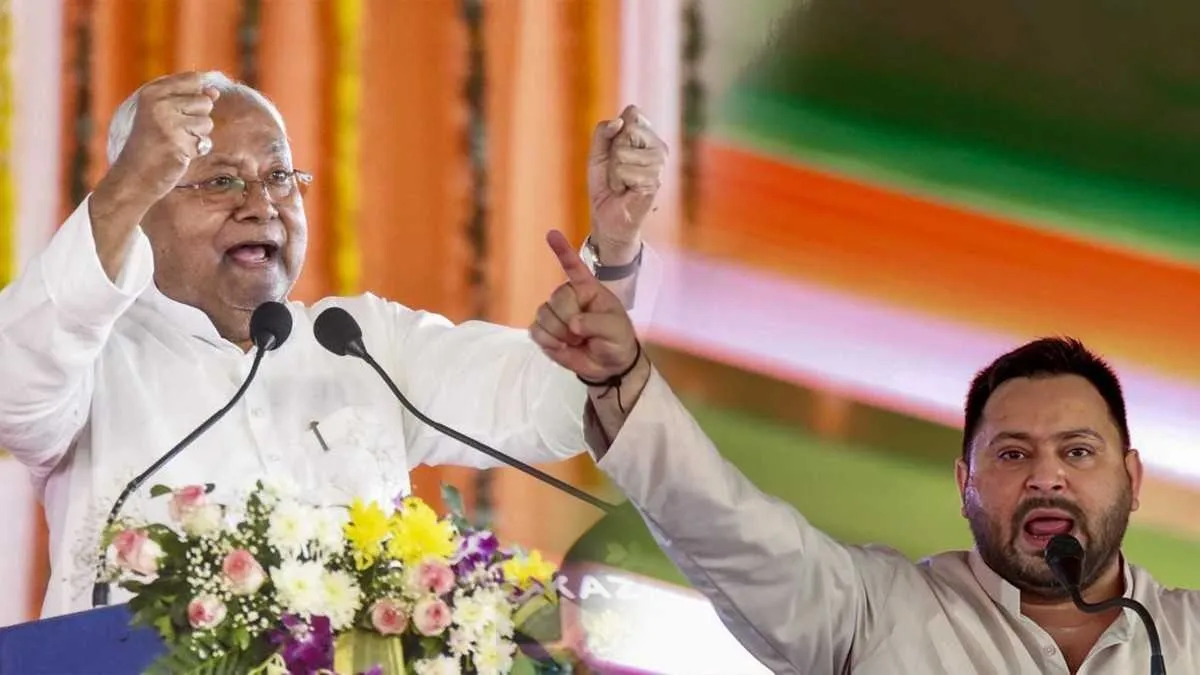
The National Democratic Alliance (NDA) government in Bihar, led by Chief Minister Nitish Kumar and supported by Prime Minister Narendra Modi, recently launched the 'Mukhyamantri Mahila Rojgar Yojana'- a flagship scheme aimed at women’s economic empowerment through self-employment. Under this Rs 7,500-crore initiative, financial assistance of Rs 10,000 has been transferred directly to the bank accounts of 75 lakh women across Bihar.
The scheme targets one woman from each family, enabling her to start livelihood activities of her choice, including agriculture, animal husbandry, handicrafts, tailoring, and more. Subsequent assistance of up to Rs 2 lakh is planned for women who succeed in their businesses. The program is community-driven, featuring training and support through Self Help Groups (SHGs), and promotes rural marketing infrastructure with expansion of Gramin Haat-Bazaars.
This initiative is expected to foster economic independence and social empowerment among women, buoyed by the state’s strong legacy of women’s participation in Panchayati Raj and government jobs. It is also seen as a strategic move by the NDA to consolidate women voters ahead of the elections.
RJD's 'Mai Bahin Maan Yojana'
In response, Rashtriya Janata Dal (RJD) leader Tejashwi Yadav has proposed the 'Mai Bahin Maan Yojana', which promises a monthly financial assistance of Rs 2,500 to women from financially vulnerable and backward communities if the party forms the government. This scheme aligns with similar initiatives in other states, focusing on direct monthly support to women rather than one-time or business-linked grants.
Tejashwi Yadav has also vowed to launch parallel women-centric schemes like the Maa Yojana and Beti Yojana, addressing broader social welfare concerns tied to female empowerment. His rhetoric emphasizes the demand for change and appeals directly to women voters as a crucial political constituency.
Comparison of focus areas-
| Feature | NDA's 'Mukhyamantri Mahila Rojgar Yojana' | RJD's 'Mai Bahin Maan Yojana' |
|---|---|---|
| 1. Financial Aid | Initial Rs 10,000 + up to Rs 2 lakh for business development | Rs 2,500 monthly allowance |
| 2. Beneficiaries | One woman per family from all communities | Women from financially backward communities |
| 3. Goal/Objective | Promote self-employment, economic independence, entrepreneurship | Provide direct financial support to women |
| 4. Support mechanism | Training via SHGs, community resource persons, rural markets | Direct monthly cash transfers |
| 5. Political strategy | Build on existing women’s empowerment infrastructure | Appeal to vulnerable and marginalized women |
The Bihar assembly elections present a clear contest between two contrasting approaches to women’s empowerment. The NDA scheme highlights entrepreneurship and long-term economic self-reliance, while the RJD scheme focuses on immediate monetary relief to vulnerable women households. Both parties recognise women as a key electoral demographic, with welfare schemes crafted to address their aspirations and needs in differing ways.
This competition underscores the growing importance of women voters in Bihar’s electoral landscape, shaping how political parties formulate and communicate their promises.
Here are some related stories-
