
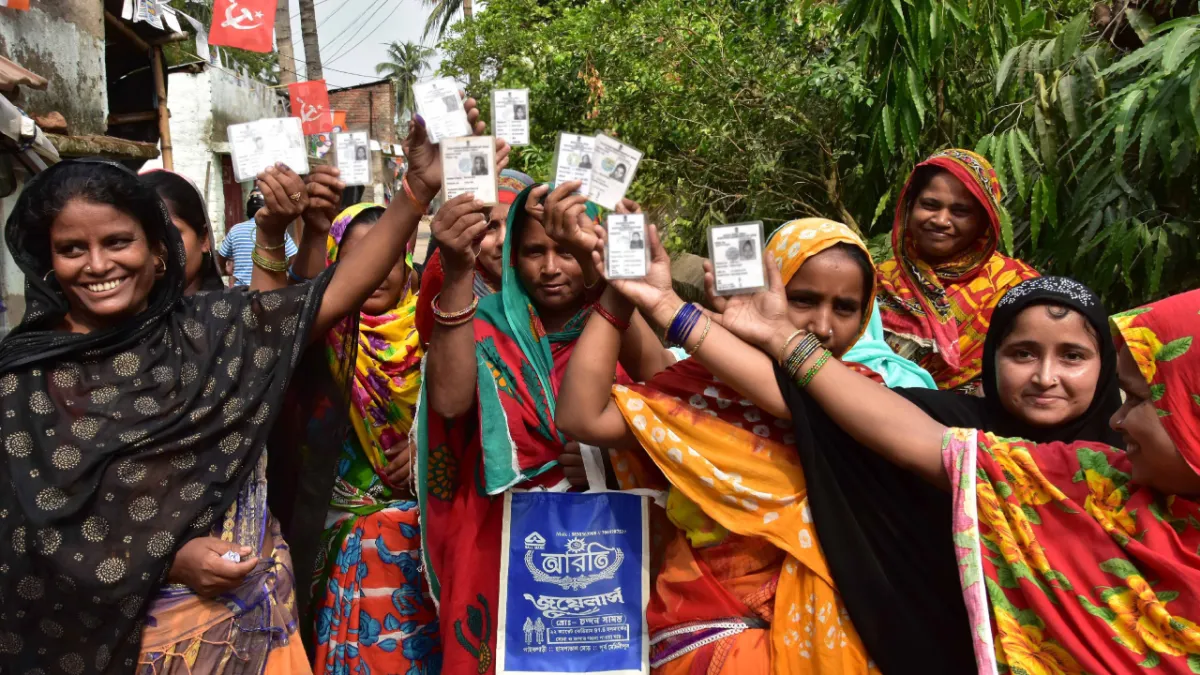
Assembly elections in West Bengal are just a few weeks away, and that calls for a deep dive into the state's political landscape, which has undergone a major transformation over the past elections. Data from the Election Commission of India for the 2016 and 2021 Assembly elections show how voter support and seat distribution have shifted among major parties, reshaping the state’s electoral competition.
The figures indicate a consolidation of votes around two major parties - the TMC and the BJP, while the traditional Left and Congress bases have declined significantly.
Vote share and seats in the 2021 assembly election
The political dynamics changed dramatically in the 2021 West Bengal Legislative Assembly election. The Trinamool Congress increased its vote share to about 47.94% and won 213 seats, retaining a comfortable majority in the Assembly.
The biggest shift was the rapid rise of the Bharatiya Janata Party. Its vote share surged to about 38.13%, and the party won 77 seats, emerging as the principal opposition in the state.
In contrast, the Left Front suffered a steep decline, with the Communist Party of India (Marxist) seeing its vote share fall to around 4.72%. The Indian National Congress also witnessed a sharp drop in support, with its vote share declining to about 2.94%.
Vote share and seats in the 2016 assembly election
In the 2016 West Bengal Legislative Assembly election, the All India Trinamool Congress emerged as the dominant force with a vote share of about 44.91%. The party converted this support into a decisive victory, winning 211 out of 294 seats in the Assembly.
The Communist Party of India (Marxist) secured about 19.75 per cent of the vote, while the Indian National Congress obtained roughly 12.25 per cent.
The BJP had a relatively small presence at the time, securing around 10.16 per cent of the vote and winning only 3 seats in the Assembly.
At that stage, West Bengal’s electoral competition remained largely multi-cornered, with the Trinamool Congress facing opposition from the Left and Congress, while the BJP was still a minor player in terms of seats.
TMC maintains stronghold, BJP sees sharp rise in vote share
The numbers from the Election Commission of India highlight several clear trends. First, the TMC maintained and slightly expanded its vote base while continuing to dominate the assembly in terms of seats.
Second, the BJP recorded the most dramatic growth between the two elections, increasing both its vote share and its seat tally sharply.
Third, the sharp fall in vote share for the Left and the Congress indicates a major shift in voter alignment.
Taken together, the vote share and seat share data from 2016 and 2021 suggest that West Bengal’s political competition has shifted from a multi-party contest to a largely bipolar one. The primary electoral contest now revolves around the Trinamool Congress and the Bharatiya Janata Party, while the space once occupied by the Left and the Congress has shrunk considerably.
The data from the Election Commission underscores how voter preferences in the state have realigned within a single electoral cycle, significantly altering the balance of power in West Bengal politics.
