
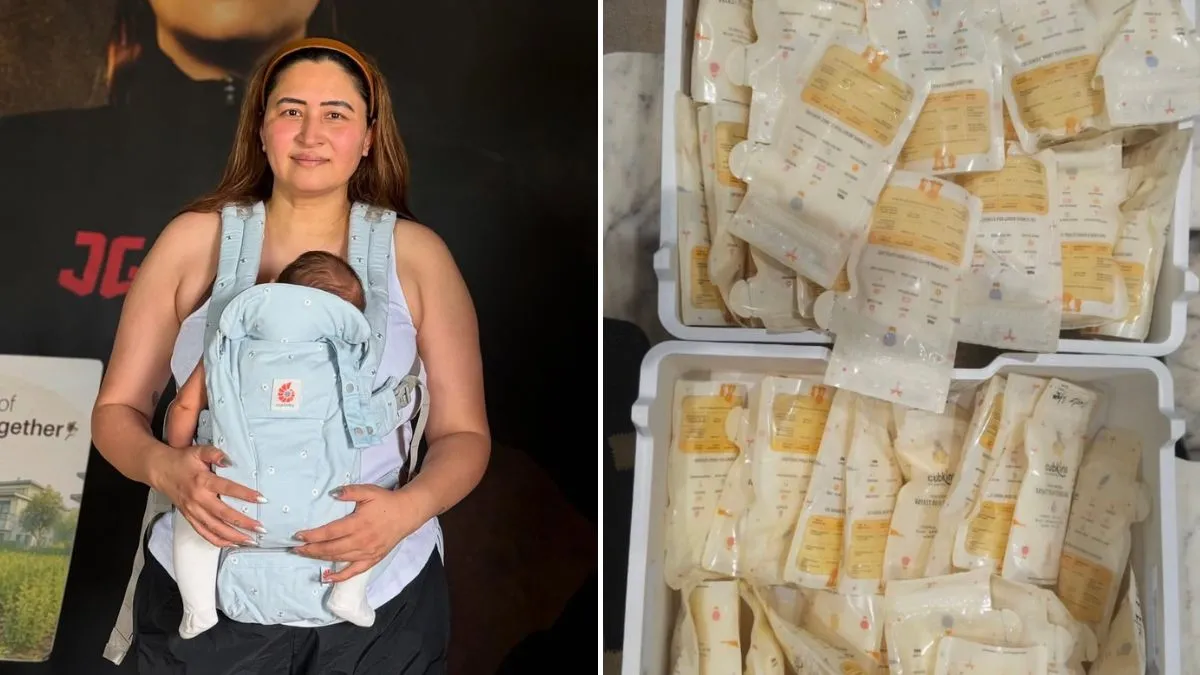
Jwala Gutta has shared a deeply personal part of her first year of motherhood, and the internet is applauding her for it. The former badminton champion revealed that she donated nearly 60 litres of breast milk to government hospitals in Hyderabad and Chennai to support newborn babies in neonatal intensive care units.
Posting on X on May 14, Jwala explained why donor milk can become life-saving for premature and medically vulnerable infants, especially during the first few days after birth.
Jwala Gutta says she donated nearly 60 litres of breast milk
Jwala and her husband, Vishnu Vishal, welcomed their daughter in April 2025.
Reflecting on her postpartum journey, Jwala shared two photographs showing the scale of her donation effort. One image featured rows of carefully labelled breast milk storage bags placed neatly across a desk, while another showed large freezer containers packed with frozen milk pouches ready for transfer.
In her post, she wrote, “I donated around 60 litres of breast milk to the government hospital in Hyderabad and Chennai during my first year of postpartum!!”
She also explained why even small amounts of donor milk can make a major difference inside neonatal intensive care units.
“Why does it matter? Just 100ml of donor milk can feed a tiny 1 kg baby for several days. This donation could potentially support dozens of infants in the NICU (Neonatal Intensive Care Unit)” Jwala added.
Donor milk can become a ‘vital bridge’ for premature babies
Jwala explained that many newborns admitted to NICUs often cannot immediately receive their mother’s own milk due to premature birth, medical complications or stress-related issues.
“Donor milk acts as a vital bridge, providing immunity and nutrition during those critical first days,” she wrote.
She further highlighted the medical benefits associated with donor human milk for premature infants.
“Donor human milk is proven to significantly reduce the incidence of necrotising enterocolitis (a life-threatening gut condition) in premature infants!!! Check your local govt hospital to see how you can help!”
Her post also encouraged more awareness around milk donation and attempted to normalise conversations around the process.
WHO guidelines also support donor human milk
Jwala’s message closely aligns with recommendations from the World Health Organization.
According to WHO guidelines, low-birth-weight infants who cannot receive their mother’s own milk should ideally be given donor human milk whenever properly screened milk banking systems are available.
WHO estimates suggest that more than 20 million babies worldwide are born weighing under 2.5 kilograms every year, with most cases reported in developing countries.
Medical studies have also found that donor milk may help lower the risk of severe infections and dangerous intestinal conditions in newborns when compared to formula feeding during early hospital care.
Jwala’s post quickly received praise online, with many users appreciating that she highlighted a lesser-discussed but extremely important aspect of maternal and infant healthcare.
