
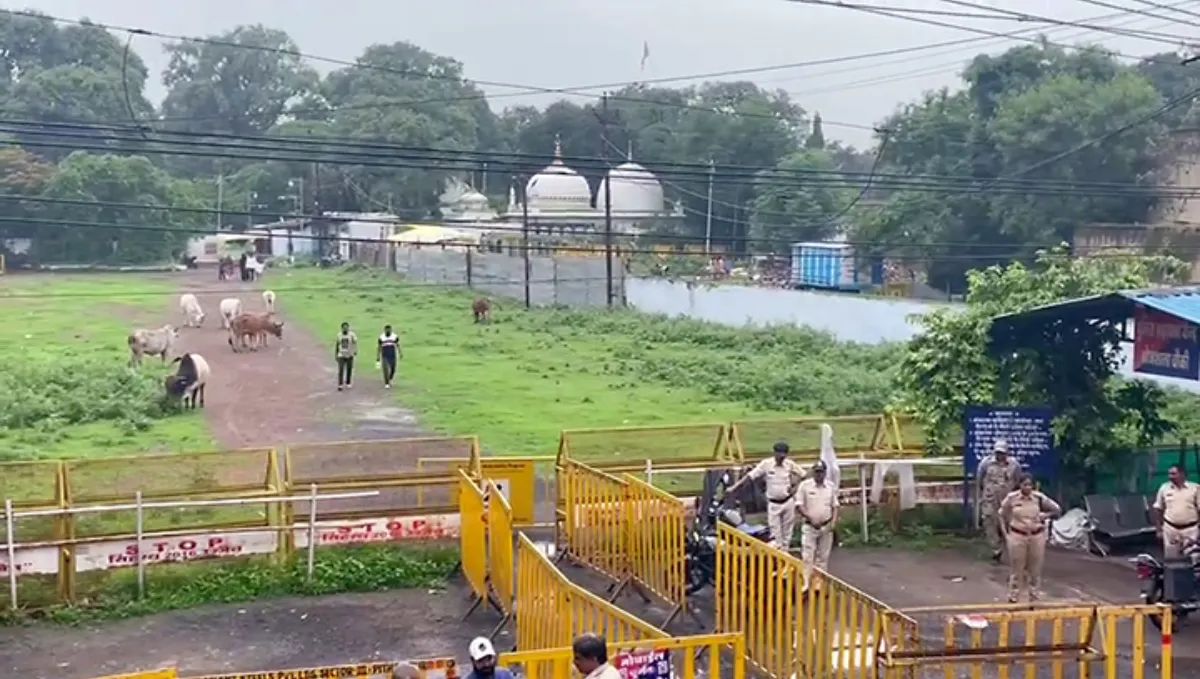
AIMIM MP Asaduddin Owaisi took a strong objection to the Bhojshala disputed structure being declared a temple of Goddess Saraswati by the Madhya Pradesh High Court, calling it similar to the Babri Mosque judgment and hoped that the Supreme Court would overturn the ruling.
"We hope the Supreme Court will set this right and overturn this order. Glaring similarities with the Babri Masjid judgment," Owaisi said in a post on X.
The Muslim side, contesting the case, too said they will move the Supreme Court.
"We will review the decision that has been made against us. We will challenge the verdict in the Supreme Court," Dhar Shahar Qazi Waqar Sadiq told ANI.
Bhojshala complex judgment
In a landmark verdict, the high court on Friday ruled that the disputed Bhojshala complex in Madhya Pradesh's Dhar district is a temple dedicated to Goddess Saraswati, while observing that the Muslim community may approach the state government for allotment of separate land in the district to construct a mosque.
Delivering its verdict in the Bhojshala Temple-Kamal Maula Mosque dispute, the court noted that there were indications of a Sanskrit teaching centre and a temple of Goddess Saraswati at the Bhojshala site.
The dispute concerns the religious character of the ASI-protected monument in Dhar district.
The Hindu community regards Bhojshala as a temple dedicated to Vagdevi, Goddess Saraswati, while the Muslim side identifies the structure as the Kamal Maula Mosque. A petitioner from the Jain community has also claimed that the disputed complex is a medieval Jain temple and gurukul.
History of the case
After controversy erupted over the Bhojshala complex, the Archaeological Survey of India issued an order on April 7, 2003, allowing Hindus to worship at the site every Tuesday and Muslims to offer namaz there every Friday.
The Hindu side challenged the order in the High Court, seeking exclusive worship rights at the complex.
A division bench of the Indore bench of the Madhya Pradesh High Court, comprising Justice Vijay Kumar Shukla and Justice Alok Awasthi, began regular hearings on April 6 this year on five petitions and one writ appeal linked to the dispute.
After hearing all parties amid conflicting religious beliefs, historical claims, complex legal provisions, and thousands of documents related to the disputed monument, the bench reserved its verdict on May 12.
During the proceedings, petitioners from the Hindu, Muslim, and Jain communities presented detailed arguments and sought exclusive rights to worship at the monument for their respective communities.
Following a scientific survey of the monument, the ASI stated in its over 2,000-page report that a massive structure dating back to the reign of the Parmar kings of Dhar existed before the mosque, and that the present disputed structure was built using repurposed temple components.
