
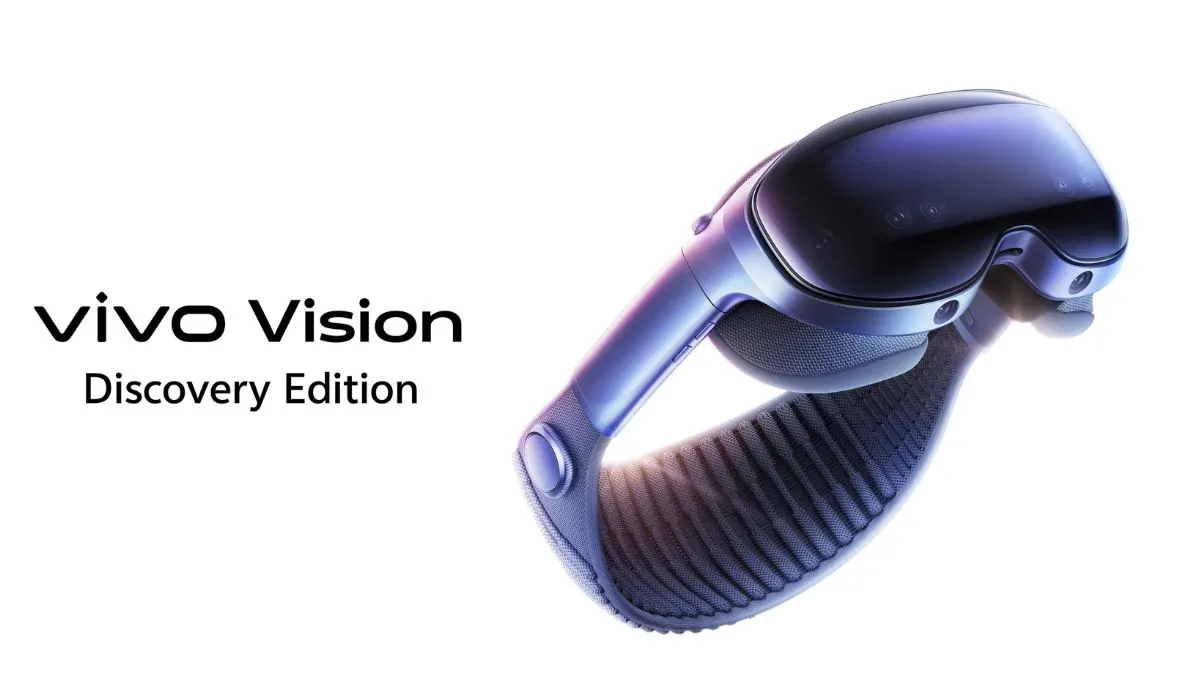
At its 30th anniversary, Vivo has unveiled the Vision Discovery Edition- its first mixed reality (MR) headset. Designed with lightweight ergonomics, the device weighs only 398g, making it 26 per cent smaller than the industry average. Powered by the Qualcomm Snapdragon XR2+ Gen 21 platform, it delivers powerful computing for immersive experiences, including gaming, entertainment, and productivity.
The device was unleashed at an event which took place in Dongguan (China), where the headset features Dual Micro-OLED 8K displays, gesture recognition, advanced eye-tracking and cinematic visuals with a 120-foot virtual theatre screen. The headset runs on OriginOS Vision, offering intuitive ‘move-and-pinch’ controls that replace traditional screen taps.
About the Vision Discovery Edition
Vision Discovery Edition runs on OriginOS Vision, which enables natural and intuitive interactions. The information appears seamlessly in the surrounding space, allowing users to shift from traditional 'tap-through-screen' interactions to 'move-and-pinch' gestures. With 1.5-degree high-precision eye-tracking, 26 degrees of freedom in fingertip gesture recognition, and a vertical tracking range of 175 degrees, users can enjoy intuitive and responsive controls. Additionally, its Dual Micro-OLED screens deliver 8K binocular resolution, 94 per cent DCI-P3 colour coverage, and DeltaE<2 colour accuracy, producing visuals comparable to professional cinema monitors. Binocular brightness and colour consistency calibration was also performed, with the binocular brightness difference ≤ 2nits and the binocular chromaticity difference ΔE < 2 to reduce the discomfort caused by binocular visual differences.

A new imaging strategy for the future
Alongside the MR headset, Vivo further announced a comprehensive upgrade to its imaging strategy, which aims at building an integrated ecosystem for night photography, video, portraits and telephoto.
The company reaffirmed its partnership with ZEISS to advance smartphone optics and highlighted its innovations like the 200MP BlueImage and Samsung HP9 sensor, Sony LYT-828 sensor and its in-house VS1 + V3+ imaging chips. New AI-powered features like AI Photo Enhance, AI Customised Beautification, and Multi-Focal 4K Video will further help in improving the imaging experiences for the users.
Strengthening the imaging culture ecosystem
Vivo is also expanding its imaging culture ecosystem, which encourages creativity through collaborations with UNESCO and photography exhibitions with the China Photographers Association.
At the event, the winners of the 2025 vivo VISION+ Mobile PhotoAwards were announced, showcasing over 5 lakh global submissions, all captured on vivo smartphones.
Marking 30 years of innovation and catering to the needs worldwide, Vivo has entered the mixed reality market now, further strengthening its position in mobile imaging. With a user-first approach, the company has promised to shape the future of immersive technology and photography experiences.