
This year, industry giants like Apple, Samsung, and Google followed their routine launch cycles to debut their latest flagship models. However, a persistent trend from previous years has remained: minimal changes in design and hardware. While Google and Samsung introduced only minor tweaks, Apple’s design changes to its "Pro" models were far from radical. It is becoming increasingly clear that smartphone hardware and design have reached a plateau.
This raises a vital question: What will actually change in the smartphones arriving next year? Will we see more of the same "incremental updates," or do companies finally have something new to offer?
Prices are set to climb
For starters, the cost of smartphones is expected to rise, and models with 16GB of RAM or higher may become rarer. According to a CNBC report, the surge in AI data centers has spiked demand for Nvidia chips, which rely heavily on DRAM (Dynamic Random-Access Memory). Since DRAM is also a critical component for mobile devices, prices have surged as demand outstrips supply.
The shortage of memory chips that could lead to a significant rise in smartphone prices. For budget smartphones, the cost of material has gone up by as much as 30 percent. Meanwhile, mid-range and high-end smartphones material cost has seen an increase of around 15 percent. As manufacturers face higher costs for these components, they will likely pass these increases on to consumers, which means that the average price of smartphones worldwide will be going up.
Dedicated NPUs and "on-device" AI
With less room for hardware breakthroughs, manufacturers are pivoting toward AI-integrated software. Next year, we will see a massive push for Neural Processing Units (NPUs), which is dedicated hardware within the chipset designed for secure, real-time, on-device AI tasks.
- Google: The Tensor G5 chipset already features a TPU (Tensor Processing Unit) that is 60 per cent more powerful than the G4, specifically for generative AI.
- Apple: The A19 chips included "Neural Accelerators" for each GPU core and an updated 16-core Neural Engine to boost Siri’s performance and local AI models.
A greater focus on cooling
As on-device AI processing increases, hardware generates significantly more heat. To combat this, advanced cooling systems will become a priority. Apple recently introduced a vapour cooling chamber in the iPhone 17 Pro series alongside aluminium unibody for heat dissipation. We expect more brands to experiment with new materials and heat-dissipation technologies to maintain peak performance.
Battery and charging breakthroughs
While Chinese manufacturers have taken a bold approach, launching silicon-carbon batteries with capacities up to 10,000mAh, giants like Apple, Google, and Samsung have been hesitant due to the risks associated with silicon expansion. However, as the technology matures and demand for longer battery life grows, these companies are expected to finally offer larger capacities. Furthermore, expect more brands to finally increase their charging speeds to better compete with their Chinese counterparts.
The expansion of under-display cameras
Under-display camera (UDC) technology is not new, but it has remained a niche feature for premium devices. As companies look for "new" hardware selling points to justify higher prices, UDC technology is expected to go mainstream in 2026, offering a truly edge-to-edge display experience without notches or punch-holes.
More folding phones
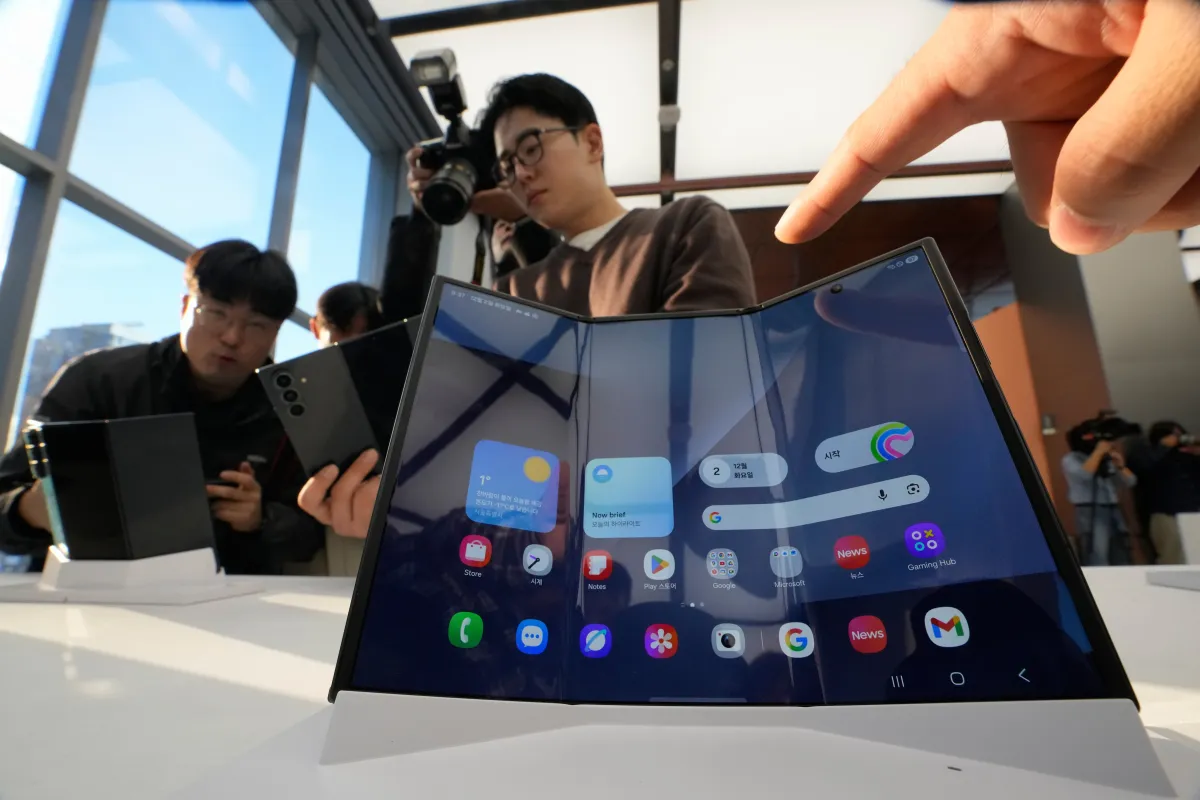
We are likely to see more brands rolling out smartphones with folding screens next year. Samsung recently launched its Galaxy Z TriFold, and Apple is rumored to be working on its own foldable smartphone for 2026. Additionally, Xiaomi is reportedly developing a triple-folding device to compete in this new category.
Minor camera upgrades
Lastly, smartphones will continue to see incremental upgrades in optical zoom and AI-driven camera software. While these improvements will enhance photo quality, they are unlikely to be the "radical" shifts consumers are truly waiting for.
ALSO READ: Your next smartphone and TV will cost 6.9% more in 2026: Here’s why
