
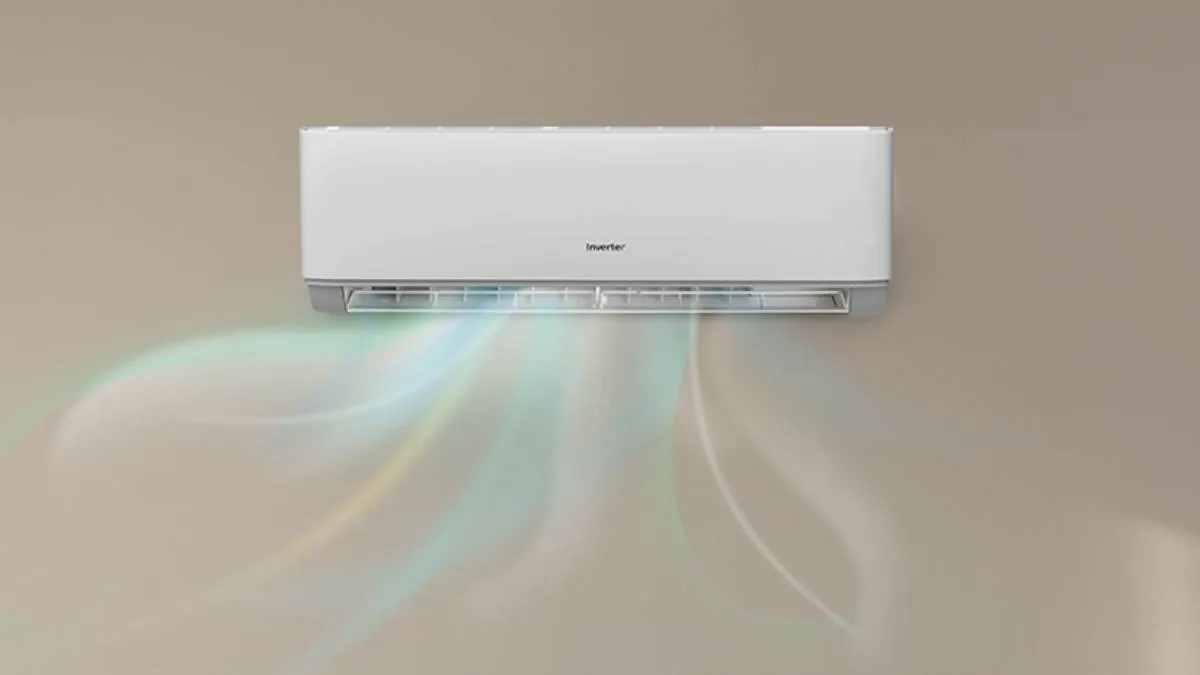
As summer approaches, the demand for coolers and air conditioners (ACs) skyrockets. While coolers can be effective during the milder heat of March and April, they often fall short when the temperatures really soar. In such cases, an air conditioner becomes essential. If you're considering purchasing a new AC this summer, this information could prove invaluable. A common dilemma many face is whether to choose an Inverter AC or a Non-Inverter AC. If you're unsure about the differences between these two types of air conditioners, making the right choice could be tricky.
Many people mistakenly believe that an inverter AC can be run on a regular inverter installed in the house, but that's far from the truth. The term "inverter" actually refers to a specific technology used in these units. When buying an AC, it's crucial to pay attention to factors like cooling capacity and energy consumption. Choosing the wrong type of AC could lead to insufficient cooling and hefty electricity bills.
In the market today, you’ll find two main types of ACs: inverter and non-inverter. Let's explore which air conditioner might be more suitable for you and which one can help you save money.
So, what exactly are inverter ACs?
Inverter ACs utilise advanced technology that regulates the speed of the compressor. When you turn on the AC, it quickly cools the room to the desired temperature; thereafter, it slows the compressor down instead of turning it off. This approach allows for consistent cooling while consuming less electricity. In simple terms, an inverter AC stays on, running at a lower speed, rather than cycling on and off.
Now, what about non-inverter ACs?
With a non-inverter AC, the compressor operates either at full power or not at all. When you first turn it on, the compressor runs until the room reaches the desired temperature, at which point it shuts off. However, as the temperature starts to rise again, the compressor kicks back into action. This repeated switching between on and off leads to higher electricity consumption and, consequently, increased bills.
When it comes to cooling efficiency, inverter ACs have the upper hand. Their compressors remain operational even when the room is sufficiently cool, allowing for a steady stream of cold air. In contrast, non-inverter ACs cool the room quickly but often lead to temperature fluctuations due to their constant on-and-off cycling. Therefore, if your goal is to save on electricity bills and maintain a consistent temperature, opting for an inverter AC would be a wise choice.
ALSO READ: Infinix to launch razor-thin 5G smartphone soon, challenges Apple, Samsung's upcoming models
