
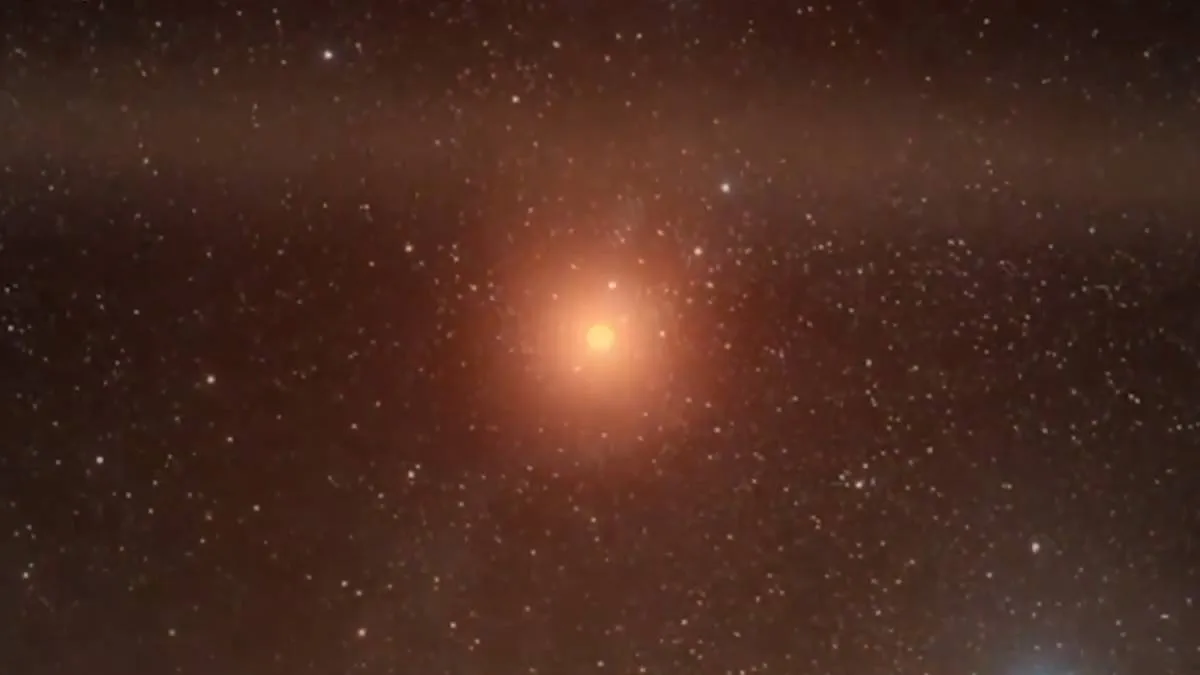
The Hubble Space Telescope has captured the clearest image yet of a high-speed comet from another star system visiting our solar system. NASA and the European Space Agency released the new photos on Thursday. The comet, officially named 3I/Atlas, was discovered last month by a telescope in Chile. It is only the third known interstellar object to pass through our solar system and poses no threat to Earth.
Astronomers initially estimated the comet's icy core to be tens of kilometers across. However, Hubble's observations have revised this estimate, narrowing the size down to no more than 5.6 kilometers. Scientists suggest it could even be as small as 320 meters (or about 1,000 feet).
Speed of comet
The comet is traveling toward us at a speed of 209,000 kilometers per hour, but its trajectory will bring it closer to Mars than to Earth, maintaining a safe distance from both planets.
When Hubble photographed the comet a couple of weeks ago, it was 446 million kilometers away. The orbiting telescope's images revealed a teardrop-shaped plume of dust around the nucleus, as well as traces of a dusty tail.
End of Orbiting Carbon Observatories
Meanwhile, the Trump administration is planning to end two important NASA missions that help track carbon dioxide gas and monitor the health of plants. This move could cut off crucial information that scientists, policymakers, and farmers rely on. In the budget proposal for the 2026 fiscal year, there is no funding allocated for the Orbiting Carbon Observatories, which are designed to accurately measure where carbon dioxide is being released and absorbed, as well as keep an eye on crop health.
In a statement released on Wednesday, NASA explained that these missions have completed their main objectives and are being terminated to better align with the President's goals and budget priorities.
ALSO READ: ESA’s JUICE Spacecraft tests radar on Moon before hunting alien life on Jupiter’s Moons
