
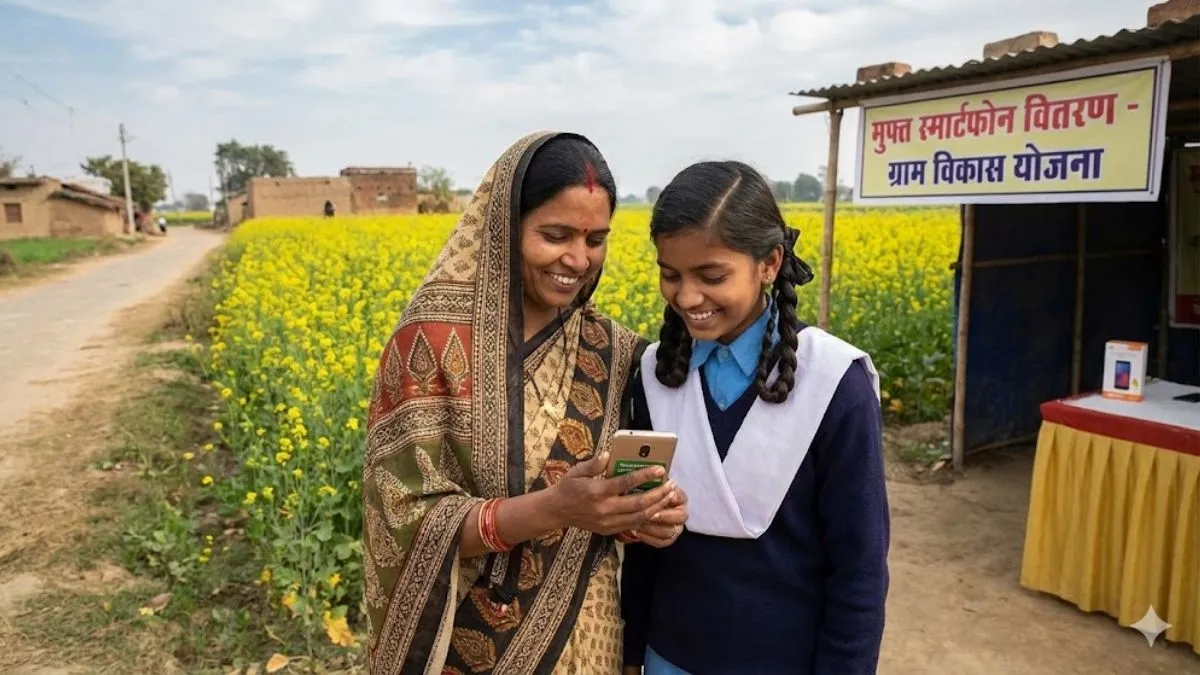
We live in the world of fake news, which is excelling day by day. Fake news related to government schemes has escalated on social media, and many people have already fallen prey to online scams because of misleading videos and posts. Recently, a claim about a so-called “Pradhan Mantri Free Mobile Yojana” has gone viral, which has created immense confusion among women, students and low-income users across the country.
As per the viral claims, the central government is allegedly offering free smartphones to citizens by simply filling out an online form. Some videos even stated that women and students are being prioritised under this scheme to help them.
However, these claims are completely false.
Pradhan Mantri Free Mobile Yojana: What is it, and how is it fooling innocents?
As per the reports, videos are being circulated on YouTube and Facebook, claiming that the government has launched a ‘PM Mobile Yojana’. This scheme is offering a free smartphone to women and students, tempting them to add their personal details.
People who fall prey to the fake scheme tend to click on a link (which is fake). Then they fill in their personal details and submit their Aadhaar number. The scammers claim that once all the formalities are done, the applicant will receive the device in a few days.
The messages created by scammers look authentic, as they have used official-sounding language, along with government logos and keywords like ‘free mobile’, ‘प्रधानमंत्री योजना’ and ‘limited time offer’ – which looks very real for a layman at first glance.
This kind of scam is very dangerous for innocent people who are not very familiar with online fraud tactics, which are being used by the literate scammers.
PIB clarifies: No such scheme exists
The Press Information Bureau (known as PIB), which is known for fact-checking and clarifying the misinformation related to government policies, has clarified that there is no such scheme called “Pradhan Mantri Free Mobile Yojana”.
So far, the government of India has not yet announced any nationwide programme to distribute free smartphones to citizens.

The PIB Fact Check page on X.com (formerly known as Twitter) has also warned about the fraudsters who are misusing the names of popular government schemes to gain public trust.
Once people click on such links, they are asked for sensitive information like Aadhaar numbers, mobile numbers, bank details, or OTPs, which can lead to financial loss or identity theft.
How do these scams usually work?
Scammers have become advanced over the upgrading of time with technology upgrading, and they usually follow a common pattern, targeting those who are not technologically advanced.
- First, they upload a viral video or post promising free benefits, creating social media buzz.
- Then, they include a suspicious link redirecting users to a fake website.
- When users enter their details, scammers use those details for information for fraud.
Note: No genuine government scheme in India asks for OTPs, bank details or payments for registration.
How to stay safe from fake schemes?
To avoid falling victim to fake schemes and scams, which are growing in the country. The common man must verify anything which they receive online from the official government websites or trusted sources.
- Check PIB fact-check updates and follow the official press releases.
- If an offer sounds too good to be true, it usually is not the correct one; one should not follow it blindly.
People are advised not to click on any random links which they receive, and they should not share any personal information online, because government officials will not ask for it.