
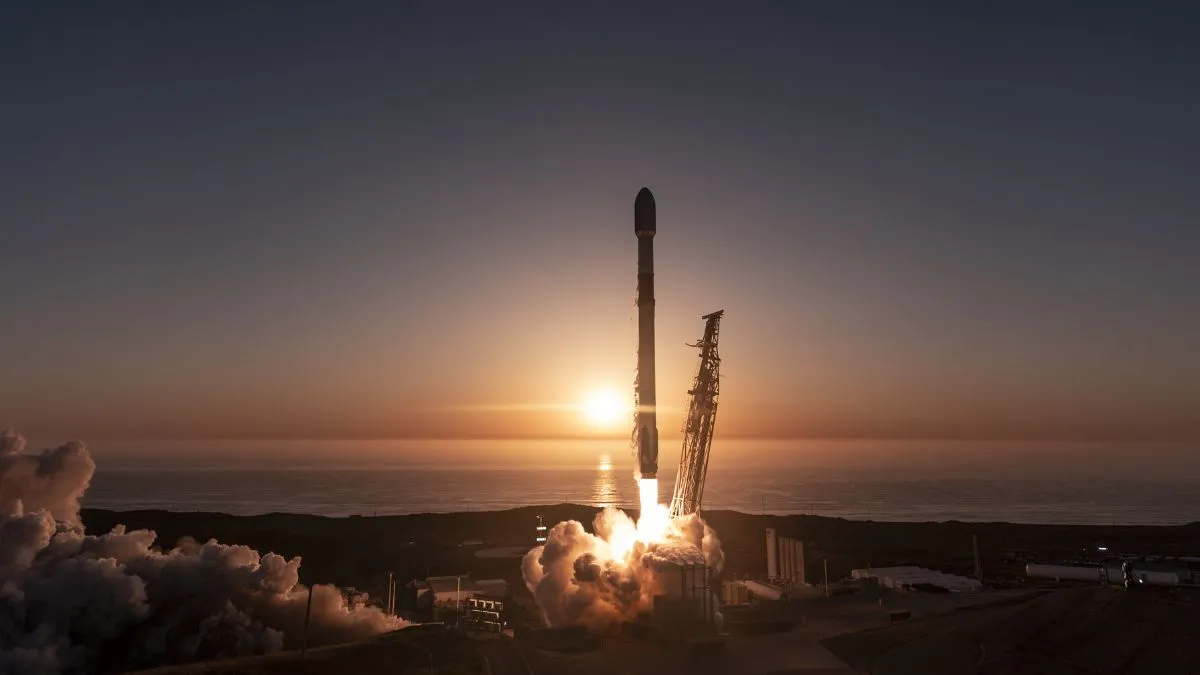
SpaceX, a private space agency owned by Elon Musk, has been working closely with NASA for multiple space missions and has completed another successful satellite launch mission on May 19, 2026. The rocket that carried 24 new Starlink satellites was sent into low-Earth orbit.
Falcon 9 rocket blasted off right on schedule at 10:46 p.m. EDT from Space Launch Complex 4 East. Within nine minutes, the satellites were already circling in their temporary orbit. Full deployment? Wrapped up in under 50 minutes.
Reusable Falcon 9 booster lands successfully again: Let’s talk about the rocket
Falcon 9 booster B1103 made the trip, its second flight so far. After getting the payload into space, the booster turned around and nailed its landing on SpaceX’s autonomous drone ship, cleverly named “Of Course I Still Love You.”
Reusability is really where SpaceX shines. They snag their USD 60 million rocket boosters back from the ocean and use them again, which slashes launch costs and keeps the competition scrambling to catch up.
Starlink network nears 10,500 satellites in lower orbit now
Now, with this latest crop of satellites, the active Starlink fleet is closing in on 10,500, according to satellite tracker Jonathan McDowell. The network’s satellites zoom around between 340 km and 570 km above Earth. That’s way lower than traditional relay satellites, which sit out at 35,786 km in geostationary orbit.
Why is low-Earth orbit important for satellites?
Low-Earth orbit means lower latency: this basically means that your internet reacts almost instantly. SpaceX says Starlink delivers latency under 27 milliseconds. That is fast enough for video chats, gaming, HD streaming, and remote work. It’s a game-changer, especially for folks in rural or hard-to-reach places where laying cables just isn’t an option.
Starlink’s global expansion continues
Starlink’s footprint keeps growing. SpaceX is charging toward its vision of blanket high-speed internet access all around the planet, no matter where you live. Every launch gets them one step closer to Elon Musk’s goal: a world genuinely connected by satellites, not just cables.
