
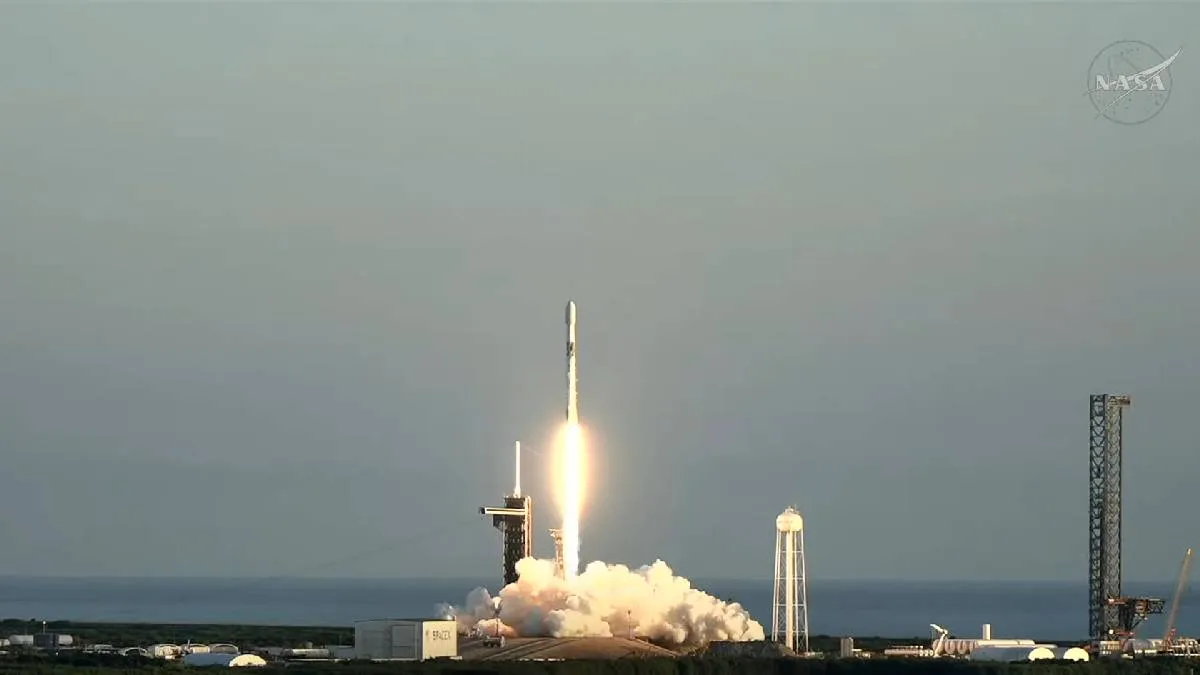
The three satellites were launched on a single SpaceX rocket from the Kennedy Space Center shortly after sunrise. They are headed for a sun-orbiting position 1.6 million kilometers from Earth, each embarking on its own mission. According to Joe Westlake of NASA, the missions—including related costs—are valued at about $1.6 billion. By sharing a rocket, the organisations saved money in what Westlake called "the ultimate cosmic carpool".
The three missions
- NASA’s Interstellar Mapping and Acceleration Probe (IMAP): This satellite will be deployed first to study the outer limits of the heliosphere, the protective, solar wind-driven bubble around our solar system. As a bonus, IMAP will provide a valuable 30-minute heads-up for astronauts on future Artemis missions, allowing them to prepare for incoming solar storms. Officials expect it to be fully operational by next year's crewed flight around the moon.
- NASA’s Carruthers Geocorona Observatory: This smaller satellite will focus on Earth’s outermost, glowing atmosphere, which extends well beyond the moon. It's named after the late scientist George Carruthers, who invented the ultraviolet telescope left on the moon by Apollo 16 astronauts in 1972.
- NOAA’s Space Weather Observatory: This new observatory will provide full-time, around-the-clock forecasting. It will monitor the sun's activity and measure solar wind to help protect Earth from dangerous solar flares.
Improving solar forecasting
The goal of these missions is to better understand the sun in order to protect Earth. While the northern and southern lights are a spectacular side effect, they are not the primary focus of the missions.
NASA's satellites are expected to be fully operational by early next year, with NOAA's spacecraft following in the spring. NASA's missions account for over $879 million of the total cost, while NOAA's share is $693 million.
According to Nicky Fox, NASA's science mission chief, these new missions feature more advanced instruments that will provide more sensitive measurements. "Just being able to put all those together will give us a much, much better view of the sun," she said.
During a preview of an upcoming Artemis mission, officials confirmed that these new space weather missions will enhance forecasting and provide crucial alerts. If a major solar event occurs, astronauts can take temporary shelter in a storage area to avoid heightened radiation levels.
ALSO READ: Scientists discover new dinosaur in Argentina, shedding light on ancient predator's diet
