
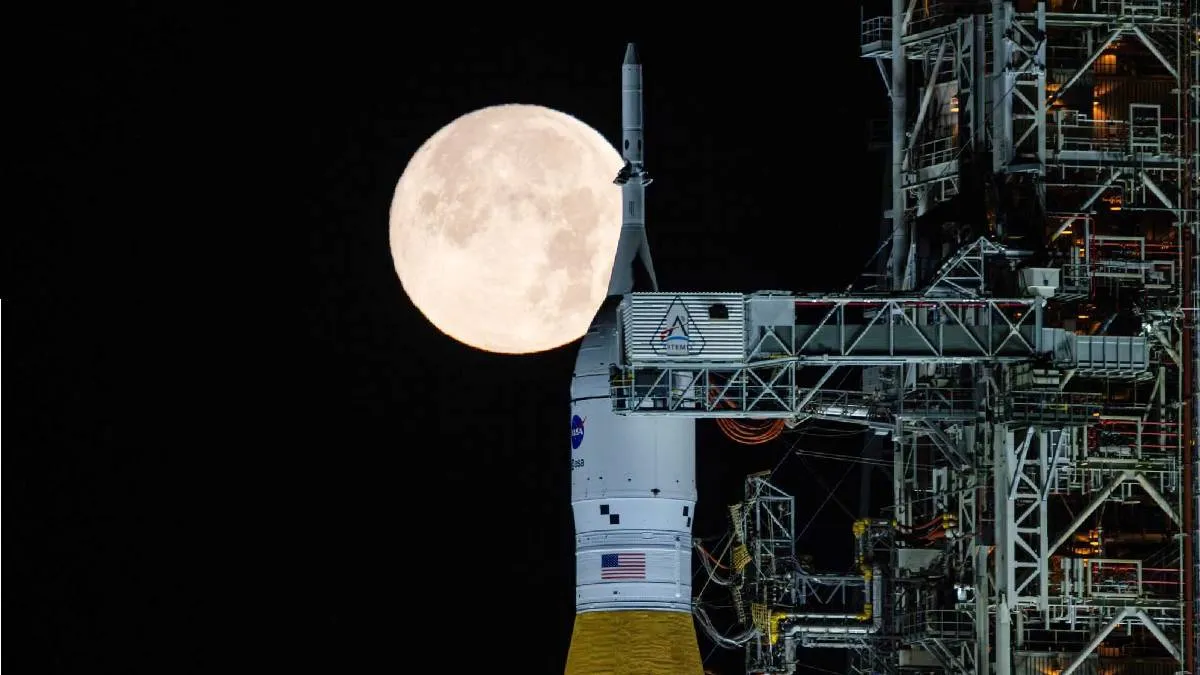
NASA’s long-awaited crewed moon mission has been postponed until at least March after hydrogen fuel leaks disrupted the final dress rehearsal of its massive new rocket. The same issue had delayed the Space Launch System (SLS) rocket’s debut three years ago.
The earlier uncrewed test flight was grounded for months due to leaking hydrogen, a highly flammable and dangerous fuel. Speaking on Tuesday, NASA’s John Honeycutt admitted the latest issue was unexpected, just hours after the test came to an abrupt halt at the Kennedy Space Centre.
“Actually, this one caught us off guard,” Honeycutt said.
Until the fuel leaks emerged, NASA had been targeting as early as this weekend for humanity’s first trip to the moon in more than half a century.
Hydrogen leaks force mission delay
Honeycutt explained that hydrogen, while ideal as a rocket fuel, is notoriously difficult to manage.
“When you're dealing with hydrogen, it's a small molecule. It's highly energetic and we like it for that reason and we do the best we can,” he said.
Officials confirmed that the month-long delay will allow the launch team to conduct another fuelling test before committing the four astronauts—three from the US and one from Canada—to a lunar fly-around.
Repairs likely at launch pad
It remains unclear when the countdown dress rehearsal will be repeated. NASA managers said that any repairs to damaged or deformed seals, or other components, can likely be completed at the launch pad. However, returning the rocket to the Vehicle Assembly Building would result in a significantly longer delay.
The leaks first appeared early during Monday’s fuelling operation and resurfaced hours later, ultimately stopping the countdown clocks at the five-minute mark. Launch controllers had hoped to reach the final 30 seconds, but escaping hydrogen exceeded safety limits.
Attempts to fix the issue fell short
NASA repeatedly halted the flow of liquid hydrogen—kept at minus 423 degrees Fahrenheit (minus 253 degrees Celsius)—to warm the area between the rocket and fuel lines and attempt to reseat loose seals. Altering the hydrogen flow was also tried, a method that had helped the first SLS rocket launch successfully without a crew in 2022.
Despite these efforts, the problem persisted.
Astronauts exit quarantine after delay
With the launch now pushed back to at least March 6, mission commander Reid Wiseman and his crew were cleared to exit quarantine in Houston. They are scheduled to reenter quarantine two weeks before the next launch attempt.
Wiseman posted on social platform X that he was proud of the dress rehearsal, especially given the difficulty of the situation.
“Especially knowing how challenging the scenario was for our launch team doing the dangerous and unforgiving work,” he wrote.
Weather not a factor, NASA says
Officials confirmed that extreme cold at the launch site did not contribute to the fuel leaks or any other issues. Heaters kept the Orion capsule warm atop the 322-foot (98-metre) rocket, while continuous purging protected both the rocket and ground systems.
NASA associate administrator Amit Kshatriya emphasised that the Space Launch System remains experimental.
“The Space Launch System is an experimental vehicle,” he said, adding that long gaps between fuelling tests and flights make operations more challenging.
Referencing the Challenger disaster, Kshatriya stressed caution in declaring such vehicles operational.
Limited launch windows for lunar mission
NASA has only a handful of days each month to launch the mission, which will send astronauts around the moon for the first time since 1972. The nearly 10-day mission will not involve a lunar landing or orbit, but will instead test life-support systems and other critical capsule functions ahead of future moon landings.
Between the 1960s and 1970s, NASA sent 24 astronauts to the moon under the Apollo programme. The Artemis programme now aims to explore new territory—the moon’s south polar region—with plans for astronauts to remain on the lunar surface for extended periods.
ALSO READ: ISRO to relaunch PSLV in June after back-to-back failures, sabotage ruled out
