
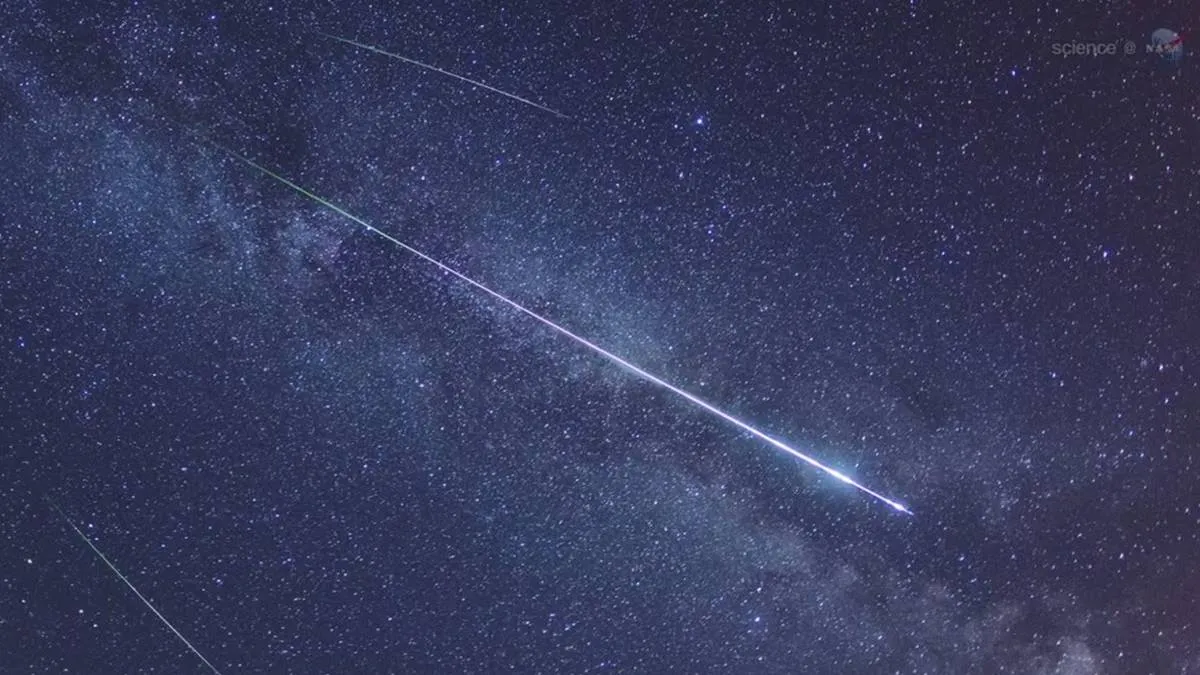
The Lyrid Meteor Shower, one of the oldest and most celebrated astronomical events, is once again gracing our night skies. This spectacular display has been active since April 17 and will continue until April 26, according to the American Meteor Society. The peak of the shower is set to occur overnight from Monday, April 21, to Tuesday, April 22 (today), 2025. It's bound to be a delight for both early risers and night owls alike!
Under ideal dark-sky conditions, observers can typically witness up to 18 meteors per hour during the peak of the Lyrids. These meteors are remnants of Comet Thatcher, which completes its orbit around the Sun approximately every 415 years. As the Earth passes through this comet's dusty trail, these tiny fragments ignite in our atmosphere, creating the bright streaks we fondly call shooting stars.
The radiant point of the meteor shower is situated near the constellations Lyra and the prominent star Vega. Each year, the peak activity usually falls around April 22–23. This year, the meteors will reach their height of activity between Monday, April 21, and Tuesday, April 22, before gradually tapering off and ceasing entirely by Saturday, April 26.
When Indians can watch Lyrid Meteor Shower
If you want to catch the action, the best time to look up is just before sunrise when the sky is darkest, providing optimal visibility. While the Lyrids are best appreciated from the Northern Hemisphere, there’s still a chance for lucky viewers in some regions of the Southern Hemisphere to catch a glimpse. Unfortunately, for observers in India, the prospects aren’t great this year due to weather conditions and the meteor shower's positioning, making visibility quite limited or unlikely.
Best places to view Lyrid Meteor Shower
For those in the United States, Canada, Europe, or parts of northern Asia, you’re in for a treat! For the best viewing experience, head to a dark open area away from city lights. According to NASA, rural locations with minimal light pollution offer the most breathtaking views of this celestial spectacle.
ALSO READ: Indian astronaut Shubhanshu Shukla to conduct 7 experiments in ISS next month
