
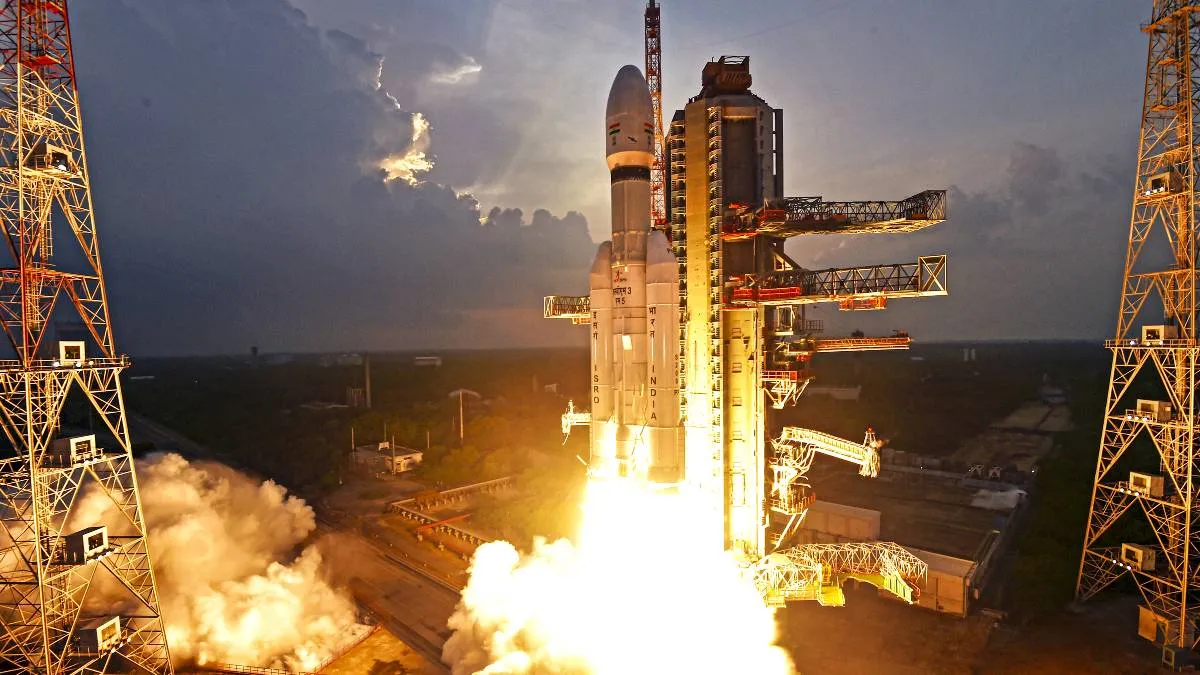
Following the recent launch of the PSLV-C62 mission, which was declared a failure due to technical issues within the launch vehicle, veteran ISRO scientist Dr S Venkateswara Sharma provided an in-depth look at the mission’s objectives and the broader roadmap for India's space program.
The PSLV-C62, a four-stage rocket standing 44.4 meters tall and weighing 260 tons, was the first mission of 2026. Despite the setback, Dr. Sharma highlighted the sophisticated engineering behind the vehicle, which utilised a combination of solid and liquid stages designed to deliver the EOS-N1 satellite and several co-passengers into orbit.
The EOS-N1 "Anvesha" satellite
The primary payload of the mission was the EOS-N1 (Anvesha), a joint venture between ISRO and DRDO. Built to serve both strategic and civilian sectors, the satellite was designed for high-resolution mapping, environmental monitoring, and surveillance.
"The bus system—including control, power, and guidance—was built by ISRO, while the specialized payload was developed by DRDO in collaboration with private players," Dr Sharma explained. The satellite was intended to operate for at least five years, providing critical weather and surveillance data for strategic operations.
The reliability of the PSLV "workhorse"
Prior to this technical issue, the PSLV had established itself as ISRO’s reliable "workhorse," successfully launching landmark missions like Mangalyaan and Chandrayaan-1. Dr. Sharma noted that the technology has matured to the point where production is being transitioned to private partners like HAL, L&T, and Godrej to achieve "Atmanirbharta" (self-reliance) in the space sector by 2047.
"The repeated testing and available margins make the PSLV extremely reliable," Dr Sharma said, adding that India’s fleet also includes the GSLV and the upcoming SSLV, which can launch small satellites on demand.
Human spaceflight and future frontiers
Looking ahead, Dr Sharma discussed the Gaganyaan program. ISRO aims to launch the first uncrewed flight with a humanoid in early 2026. Following three successful uncrewed missions, India expects to launch astronauts in 2027.
"The LVM3 launch vehicle is being 'human-rated,' which requires significantly higher reliability and emergency contingency systems," Dr Sharma noted. He also highlighted the experience gained by astronaut Subhanshu Shukla during his 14-day stay on the International Space Station (ISS) as a vital asset for the program.
Global space order and the Bharat Space Station
As the ISS nears retirement around 2030, Dr Sharma confirmed that the Bharat Space Station (BSS) is on track for 2035. He addressed the growing concerns of space debris and the potential for space to become a "battlefield," noting that space assets are now integral to navigation, imaging, and strategic security.
"India is moving toward self-sufficiency in lower orbit monitoring. By 2035, with the BSS and a planned lunar landing, the country will be in a different orbit entirely," he stated.
Career milestones and advice for the youth
Reflecting on his career, Dr Sharma cited several proud moments:
- Aryabhata (1975): India's first satellite, built by a small team of 100 engineers.
- Chandrayaan-1 (2008): The first mission to discover water on the Moon.
- Mars Orbiter Mission (2014): Reaching Mars on the first attempt at a cost of just eight rupees per kilometer.
- Chandrayaan-3 (2024): The historic textbook landing on the Lunar South Pole.
In his advice to young Indians, Dr Sharma emphasised that the space sector needs more than just engineers. "Whether you study science, commerce, or arts, every role—from technician and administrator to housekeeping—is part of the space sector. Excel in your field, follow your passion, and be a good citizen".
ALSO READ: ISRO PSLV-C62 mission fails: A Look at the space agency's rare launch setbacks
