
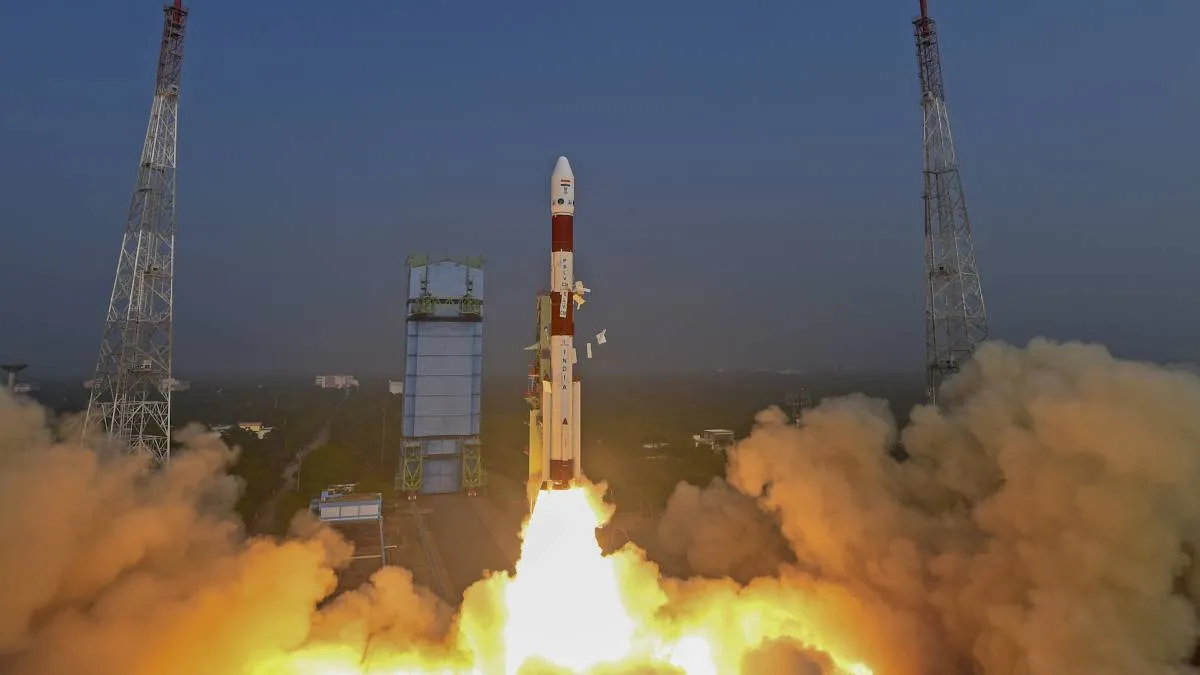
The Indian Space Research Organisation (ISRO) successfully kicked off its 2026 launch calendar today, January 12, with the flight of the PSLV-C62 mission. This mission is set to deploy the EOS-N1 earth observation satellite alongside 14 other secondary payloads into orbit. The launch took place from the first launch pad at Satish Dhawan Space Centre, Sriharikota.
Managed by NewSpace India Ltd (NSIL), the commercial arm of ISRO, the 14 co-passenger satellites represent a mix of domestic and international customers. The primary Earth Observation Satellite was built jointly by Thailand and the United Kingdom, according to ISRO.
Mission timeline and deployment
The mission took flight at 10:17 AM on January 12 from the Satish Dhawan Space Centre. The primary payload, the Earth Observation Satellite, is flying piggyback with 13 other co-passenger satellites. These are scheduled to be deployed into their intended sun-synchronous orbits approximately 17 minutes after lift-off.
However, the final phase of the mission is expected to extend beyond the two-hour mark. This includes the separation of the rocket's fourth stage (PS4) and a critical demonstration involving the Kestrel Initial Technology Demonstrator (KID) capsule, owned by a Spanish startup.
Advanced re-entry demonstration
To facilitate this demonstration, scientists will restart the PS4 stage to perform a de-boost maneuver. This will place the stage on a re-entry trajectory, followed by the separation of the KID capsule. Both the PS4 stage and the KID capsule—the final co-passenger—are designed to re-enter the Earth's atmosphere and conclude with a splashdown in the South Pacific Ocean.
The legacy of the PSLV
With today's success, the PSLV has completed 63 flights to date. Its storied history includes high-profile missions such as Chandrayaan-1, the Mars Orbiter Mission (MOM), and the Aditya-L1 solar mission.
The Polar Satellite Launch Vehicle (PSLV) is known as the "Workhorse of ISRO" due to its exceptional reliability and versatility, which has been instrumental in India's rise as a prominent space power. The rocket's journey is a story of resilience, record-breaking feats, and strategic innovation.
ALSO READ: Space 'petrol pumps' in orbit: How OrbitAid’s AyulSAT will extend satellite lifespan
