
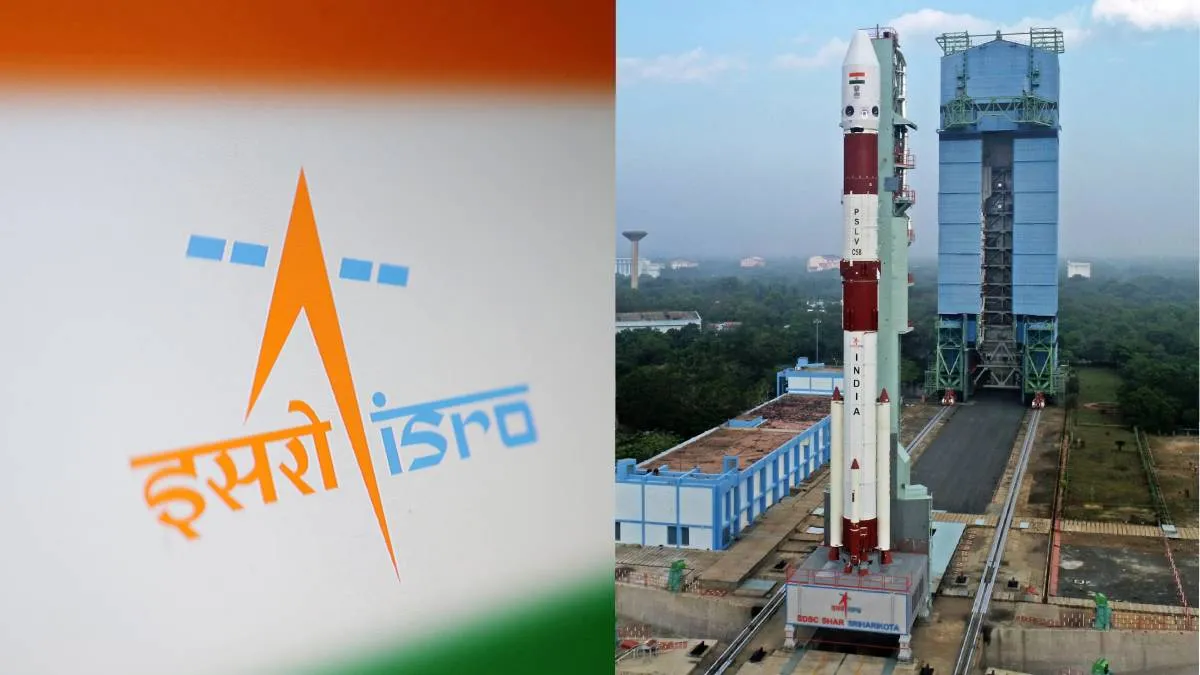
The Indian Space Research Organisation (ISRO) is focused on designing and executing space programmes that serve the safety and security of India, said Chairman V Narayanan on Thursday. Speaking to the press in Chennai, Narayanan emphasised that India's space missions are driven by national requirements, not competition with other countries.
“All our programmes are for the safety and security of our people and country. We don't compete with any other nation. Our mission is planned based on our needs,” he said, when asked about any specific launches planned for the Indian armed forces.
RISAT-18 launch set for May 18
Highlighting ISRO’s upcoming missions, Narayanan announced that the 101st rocket launch will take place on May 18, 2025. The mission will launch Earth Observation Satellite RISAT-18 aboard the Polar Satellite Launch Vehicle (PSLV-C61). The satellite will enhance India’s surveillance, remote sensing, and disaster response capabilities.
ISRO had completed its 100th launch from Sriharikota earlier this year in January, a milestone in India's space journey that began over four decades ago.
India’s space journey since 1979
Recalling ISRO’s early days, Narayanan noted that India’s first space launch was in 1979 with the SLV-3 rocket, which achieved 98 per cent success.
“Our first completely successful mission was in 1980,” he added, showcasing the progress India has made since then.
As ISRO continues to strengthen its technological capabilities, it remains committed to serving India’s interests across fields like defence, disaster management, agriculture, and climate monitoring.

The Indian Space Research Organisation (ISRO) is gearing up for another major space mission. On June 18, 2025, the space agency will launch EOS-09, also known as RISAT-1B, from the Satish Dhawan Space Centre in Sriharikota, Andhra Pradesh. The launch is scheduled for 6:59 AM IST, marking another significant milestone in India’s Earth observation programme.
NASA’s Imaging X-ray Polarimetry Explorer (IXPE) has solved a long-standing cosmic mystery about how X-rays are generated in the powerful jets of black holes like blazar BL Lacertae. By observing low X-ray polarisation alongside high optical polarisation, the findings point to Compton scattering.
Inputs from PTI