
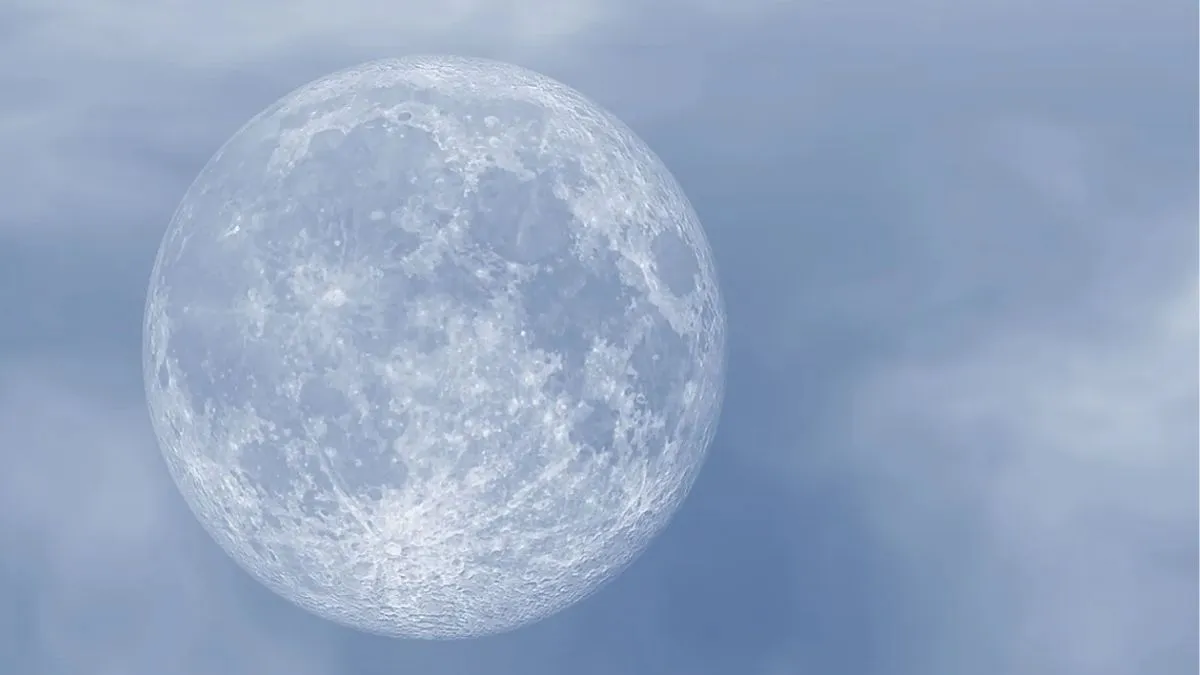
The Moon, our closest neighbour in space, is actually shrinking — or at least, that’s what scientists at the National Air and Space Museum’s Centre for Earth and Planetary Studies are saying. As the Moon cools down from the inside, its core contracts.
That squeeze pulls the surface in, wrinkling it up and creating these cliff-like ridges called lobate scarps. They pop up when the Moon’s crust gets pushed and crumpled from below.
This idea is not exactly brand new. Back in 2010, Thomas R. Watters, a planetary scientist, showed that the Moon’s been slowly shrinking for ages.
So, how does this shrinking even happen? And is it really possible?
Well, while Earth has active tectonic plates shifting around, the Moon does not. But it is not totally dead, geologically speaking. As the Moon’s insides keep cooling, the surface keeps changing. You get those lobate scarps, but also small mare ridges and even shallow moonquakes.
A lot of these features are pretty young, at least in geological terms. That means the Moon is still tectonically active and probably will be for a while. This stuff actually matters for space missions. Moonquakes could shake up landing sites or mess with future lunar bases, so scientists want to know exactly what’s going on up there.
Now, what if the Moon just disappeared?
We need to relax, as it is not about to vanish. But if it did, Earth would feel it big time!
The Moon keeps our planet’s tilt steady and controls the tides. Take it away, and suddenly the Earth could wobble on its axis, the seasons would swing wildly, and the climate could get unpredictable. Tides would shrink, messing with marine life and coastlines. Over time, even Earth’s rotation could go out of whack, throwing weather and life into chaos.
The “Disappearing Moon” in History
There’s actually a weird story from history about the Moon “disappearing.” In 1110, people in England wrote that the Moon vanished from the sky.
Later, scientists traced that to a volcanic eruption when sulphur-rich particles filled the air and blocked out the moonlight, which made it look like the Moon was gone, but really, it was just hidden.
Because understanding how the Moon changes the Earth’s ecosystem helps scientists to figure out its history – certainly, the Earth is going to face extremes if the Moon is gone!
Even as it shrinks, the Moon is still a huge part of what keeps Earth stable and life running smoothly.
