
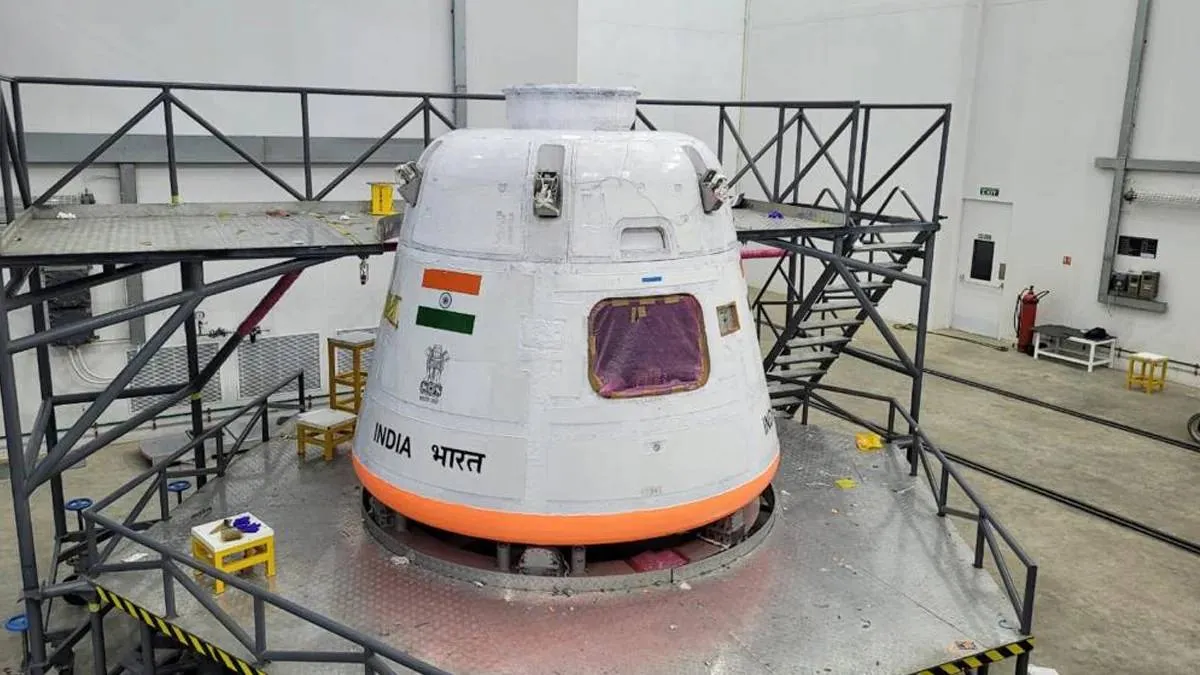
India's first human spaceflight mission, Gaganyaan, has been postponed to the first quarter of 2027, nearly five years later than initially planned, as efforts continue to master the complex technologies required for such ambitious projects. The first uncrewed mission is scheduled for launch later this year, followed by two additional similar missions in 2026, according to V Narayanan, Chairman of the Indian Space Research Organisation (ISRO), during a recent press conference. "The first crewed mission is now set for the first quarter of 2027," Narayanan stated. He also noted that ISRO would send a half-humanoid robot named Vyommitra as part of the uncrewed mission before introducing astronauts to low-Earth orbit.
Prime Minister Narendra Modi unveiled the Gaganyaan project during his Independence Day speech in 2018, setting an ambitious goal of achieving India's maiden human spaceflight by 2022. However, the project has faced multiple delays, notably due to the Covid pandemic, which impacted astronaut training, along with the complexities involved in mastering the essential technologies for the mission. The crewed launch was originally anticipated for 2025, then shifted to 2026, and has now been pushed back to early 2027.
In addition to developing the human-rated launch vehicle for Gaganyaan, ISRO scientists have built the Environment Control and Life Support System (ECLSS) from the ground up. This system is crucial for taking astronauts safely to a low-Earth orbit about 400 kilometers above the Earth for several days and ensuring their safe return home. The ECLSS will regulate cabin pressure, humidity, temperature, air quality, and personal hygiene throughout the mission.
It is a very complex process. For the first time we undertook this development. I want to say, 90 per cent of the work is completed and we are in the final phase of qualification," Narayanan explained. If successful, India will become the fourth country, following Russia, the US, and China, to independently send humans into space.
Narayanan also mentioned that space docking experiments involving two satellites launched by a PSLV rocket in December were successful, and ISRO is preparing for SPADEX-2. A proposal for this will be submitted to the government soon. He highlighted that judicious fuel use during the ongoing SPADEX mission has allowed ISRO to perform additional experiments in orbit, including making one satellite orbit around another in March.
Scientists successfully demonstrated both open and closed-loop circumnavigation experiments, which are foundational technologies for in-orbit servicing of satellites to extend their mission life. Furthermore, Narayanan announced that ISRO, together with the International Astronautical Federation, will host the Global Space Exploration Conference (GLEX 2025) from May 7-9, thereby solidifying India's role as a key player in space exploration.
ALSO READ: Defunct Soviet Satellite could crash into Earth next week: Scientists warn of rare impact risk
Inputs from PTI
