
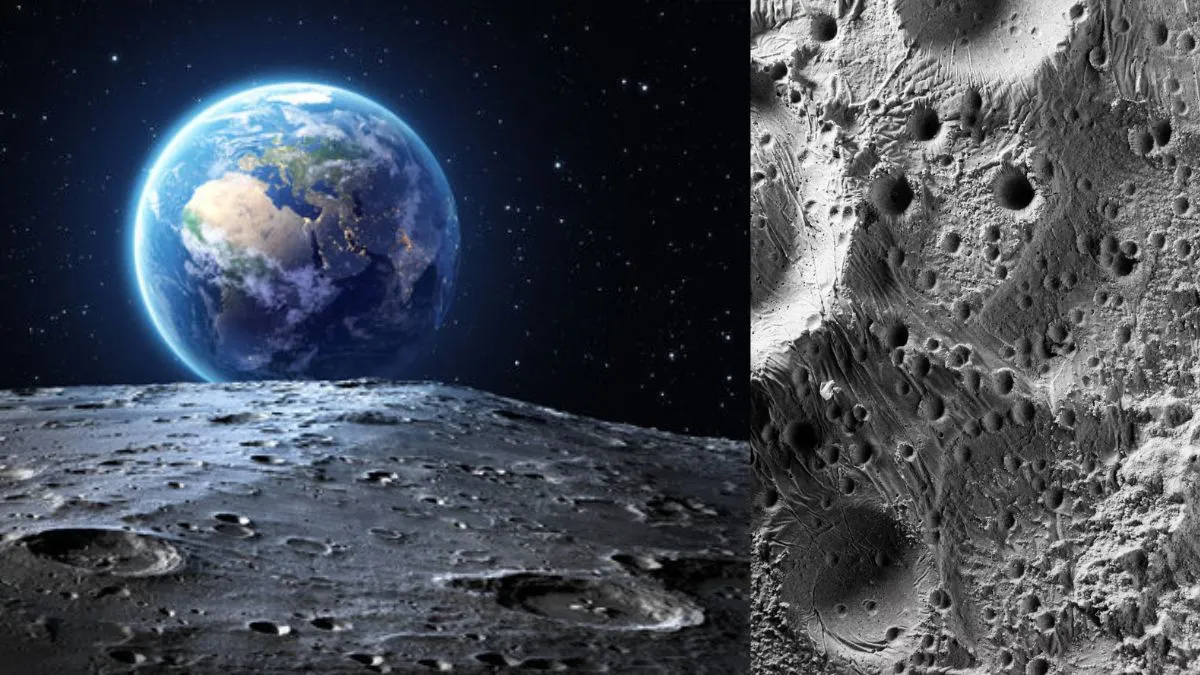
Chinese scientists have recently made an astonishing discovery in researching lunar soil samples, which were brought back by the Chang'e-6 mission. The study found evidence of uncommon CI chondrites, a class of carbonaceous meteorites which come from the outer reaches of the Solar System. The CI chondrites have water and organic compounds inside them, which are considered vital ingredients for any life to exist.
The evidence, reported in the Proceedings of the National Academy of Sciences, represents the first definitive detection of such extraterrestrial fragments on the Moon and offers unique insights into the transport of space material throughout the Solar System.
Samples from the Moon's oldest crater
The Chang'e-6 mission gathered almost two kilograms of ground from the South Pole–Aitken Basin, the oldest and largest impact crater on the far side of the Moon. Because the Moon has no atmosphere or geology to erode the material, it is a natural repository of ancient space debris that has been preserved with cosmic material that would have weathered on Earth.
With the aid of sophisticated microscopy and isotope examination, researchers were able to verify that the particles were identical to the special composition of undeniably fragile CI chondrites, which account for less than 1 per cent of meteorites on Earth.
Insights into the origins of water and life
The presence of water-carrying minerals in these fragments leads to evidence of the hypotheses that carbonaceous asteroids brought organic molecules and water to the surface of the Moon and Earth during the Solar System's early days.
Scientists have been thinking that the Earth–Moon system might have been hit by many more of such kinds of asteroids than was previously calculated.
This is a once-in-a-lifetime kind of discovery, which not only illuminates the inner Solar System's distribution of life-critical materials but also demonstrates the worth of the moon as a source of ancient cosmic history – for life and existence.
A new chapter in lunar science
The research further undermines the conventional wisdom about how the outer Solar System materials travelled inward in the system. It also reaffirms that the Moon contains untapped scientific resources which are yet to assist in unravelling the enigmas which have been surrounding our planetary system.
With each mission, China's Chang'e lunar programme is said to be working on increasing humankind's knowledge of how the solar system was developed and how life's seeds may have been planted throughout its vastness.
