
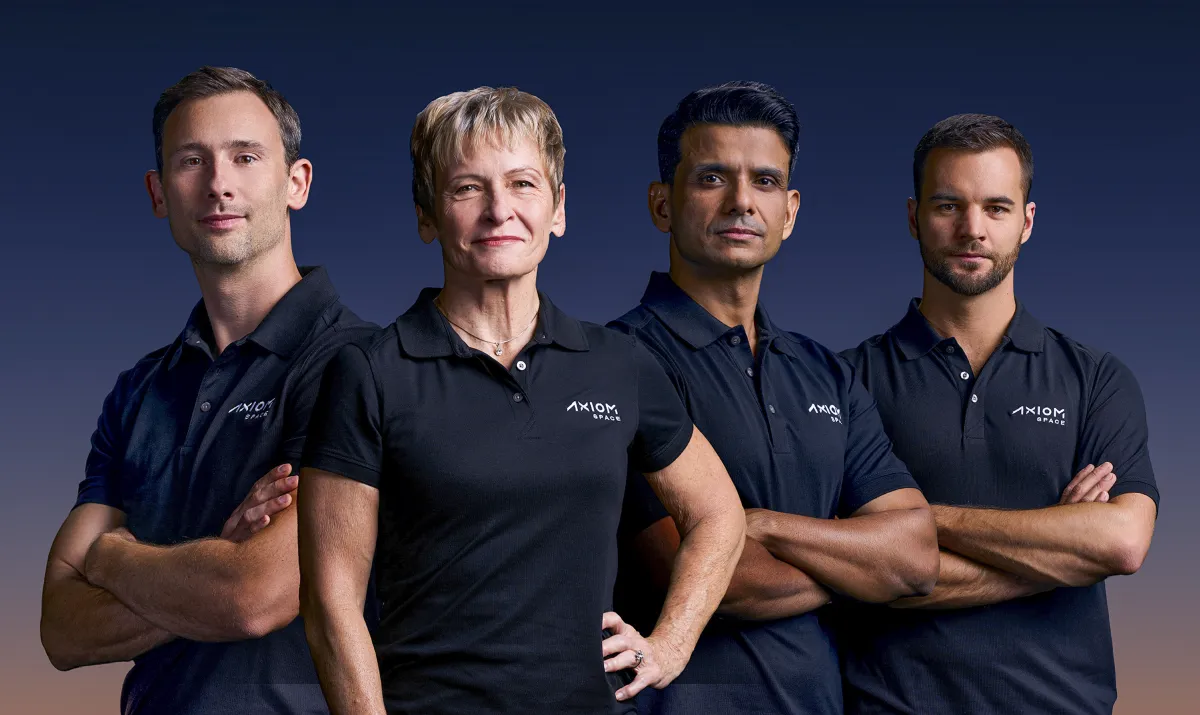
Indian astronaut Shubhanshu Shukla is set to perform significant scientific experiments aboard the International Space Station, which are crucial for future space missions, including India's Gaganyaan project. This information was shared by the Science and Technology Minister, Jitendra Singh. In a recent interview with PTI Videos, Singh mentioned that Shukla will be traveling to the ISS as part of the Axiom Space mission next week and emphasised that his role will be just as vital as that of the other three astronauts involved in the commercial mission. Singh expressed pride in Shukla’s participation in this international endeavor, highlighting that his contributions would be equally important. Shukla is a member of the Axiom-4 mission, which is expected to launch from the Kennedy Space Center in Florida, USA, no earlier than June 10. The mission will last for 14 days on the ISS.
The minister compared Shukla's mission to that of Rakesh Sharma, the first Indian astronaut to go to space, noting that Sharma's flight was part of a Soviet mission with limited experimental opportunities due to India's nascent space technology at the time. However, Singh pointed out that the current circumstances are markedly different.
Axiom-4 mission experiments
The Axiom-4 mission has planned a total of 60 experiments to be conducted by the four-member crew on the ISS, including seven experiments organised by ISRO and five in which Shukla will take part for NASA’s human research program. According to Singh, the experiments Shukla will conduct are of great significance for future missions, such as the Gaganyaan project and the proposed Bharat Antariksh Station.
Shukla is expected to investigate physical, cognitive, and physiological responses in space, as well as the effects of using continuous electronic displays in microgravity—a key aspect for extended space missions. Additionally, Singh noted that Shukla’s research would address skeletal muscle dysfunction in space and explore therapeutic strategies to mitigate these effects.
Among the experiments, Shukla will also focus on the revival, survival, and reproduction of extremophiles like tardigrades, which are known for their ability to thrive in extreme environments.
Alongside Shukla, the Axiom-4 mission includes pilot Slawosz Uznanski-Wisniewski from Poland and Tibor Kapu from Hungary, marking a historic moment as both nations will embark on their first journeys to the ISS, following the second government-sponsored human spaceflight mission in over four decades.
ALSO READ: ISRO successfully conducts third hot test of semicryogenic engine: Here's why it is a game changer
Inputs from PTI
