
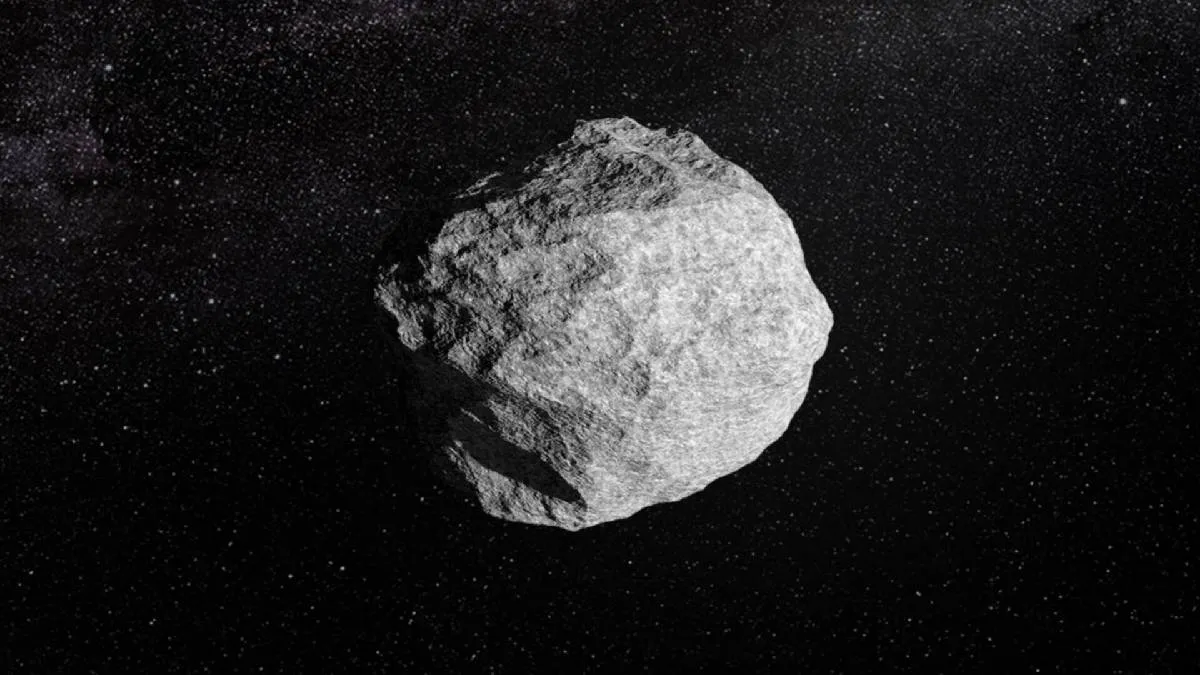
A newly discovered asteroid, 2024 YR4, is keeping the scientific community both busy and alert. While initial predictions suggested a possible collision with Earth, further observations provided a brief sigh of relief by ruling out a terrestrial impact. However, that relief was short-lived, as the latest data now indicates a rising probability of the asteroid hitting the Moon.
What is Asteroid 2024 YR4?
Asteroid 2024 YR4 was first detected on December 27, 2024, by the Asteroid Terrestrial-impact Last Alert System (ATLAS) telescope in Río Hurtado, Chile. Measuring between 53 and 67 meters in diameter, an asteroid of this size is capable of causing severe damage to an entire city or region upon impact.
Following its discovery, automated warning systems initially estimated a potential Earth impact on December 22, 2032. However, by March 2025, additional observations, including data from the James Webb Space Telescope, allowed astronomers to officially rule out any threat to our planet for that date.
Shifting focus: A 4% chance of hitting the Moon
While Earth is currently safe, the focus has shifted to our lunar neighbor. Astronomers have calculated a 4 per cent probability that 2024 YR4 will impact the Moon on December 22, 2032. This probability was slowly rising just as the asteroid began to fade from view.
The asteroid is now too far away for further study and is not expected to return to view until June 2028. Once it reappears, new observations will allow scientists to determine with high confidence whether the asteroid will—or, as is statistically more likely, will not—strike the Moon.
Why was 2024 YR4 detected so late?
Asteroid 2024 YR4 poses a unique challenge because it was discovered two days after it had already reached its closest point to Earth. It approached from the "dayside" of the planet, a notorious blind spot for ground-based optical telescopes due to the Sun's intense glare.
To address this vulnerability, the European Space Agency (ESA) is planning the NEOMIR (Near-Earth Object Mission in the InfraRed) satellite.
By positioning an infrared telescope at the first Sun-Earth Lagrange Point (L1), NEOMIR will be able to spot asteroids much closer to the Sun that are currently invisible to existing warning systems.
Potential impact on the Moon
"A lunar impact remains unlikely, and no one knows what the exact effects would be," says Richard Moissl of the ESA.
If an impact does occur, it would be a historic scientific event:
- Visibility: An impact by an object this large would likely be visible from Earth.
- New Crater: The collision would create a fresh crater on the lunar surface.
- Scientific Data: Scientists are excited by the prospect of analysing the debris. However, it is currently impossible to predict how much lunar material would be ejected into space or if any would reach Earth's atmosphere.
Detailed computational simulations are expected to be conducted over the next few years to prepare for the 2032 flyby.
ALSO READ: India's space program expands: ISRO to get third launch pad at Sriharikota for heavy-lift missions
