
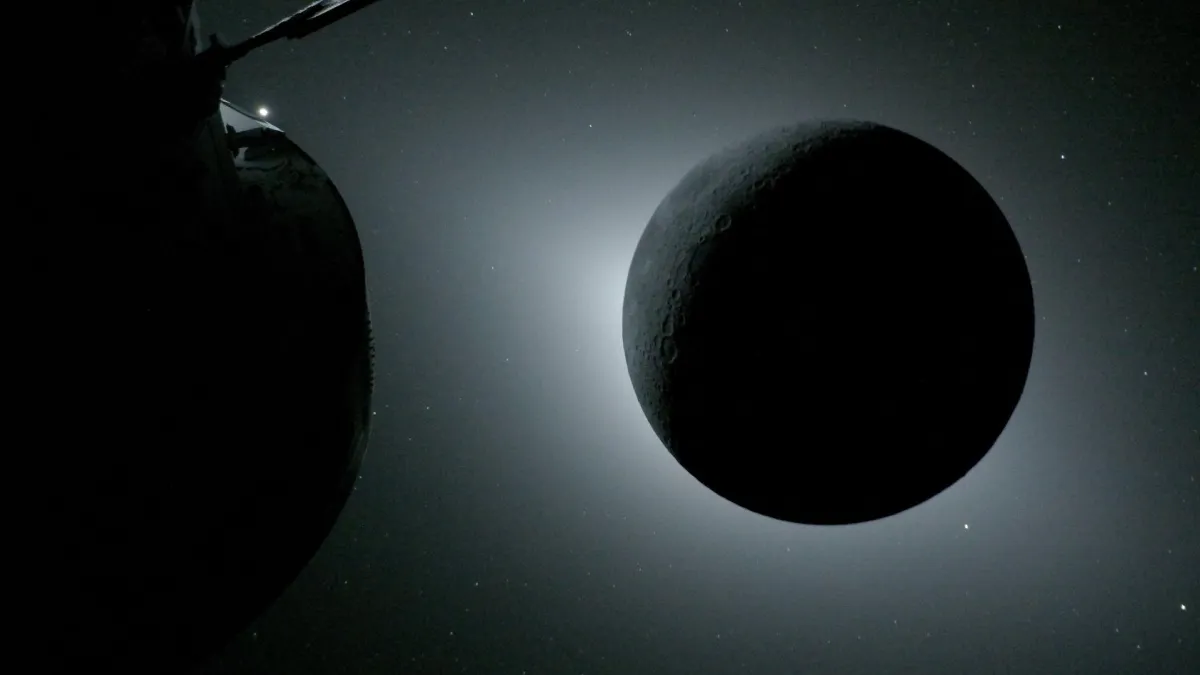
A newly released video from NASA's Artemis II mission has shed light on one of the less-discussed yet essential aspects of human spaceflight, waste management in deep space. The footage shows astronauts aboard the Orion spacecraft safely disposing of frozen human waste, including urine and feces, into space as they return to Earth following a historic lunar flyby.
Here's the video | Watch
Unlike the International Space Station, which is equipped with advanced recycling systems for long-duration missions, Orion relies on a simpler storage-and-disposal method suited for shorter missions like Artemis II, which lasts around 10 days.
How do astronauts dispose of waste in space?
During the mission, astronauts store waste in specially designed containers that prevent leakage, odour, and contamination inside the spacecraft. Once sealed, these containers are exposed to the vacuum of space, where extremely low temperatures—often below minus 100 degrees Celsius—rapidly freeze the contents.
The video captures the crew releasing the frozen waste in a controlled manner, ensuring it moves safely away from the spacecraft without posing any risk.
The process is aided by the unique conditions of space. In a vacuum, liquids like urine can undergo sublimation, transitioning directly into vapour or freezing into ice crystals, while solid waste becomes dehydrated and sterile due to the absence of atmospheric pressure and microbial activity.
NASA has stressed that all disposal procedures are carefully planned to prevent the creation of space debris or contamination of the surrounding environment, with waste ejected along trajectories that ensure it does not interfere with the spacecraft or other orbital assets.
Also Read: Artemis II crew witnesses rare cosmic eclipse while behind the moon | VIDEO
Also Read: Artemis II heads to Moon: NASA astronauts break free from Earth orbit after 50 years
