
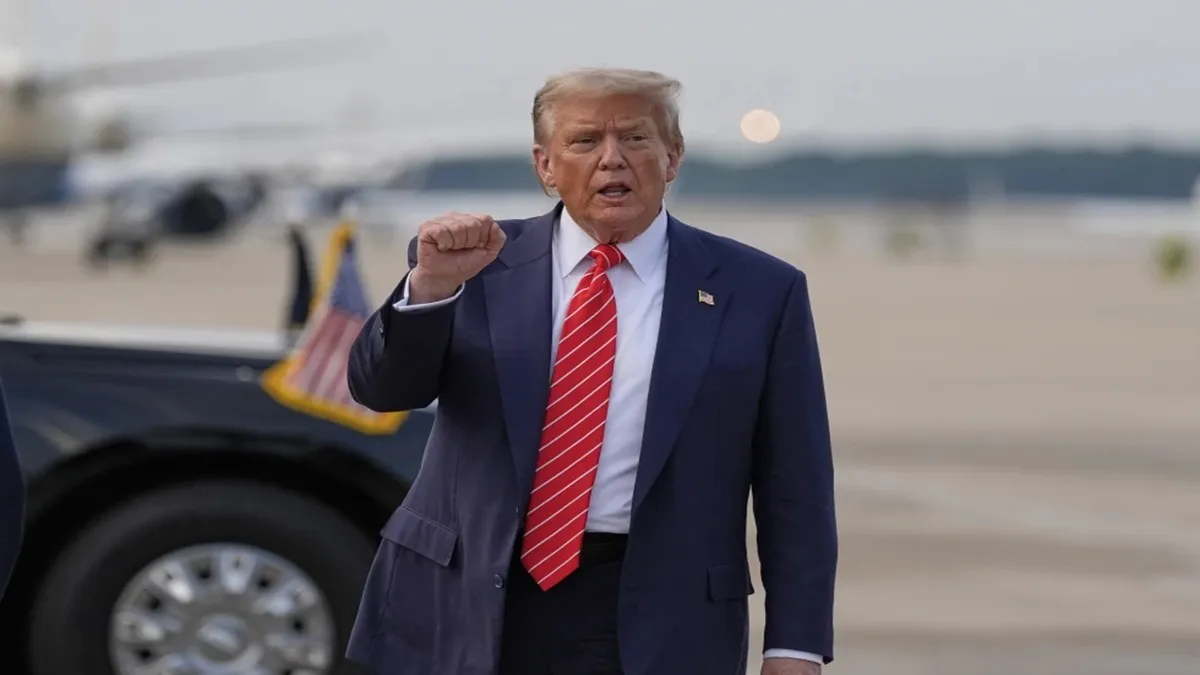
The US Senate has narrowly advanced former President Donald Trump's ambitious "One Big Beautiful Bill" - a sweeping economic and policy package but the legislation has not yet passed into law. In a late-night session on Saturday, Republican senators pushed the nearly 940-page bill past a key procedural hurdle, allowing debate to begin. The 51-49 vote came after intense negotiations within the GOP and pressure from Trump, who has been demanding the bill reach his desk before 4 July. Despite the momentum, deep divisions over healthcare, tax cuts and energy policy suggest a tough road ahead.
What is the 'Big Beautiful Bill'?
The proposed legislation is central to Trump's second-term economic agenda. It bundles a broad range of tax reforms, welfare cuts, and spending increases - including a USD 150 billion boost in military funding and money for mass deportations and border wall construction. In exchange, it proposes sharp cuts to Medicaid, clean energy programmes, and food assistance. The bill also includes Trump's hallmark tax pledges: eliminating taxes on overtime pay and tips, raising child tax credits, and increasing deductions for older Americans.
The bill passed the House of Representatives last month by a single vote. The Senate version, released after midnight on Friday, made further changes to meet budgetary rules and address internal Republican dissent. These include even stricter work requirements for Medicaid, new rules on state healthcare taxes, and scaled-back clean energy phase-outs.
What did the Senate vote mean?
Contrary to some interpretations, Saturday’s 51-49 vote was not for final passage. It was a procedural motion allowing formal debate to begin on the Senate floor. Without that vote, the bill would not have advanced at all. Debate is now expected to stretch into the week, with dozens of amendments and negotiations ahead. If passed in the Senate, the bill must return to the House because of changes setting up another showdown between hardliners and moderates.
Vice President JD Vance was present during the vote, ready to cast a tie-breaker if needed, underscoring the fragility of Republican support. Senators Rand Paul and Thom Tillis voted against the motion, joining all 47 Democrats in opposition. Their concerns mirror those of critics who argue the bill could strip millions of Americans of health coverage and worsen rural hospital access.
Opposition and fallout
The bill has drawn widespread criticism across the political spectrum. Democrats have condemned it as "reckless" and "regressive," warning of its potential to deepen inequality. Advocacy groups say proposed Medicaid cuts could impact nearly 9 million people, while changes to food stamps and housing aid would disproportionately affect working-class families. Elon Musk, once aligned with Trump, blasted the bill as "insane and destructive," warning it could kill jobs and damage long-term US competitiveness.
Even among Republicans, the bill faces internal resistance. Lawmakers from high-tax states oppose the partial rollback of SALT deductions. Rural-state Republicans are concerned about hospital closures due to Medicaid cuts. Energy hawks are split over the rollback of Biden-era clean energy tax credits, which the Senate version phases out more gradually than the House version.
What happens next?
Senators must now debate the bill, introduce amendments, and vote again for final passage. If the Senate passes a version different from the House's, the two chambers must reconcile their differences before sending it to Trump for signing. Given the razor-thin margins in both chambers and ideological rifts within the GOP, the path to final approval remains highly uncertain.
Still, the bill's advancement marks a significant moment for Trump and his allies, who view it as a fulfilment of campaign promises to cut taxes, slash government spending, and reassert hardline immigration policy. Whether the final bill emerges before the symbolic 4 July deadline as Trump wants will depend on how much compromise Republicans can muster in the coming days.
Also read: 'Let Bibi go': Trump backs Netanyahu, calls corruption trial a 'political witch hunt'
Also read: Trump must end 'disrespectful and unacceptable' tone towards Khamenei if he wants a deal: Iran
