
Pakistan has a clandestine history of nuclear proliferation, and the US intelligence report flagging Islamabad as a nuclear threat to Washington highlights the same fact, India said on Thursday.
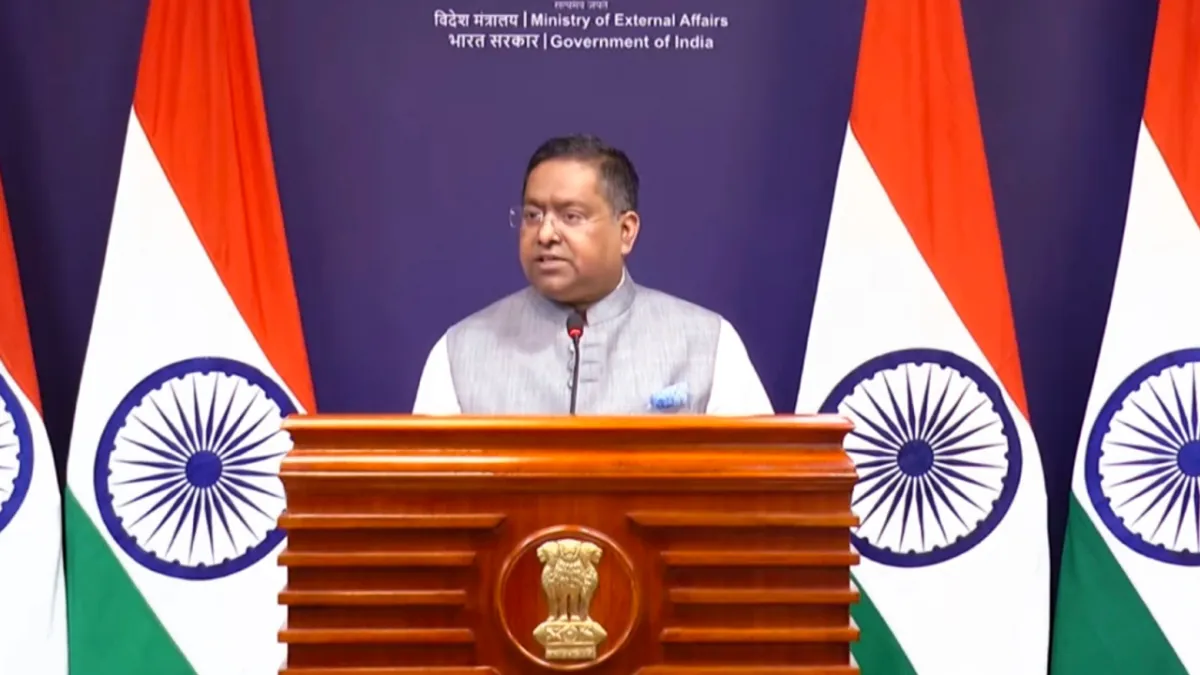
Addressing a media briefing, MEA spokesperson Randhir Jaiswal said, "As far as Pakistan is concerned, they have a history. They have a history of clandestine nuclear nonproliferation, and statements like this again make it clear what kind of threat they pose to the world because of their clandestine nuclear operations," Jaiswal said.
US report on Pakistan nuclear threat
On March 18, a report released by the Office of the Director of National Intelligence identified Pakistan as a significant nuclear threat to the United States, placing it alongside major powers such as Russia and China.
US intelligence chief Tulsi Gabbard presented the 2026 Annual Threat Assessment, outlining concerns over Pakistan’s evolving military capabilities, its role in regional instability, and the continued threat of terrorism. The report notes that Pakistan is actively developing advanced missile delivery systems, including long-range ballistic missiles that could potentially evolve into intercontinental ballistic missiles capable of reaching the US.
In her opening remarks before the Senate Select Committee on Intelligence, Gabbard said that while the US nuclear deterrent remains secure, countries including Russia, China, North Korea, Iran and Pakistan are advancing missile technologies that could threaten the US homeland.
The report also highlights Pakistan’s continued relevance in the global fight against Islamist militancy. It notes that while groups such as al Qaeda and ISIS are weaker than at their peak, the threat remains complex and evolving, with actors seeking to expand their global reach and target American interests.
Particular concern has been raised over ISIS Khorasan Province, identified as a major external threat in South Asia. The group is believed to operate in poorly governed areas, using them for recruitment and planning.
According to the report, US military operations and coordination with international partners in countries including Iraq, Pakistan, Somalia, and Syria during 2025 led to the elimination of key terrorist leaders, weakening the operational capabilities of al Qaeda and ISIS to carry out attacks against the US and its interests abroad.
MEA on India's oil and gas supplies
Speaking on the oil and energy supply issues due to the ongoing West Asia conflict, Jaiswal said India is trying to diversify its energy sources, looking for LPG supply from other parts of the world.
"We are at it, we are working, and we'll do our best to secure our energy security needs. We buy oil from across the world. If there are tankers coming from X part of the world or Y part of the world, it is normal. We'll have many more tankers coming because we are buying energy.," he said.
He added that India is buying crude oil from various parts of the world, and has a diversified option, including from Russia, in this regard, which will continue.
