

The Nabataean kingdom remained prosperous and powerful until 106 A.D. when it was finally conquered by the Roman Emperor Trajan.
The city was devastated by severe earthquakes in 336 and 551. Petra was largely abandoned by 700, except for a fort build by Crusaders in the 12th century.
Petra was sometimes called the “The Lost City” when it was rediscovered in 1812 by Swiss explorer Johann Ludwig Burckhardt.
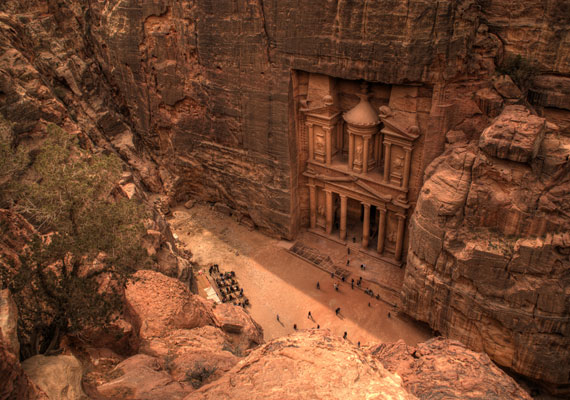
Photography enthusiasts will not be disappointed when the sunlight brings out the natural highlights in the rose-colored rocks. Early morning or late afternoon is the best time to take photographs in the gorge.
Tourists should plan on one day to see the main sites or several if they would like to see all areas of the Petra Archaeological Park.
Petra is constantly threatened by earthquakes and flash floods, and erosion is slowly wearing away the delicate facades. It may be hard to truly appreciate the incredible architectural achievements at Petra without seeing them first hand.
The ancient city of Petra is truly one of the New Seven Wonders of the World. The “rose-red city” will surpass all expectations and fill you with wonder and awe.
