
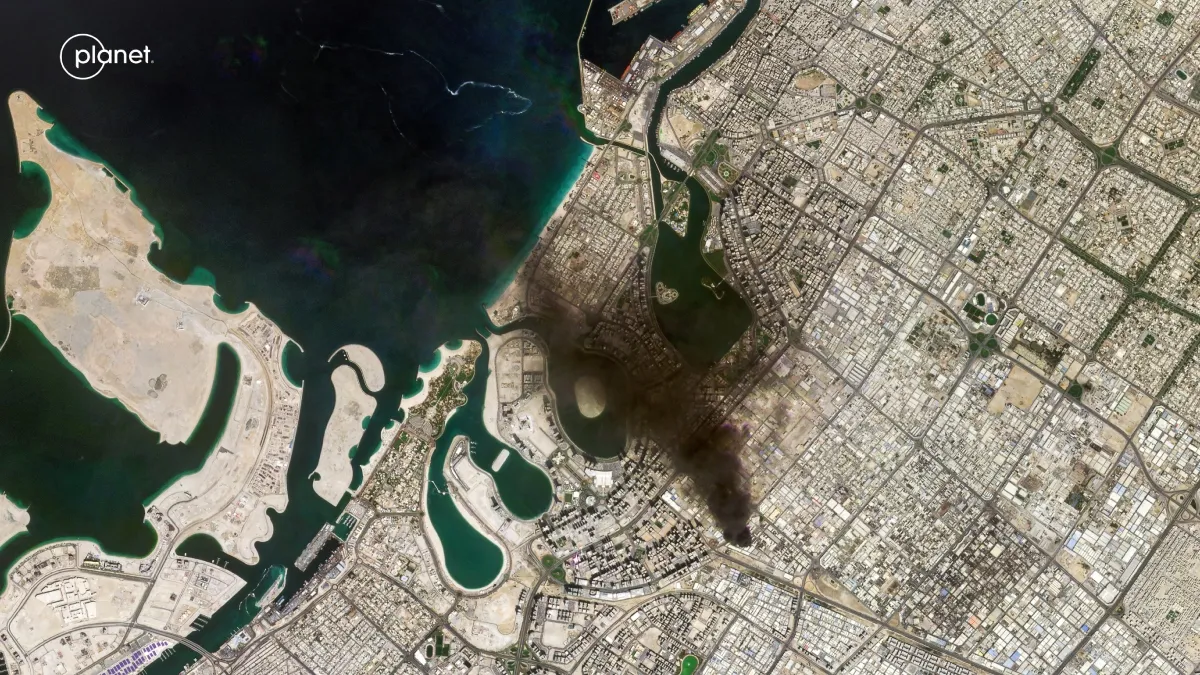
Satellite images revealed thick plumes of black smoke rising over Dubai's skyline as Iran's retaliatory attacks widened the impact of the escalating regional conflict, with before-and-after visuals showing damage across key industrial zones in the United Arab Emirates.
From clear skies to smoke plumes
Images dated February 24 show normal activity at an industrial area and at Jebel Ali Port, one of the world's busiest ports. However, satellite visuals from March 1 depict dense smoke engulfing several facilities, with one berth at the port appearing to be on fire after being struck by debris from an intercepted missile. The images underline how the conflict has begun to affect critical infrastructure far beyond the immediate theatre of war.
A comparison of the satellite photos shows a previously clear skyline replaced by concentrated columns of smoke, indicating localised blazes rather than widespread destruction.

Residents reported hearing loud explosions and witnessing air-defence systems being activated across parts of the city, as emergency services moved swiftly to contain fires and secure affected areas.
Iran strikes Dubai
The smoke was seen after Iran launched hundreds of drones and missiles toward Gulf states in retaliation for US and Israel strikes on Iran that killed Supreme Leader Ayatollah Ali Khamenei and several other senior officials. While most of the incoming projectiles were intercepted, falling debris caused limited damage and fires in parts of Dubai.
Areas near prominent landmarks such as the Burj Al Arab and the upscale Palm Jumeirah were among the locations affected, according to residents and local reports. By Sunday, as tensions deepened across the region, the city's usually vibrant atmosphere was described as unusually subdued.
In response to the situation, the UAE Ministry of Human Resources advised private-sector companies to allow employees to work remotely until Tuesday, citing safety and operational concerns.
The UAE has strongly condemned Iranian missile attacks targeting both the UAE and the "sisterly" Sultanate of Oman, calling them a "dangerous escalation" and announcing the immediate closure of its embassy in Tehran along with the withdrawal of its ambassador and diplomatic staff.
In a statement, the UAE Ministry of Foreign Affairs said the Iranian attacks represented a "blatant violation of state sovereignty" and posed a direct threat to regional security and stability.
The UAE also announced the closure of its embassy in Tehran and the withdrawal of its ambassador and all members of its diplomatic mission from the Islamic Republic of Iran. The decision follows what the UAE described as "blatant Iranian missile attacks targeting UAE territory."
This development comes amid heightened tensions after a joint missile strike titled Operation Roaring Lion/Operation Epic Fury by Israel and the United States on Iran on February 28.
Also Read: Hezbollah claims attack on Israeli base, IDF retaliates with airstrikes on Lebanese Capital
Also Read: US base in Baghdad hit, Bahrain Port on fire as Trump says Iran conflict may last weeks | VIDEO