
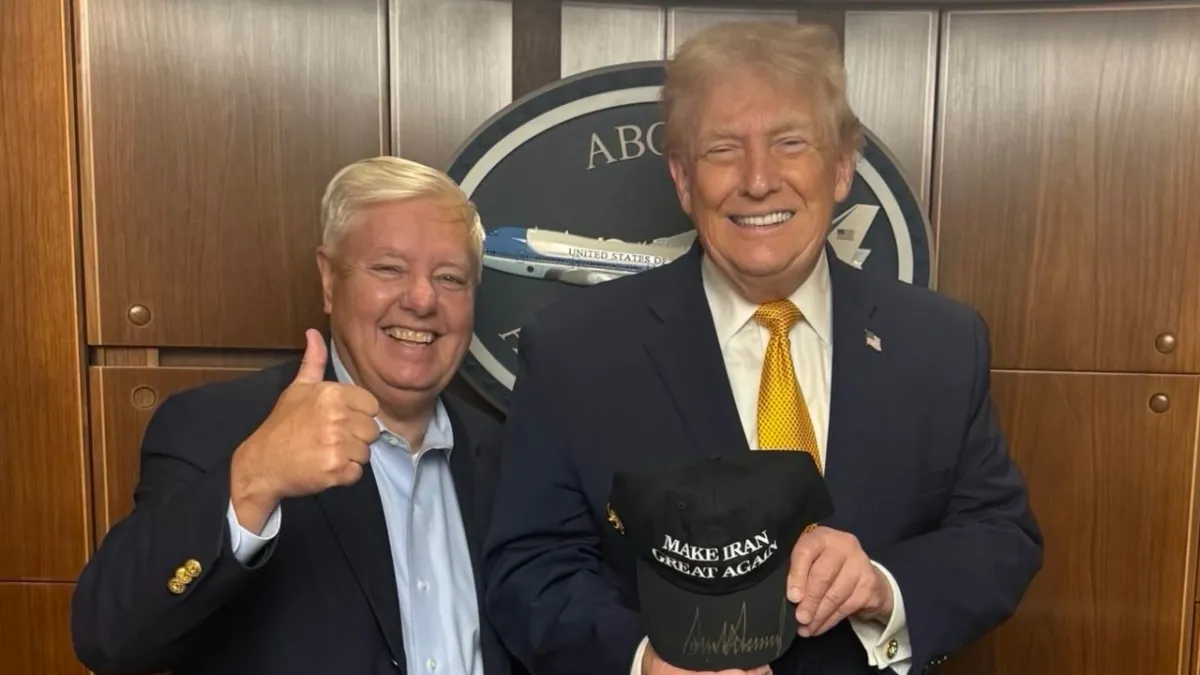
US President Donald Trump has greenlit a sanctions bill that could impose 500 per cent tariffs on countries purchasing Russian oil, a move that would give him what lawmakers describe as significant leverage over nations such as India and China to curb their imports of discounted crude from Moscow.
Senator Lindsey Graham said he had a very productive meeting with Trump at the White House on Wednesday, during which the President approved the bipartisan Russia sanctions bill that has been under consideration for several months.
"This will be well timed, as Ukraine is making concessions for peace while Putin is all talk and continues to kill innocent people. This bill will allow President Trump to punish countries that buy cheap Russian oil and fuel Putin’s war machine," Graham said in a post on X.
He added that the legislation would give Trump tremendous leverage over countries such as China, India and Brazil, encouraging them to stop purchasing Russian oil that helps finance what he described as Putin’s bloodbath against Ukraine.
Graham said he expects a strong bipartisan vote on the bill, possibly as early as next week. Trump has already imposed 50 per cent tariffs on India, among the highest globally, including 25 per cent levies linked to its purchases of Russian energy.
Who is Lindsey Graham?
Lindsey Graham has represented South Carolina in the US Senate since 2003. Before entering the Senate, he served as a military lawyer, a member of the House of Representatives, and one of the managers of President Bill Clinton’s impeachment trial in 1998.
Graham built his early reputation as a foreign policy hawk and was closely aligned with his political mentor, the late Senator John McCain. The two consistently backed US military interventions abroad and argued for a strong American role in global geopolitics.
He was also known for his willingness to work across party lines. Graham played a role in negotiating major agreements on issues such as immigration reform and climate policy, often collaborating with Democrats even when it drew criticism from conservatives in his home state.
This approach earned him a reputation as a lawmaker willing to cross ideological boundaries to achieve policy goals, combining hardline national security views with occasional centrist positions on domestic matters. It made him a well known figure in Washington long before the rise of Donald Trump, and set the stage for a shift that would later draw widespread attention.
When Graham called Trump a jackass: The early hostility
During the 2015 Republican presidential primary, few lawmakers were as openly critical of Donald Trump as Graham. He described Trump as crazy, a jackass, and one of the dumbest human beings he had ever met. Trump responded by publicly revealing Graham’s private phone number at a campaign rally and urging supporters to call him.
Their clashes continued throughout the campaign. Even after Trump secured the Republican nomination, Graham refused to support him and instead wrote in independent candidate Evan McMullin during the 2016 presidential election.
How sentiments changed for political survival
At the start of the Trump presidency, Graham was far from being a political ally of the President. However, as he began preparing for his 2020 reelection campaign, shifting political realities in South Carolina forced him to reconsider his stance.
By 2018 and 2019, South Carolina’s Republican base had grown strongly supportive of Trump and expected unwavering loyalty from party leaders. Graham’s record of bipartisan cooperation and centrist positions left him exposed within his own party. Early polling indicated potential backlash from conservative voters, and several right-leaning challengers were preparing to contest him in the Republican primary, a fight that could have brought his Senate career to an end.
Also read: 500% tariff on India soon? Why the US is soft on China but tough on New Delhi | Explained
